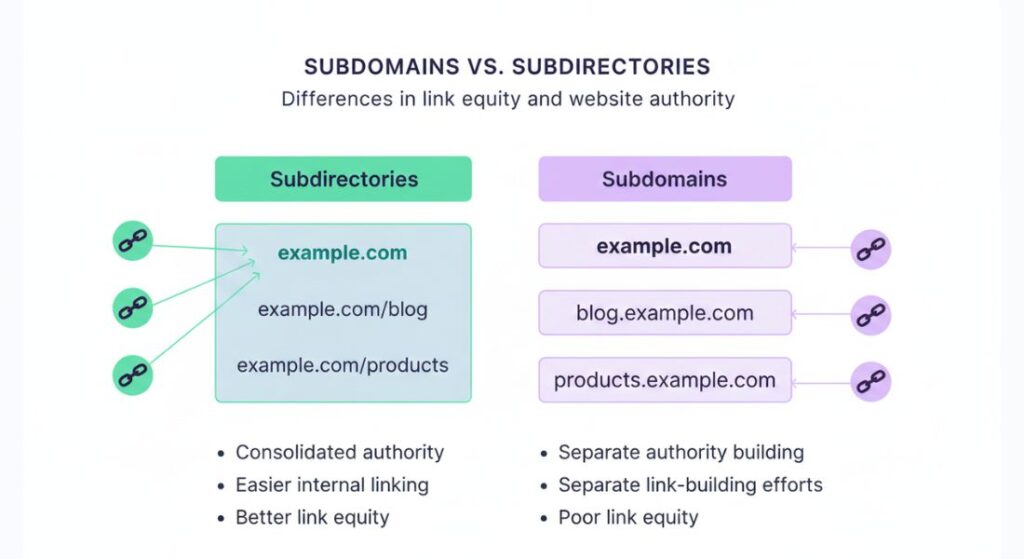
Choosing between a subdomain and a subdirectory can quietly make or break your organic growth. This choice affects everything from search rankings to user experience. Therefore understanding subdomain SEO is essential for success.
Misplaced content silos often split link equity and dilute domain authority. Many companies inherit legacy subdomains without a clear strategy for their information architecture.
This confusion complicates analytics making it hard to track performance and optimize effectively. This guide provides a practical framework for subdomain SEO. It covers when to use a subdomain, how to configure it, how to measure its success and how to migrate safely.
We’ll address some gaps competitors often overlook like GA4 cross-domain tracking Google Search Console properties, hreflang considerations and server-level implementation.
What is a subdomain and how search engines treat it?
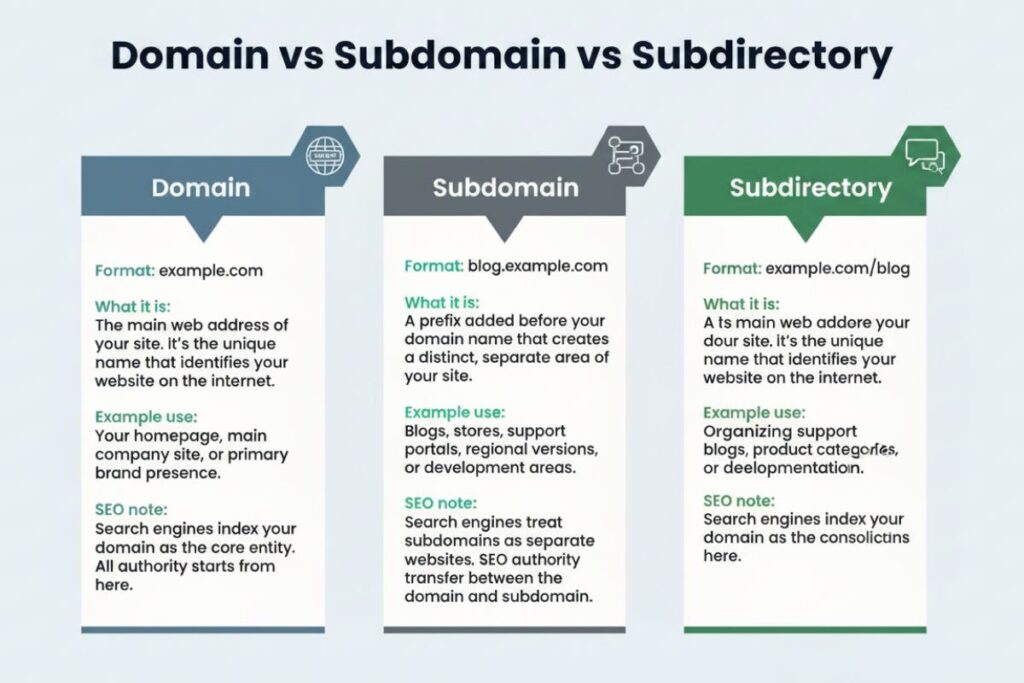
A subdomain is a distinct section of your main domain. It helps create specialized content for different audiences or services. Search engines treat subdomains as separate entities which can impact authority and rankings.
Definitions authority and link equity realities
There’s a crucial distinction between subdomains, subdirectories and subfolders. A subdomain appears before the primary domain name like “blog.example.com.” In contrast a subdirectory looks like this: “example.com/blog.” Each structure has implications for SEO.
Link equity divides when using subdomains instead of subdirectories. Your subdomain doesn’t automatically gain authority from your main domain. For example if your main site excels in a particular area its subdomain might not rank as well without dedicated backlinks.
Crawl canonicalization and duplication risks
When using subdomains you must be vigilant about duplicate content. Search engines can struggle to index unique content across multiple subdomains especially if canonical tags aren’t properly implemented. This can lead to missed opportunities in rankings.
The crawl budget is another risk. If search engines crawl your subdomain too often it might waste your overall site authority. Consider how to consolidate authority across your domains to maximize visibility.
Decision framework: subdomain vs subdirectory based on goals and constraints!
Your decision to use a subdomain or a subdirectory should align with your organizational goals. Mapping how content fits into your overall strategy is crucial for strong performance.
Strategy thresholds and information architecture conflicts
When do you choose a subdomain? Use a subdomain to create clear boundaries for distinct products or targeted audiences. Doing so helps prevent confusion especially in complex organizations.
Topical authority becomes vital for a root domain. If your organization has varied subjects, centralizing authority may yield better results. Root domains often benefit from breadth and depth in content.
Engineering governance and performance drivers
Consider the technical constraints of your organization. Separate deployments or teams may impact your choice between subdomains and subdirectories. Efficient governance is essential for minimizing confusion and maximizing performance.
Performance metrics like Core Web Vitals should also influence your decision. Session management and caching mechanisms can vary dramatically between separate domains and shared environments. Make data-driven decisions based on these factors.
Technical setup that preserves equity and crawl efficiency
Setting up your subdomain requires careful planning. The technical setup plays a vital role in preserving link equity and ensuring efficient crawls.
DNS, SSL and cookie strategy
Begin by configuring DNS to ensure your subdomain points correctly to your server. Implement SSL as visitors expect secure connections notably for transactional sites. Without SSL your authority may suffer.
Consider cross-subdomain cookies for session handling. Using shared cookies can improve user experience across your properties. This strategy ensures visitors experience a seamless transition between domains.
Robots sitemaps and canonical rules
Robots.txt files help guide search engines to crawl priority areas effectively. Ensure you include your subdomain in sitemaps so that search engines know where to focus their efforts. Doing this prevents wasted crawl budgets on low-priority pages.
Use canonical tags to prevent duplicate content issues. Specify the preferred URL for indexing to maintain clarity for search engines. This practice is especially critical in multi-domain setups.
Analytics and attribution for multi-subdomain ecosystems
Analytics might become complex in a multi-subdomain environment making effective tracking imperative. A robust analytics strategy helps measure performance accurately.
GA4 cross-domain tracking and roll-up reporting
To implement GA4 tracking across subdomains utilize referral exclusions. This setup prevents duplicate sessions from the same user improving data integrity. Accurate tracking leads to better performance insights.
Consider using roll-up reporting for KPIs across subdomains. This strategy allows for a unified view of performance metrics enabling better decision-making through comprehensive data analysis.
Search Console property strategy
Google Search Console distinguishes between subdomain and domain properties. Coverage is critical for monitoring performance across all segments of your site. Focusing on both helps maintain control over your SEO efforts.
Geo-targeting in GSC can optimize your subdomains by targeting specific languages or regions. This strategy addresses location-specific content efficiently maximizing relevance for targeted audiences.
International and local SEO on subdomains without losing relevance
Using subdomains for international SEO is effective yet it requires precise execution. Critical techniques ensure your efforts don’t lose relevance to your audience.
Hreflang language routing and canonical clarity
Hreflang tags are necessary for guiding search engines toward the correct language or regional subdomains. This step prevents mixed signals and helps search engines understand your content’s target audience better.
Consistency in canonical tags prevents confusion with indexing. Ensure that all versions of your content point to the same canonical tags which ultimately preserves your rankings across different language offerings.
Local SEO and multi-location structures
Subdomains can also enhance local SEO efforts especially for businesses in multiple locations. Each location can benefit from its subdomain ensuring consistency through Name Address Phone Number (NAP) information.
Deciding between ccTLD and subdomains requires careful consideration. Often subdomains outperform directories when targeting international audiences. Evaluate your needs before implementation.
Migration blueprint: moving subdomains and protecting rankings
Migrating from a subdomain to a subdirectory needs careful planning to avoid negative impacts on your rankings. The process involves multiple steps to ensure smooth transitions.
From subdomain to subdirectory safely
To move a subdomain to a subdirectory use 301 redirects. This method tells search engines that your content has moved permanently retaining as much link equity as possible. Monitor your rankings during and after the migration to address any fluctuations.
Be aware that migration can initially disrupt your crawl budget. It usually takes time for search engines to adjust after a significant change. Communicate your modifications clearly to your audience to maintain trust.
Monitoring links and communications
After migration conduct log file analysis to monitor performance. This review helps track the success of subdomains and overall site authority. Ensure that tracking keywords align with your pre-migration expectations.
Focus on internal linking strategies post-migration too. Redirecting to consolidated hubs strengthens authority and helps regain any lost link equity. Ongoing communication with your audience can also enhance user experience during changes.
Conclusion
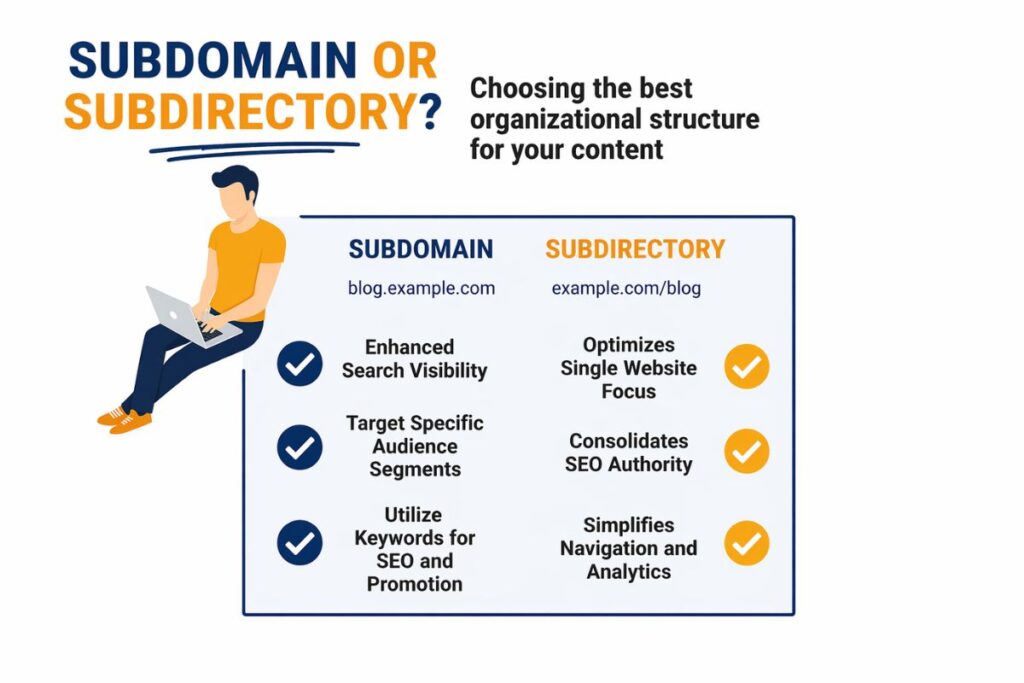
Effective subdomain SEO relies on clear information architecture, sound technical setups and reliable measurement strategies. Utilize subdomains for well-defined separation and minimize link equity loss with appropriate linking methods.
Always back your decisions with data from GA4 and Google Search Console. Audit your current subdomain footprint today. Map your information architecture, implement robust tracking measures and choose one consolidation or optimization action to execute this quarter.
FAQs
Will moving content from a subdomain to the main site boost rankings
It can improve rankings if the main site has stronger backlinks and relevance. Plan redirects and monitor traffic because results vary by niche and link profile.
How do I track a subdomain separately in analytics
Set up the subdomain as its own property or use cross domain tracking in GA4. Test by checking real time reports and verifying event continuity across pages.
Should product pages live on a subdomain for a multilingual site
Use a subdomain if different languages require unique infrastructure or localized servers. Otherwise serving languages under the main domain usually simplifies SEO and tracking.
Does a subdomain affect site speed and page experience
It can if the subdomain is hosted on different infrastructure or has separate optimization. Keep assets and hosting consistent to avoid user experience penalties.
How should I set up Search Console for a subdomain
Add the subdomain as its own property in Search Console. Verify ownership and submit separate sitemaps to get accurate indexing data.
Can internal links pass authority between a main domain and a subdomain
Yes internal links help but they do not fully transfer domain authority automatically. Use strong contextual links and build external backlinks to the subdomain as well.