Technical SEO consulting is a specialized service where an expert audits, diagnoses and fixes the infrastructure issues that prevent your website from ranking things like crawlability, page speed, JavaScript rendering and site architecture.
Your content can be excellent and your backlinks growing yet Google still buries your pages. That gap almost always traces back to a broken technical foundation.
A site infrastructure specialist finds exactly what search engines cannot read, crawl or index and fixes it at the server code and architecture level.
What Does a Search Engine Infrastructure Expert Actually Do?
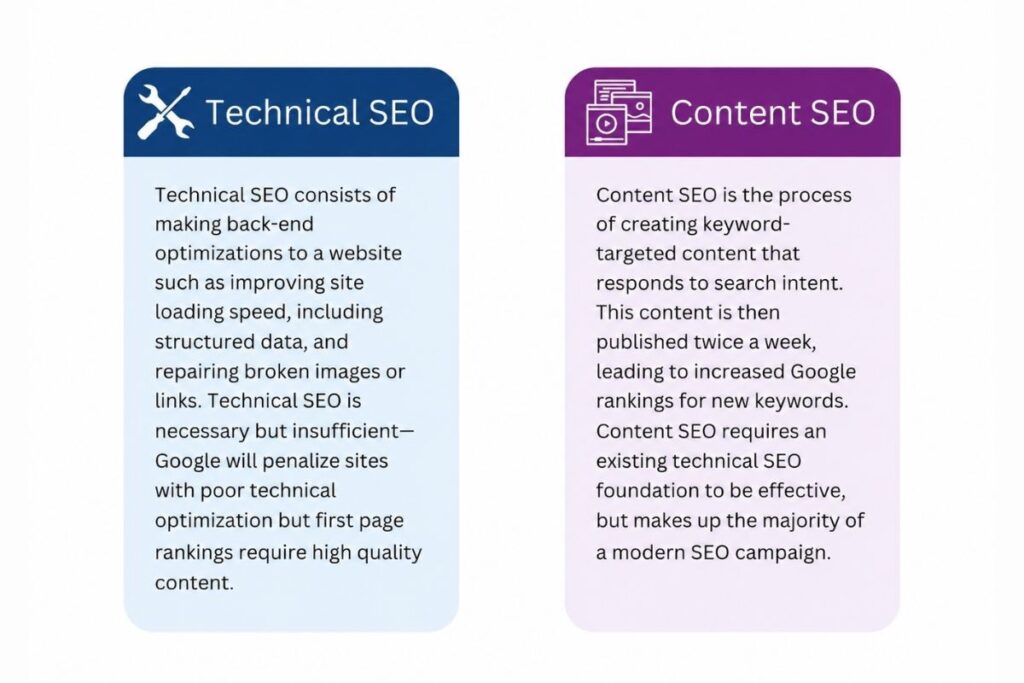
Most people understand content SEO, write great articles and earn backlinks rank higher. The technical layer is less visible but equally critical. A site infrastructure specialist focuses exclusively on ensuring search engines can efficiently discover, interpret and index every page on your site. When any part of that process breaks your content never reaches the rankings it deserves regardless of quality.
Unlike a generalist SEO agency handling blog posts and outreach a dedicated website performance consultant digs into your CMS configuration server settings rendering behavior and site architecture the exact layer where organic visibility is either supported or sabotaged.
The practical output: a site that search engines read cleanly loads fast enough to satisfy Core Web Vitals and communicates its content hierarchy clearly through schema markup, canonical tags and structured internal linking.
What a Professional Site Audit Covers (Beginner to Advanced Breakdown)?
A real SEO infrastructure audit is not a five-minute automated report. It uses advanced crawling tools like Screaming Frog Sitebulb or DeepCrawl combined with server log file analysis, Google Search Console data and manual inspection across hundreds of data points. Here is what it actually investigates.
Crawlability and Indexation
Search engines must reach your pages before they rank them. A crawl analysis maps your full crawl depth surfaces to orphan pages with no internal links, checks robots.txt for accidentally blocked URLs and validates your XML sitemap.
For large sites with thousands of URLs crawl budget optimization directing Google’s crawl allocation toward your most valuable pages is a primary deliverable.
Core Web Vitals and Page Speed Optimization
Google uses Core Web Vitals as a direct ranking signal. The three metrics Largest Contentful Paint (LCP) Interaction to Next Paint (INP) and Cumulative Layout Shift (CLS) measure how quickly and stably pages load for real users. A specialist audits your performance using both Google PageSpeed Insights lab data and Chrome User Experience Report field data. They identify render-blocking scripts, unoptimized images, slow server response times, missing cache directives and CDN misconfiguration as the specific causes, not just the symptom.
Site Architecture and Internal Linking Structure
How pages connect tells search engines which content matters most. A flat logical architecture with clear navigational hierarchy passes link equity efficiently and helps crawlers understand page relationships. The audit evaluates URL structure page depth within your hierarchy and internal linking gaps where high-value pages sit isolated. Fixing site architecture often produces measurable ranking improvements without changing a single word of content.
Duplicate Content and Canonical Tag Management
Duplicate content is one of the most common and damaging search engine optimization issues on the web. It appears when the same content exists at multiple URLs caused by faceted navigation on e-commerce sites session ID parameters www versus, non-www conflicts or HTTP/HTTPS mismatches.
The audit identifies every instance of duplication and implements proper rel=”canonical” tags, 301 redirects and parameter handling rules to consolidate ranking signals onto a single authoritative URL.
JavaScript Rendering and Search Engine Visibility
Modern sites built on React Angular or Vue.js present a specific crawling challenge. Client-side rendering builds page content dynamically in the browser not in the HTML delivered to bots. Google can render JavaScript but the process is slower and less reliable than reading static HTML.
A specialist audits exactly what search engine crawlers see, often revealing that critical content navigation or internal links are invisible to bots even when they look perfect to users. Fixes typically involve server-side rendering (SSR) dynamic rendering or pre-rendering strategies.
Structured Data and Schema Markup Implementation
Schema markup helps search engines understand not just what your content says but what it means. Implementing Organization Product Article FAQ BreadcrumbList and other schema types gives Google the structured context it needs to generate rich results, star ratings, FAQ dropdowns, product prices and sitelinks in search results.
These enhanced SERP features dramatically improve click-through rates. The audit checks your current implementation for errors, redundancies and missed opportunities then aligns everything with Google’s structured data guidelines.
HTTPS Security and Site Migration Planning
A secure site is a basic requirement for ranking in 2026. The audit confirms your SSL certificate is correctly installed and all pages redirect cleanly from HTTP to HTTPS without creating redirect chains mixed content warnings are absent and security headers are properly configured.
If you plan a website redesign CMS migration or domain change, engaging a specialist before the migration begins is critical. Poorly executed migrations are among the most common causes of catastrophic organic traffic loss prevention costs far less than recovery.
Clear Signs You Need an SEO Infrastructure Specialist Right Now
Not every site needs dedicated technical oversight at every stage. But these situations make it urgent:
- Sudden unexplained drop in organic traffic algorithm updates, manual penalties, broken redirects and crawl errors all require systematic investigation not guesswork.
- Upcoming site rebuild or platform migration the cost of lost traffic from a botched migration always exceeds the cost of proper guidance.
- Large-scale websites e-commerce stores with tens of thousands of product pages, news publishers with deep archives and SaaS platforms generate new indexation duplication and crawlability issues continuously at scale.
- Persistent Google Search Console issues crawl errors where you cannot explain pages stuck as “Discovered – currently not indexed” Core Web Vitals failing in the red zone or structured data errors across hundreds of pages.
How Much Does Website Search Performance Consulting Cost?
Pricing depends on the scope of work site size and complexity and the consultant’s experience level. Based on 2026 industry benchmarks:
- Hourly consulting rates from independent specialists: $100–$350/hour. Experts in JavaScript SEO, enterprise crawl budget optimization or complex international hreflang structures command rates at or above the top of that range.
- Project-based audit pricing: $1500–$3000 for small to mid-sized sites. Enterprise-level audits covering thousands of URLs with log file analysis and JavaScript rendering review can run $5000–$15000 or more.
- Ongoing retainer arrangements: $1500–$8000/month for sites requiring continuous technical oversight and monthly deliverables.
The key question is not what the work costs, it is what unresolved issues are currently costing you in lost organic traffic and revenue. For most growing businesses the ROI on professional optimization is substantial and measurable.
What Results Can You Realistically Expect?
Fixing technical issues removes barriers that prevent your existing content and backlinks from performing; it does not manufacture rankings from nothing.
When the infrastructure is sound and your content and authority are in place technical improvements often unlock significant ranking gains that were already earned but suppressed by crawl and indexation problems.
Timeline: Google needs to recrawl and reindex your pages after implementation before you see ranking changes. For most sites this happens within four to eight weeks. Core Web Vitals improvements and crawl rate changes surface in Google Search Console data faster than organic ranking shifts.
The most reliable early signal is an improvement in crawl coverage: more pages indexed, fewer crawl errors, stronger performance scores and eventually upward movement in organic impressions and clicks.
How to Choose the Right SEO Infrastructure Consultant?

The best specialists communicate in plain language. They explain what they found, why it matters and exactly what to do to fix it. They deliver a prioritized action plan not an overwhelming spreadsheet of every possible issue because not every issue carries the same business impact. They work closely with your development team rather than treating implementation as someone else’s problem.
Ask any prospective consultant these questions:
- Can you walk me through a site audit you delivered for a comparable website?
- How specifically do you handle JavaScript rendering issues? (This separates surface-level practitioners from true infrastructure specialists.)
- Do you have case studies with measurable before-and-after organic traffic data?
The right specialist answers all of these with specifics not generalities.
Conclusion
The technical foundation of your website is what everything else in SEO rests on. When it is solid your content ranks when it is broken even great content stalls. A qualified search engine optimization specialist does not just identify problems; they build the infrastructure that allows your entire SEO investment to perform.
Whether you run a small business site or an enterprise platform with millions of pages, systematic technical work delivers compounding returns over time.
Start with a comprehensive audit prioritized by business impact and implement fixes alongside your development team. That is the process that turns crawlability, indexation and rendering improvements into real organic growth.
FAQs
How long does a technical SEO audit take to complete?
For small to mid-sized sites a thorough audit typically takes 1–2 weeks. Enterprise-level sites with thousands of URLs, log file analysis and JavaScript rendering review can take 3–4 weeks.
Can I do a technical SEO audit myself without hiring a consultant?
You can run basic checks using free tools like Google Search Console and Screaming Frog’s free tier. However interpreting log files, diagnosing JavaScript rendering issues and prioritizing fixes accurately requires specialist expertise that takes years to develop.
What is the difference between on-page SEO and technical SEO?
On-page SEO focuses on content keywords and meta tags within individual pages. Technical SEO focuses on the backend infrastructure, crawlability, site speed rendering indexation and site architecture that determines whether those pages can be found and ranked at all.
How often should a website undergo a technical SEO review?
Small sites should conduct a full audit annually or after any major site change. Large e-commerce or enterprise sites benefit from continuous monitoring and quarterly in-depth reviews as new issues emerge constantly at scale.
Does fixing technical SEO issues guarantee higher Google rankings?
No, it removes the barriers preventing your existing content and authority from performing. When technical infrastructure is sound and your content quality and backlink profile are strong, rankings typically improve but technical fixes alone cannot substitute for content relevance and link authority.