Most websites never reach the first page of Google.
Even worse, many pages that do rank still get ignored because they sit too low on the SERP.
That is the real problem search engine positioning solves.
Modern rankings are no longer just about blue links. Google now shows featured snippets People Also Ask boxes videos image packs local results and knowledge panels before many organic listings even appear.
If your content is not positioned correctly your visibility disappears fast.
This guide explains how search engine positioning works, what actually improves rankings and how to increase your organic visibility using modern SEO strategies that align with search intent, user experience and semantic relevance.
What Is Search Engine Positioning?
Search engine positioning is the process of optimizing specific webpages to achieve higher visibility in search engine results pages for target keywords and search queries.
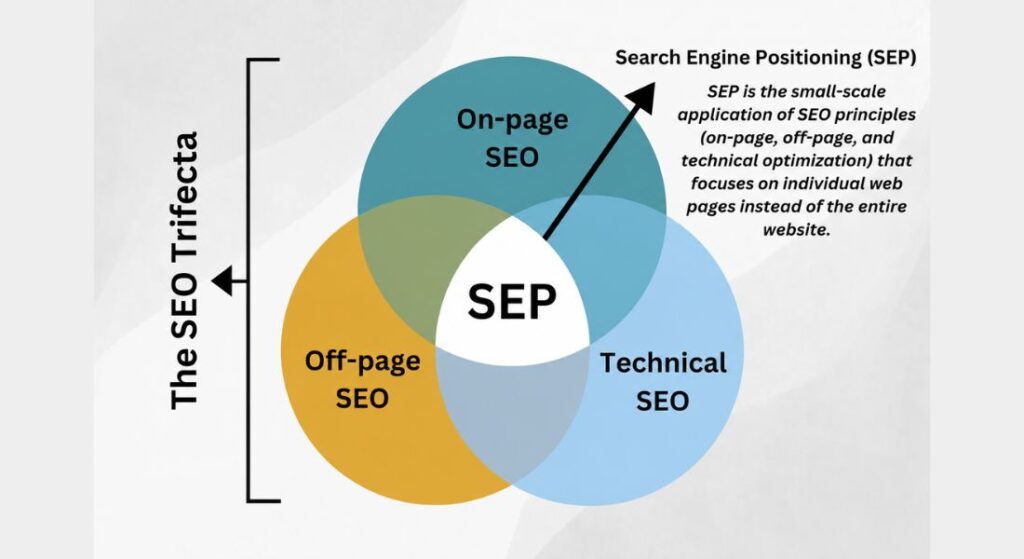
Unlike broader SEO strategies that improve an entire website search engine positioning focuses on improving the rankings and SERP visibility of individual pages.
The goal is not only to rank higher but also to secure more SERP real estate through featured snippets, video results, image packs, People Also Ask sections and other search features that increase click-through rates.
Search engines like Google evaluate webpages using hundreds of ranking signals. These include content quality semantic relevance backlinks user experience mobile usability Core Web Vitals internal linking topical authority and search intent alignment.
A well-positioned page helps search engines clearly understand:
- what the page covers
- which search intent it satisfies
- how authoritative the content is
- whether users find the experience valuable
When those signals align correctly rankings improve naturally.
Why Search Engine Positioning Matters More Than Ever
Search visibility has become far more competitive over the last few years.
Paid ads dominate the top of many SERPs. AI-generated summaries, snippets , shopping results and videos now push traditional organic listings further down the page.
That means ranking on page one alone is no longer enough.
Positioning matters because the highest-ranking results capture most user attention and clicks. Pages appearing in the top three positions often receive the majority of organic traffic while lower rankings struggle for visibility.
Better positioning also improves:
- brand recognition
- organic traffic consistency
- conversion opportunities
- customer acquisition efficiency
- trust and authority signals
- long-term SEO ROI
Unlike paid advertising, organic visibility compounds over time. A properly optimized page can continue generating traffic leads and conversions for months or years without ongoing ad spend.
Strong positioning also helps businesses reduce dependency on unstable paid acquisition channels.
Search Engine Positioning vs SEO
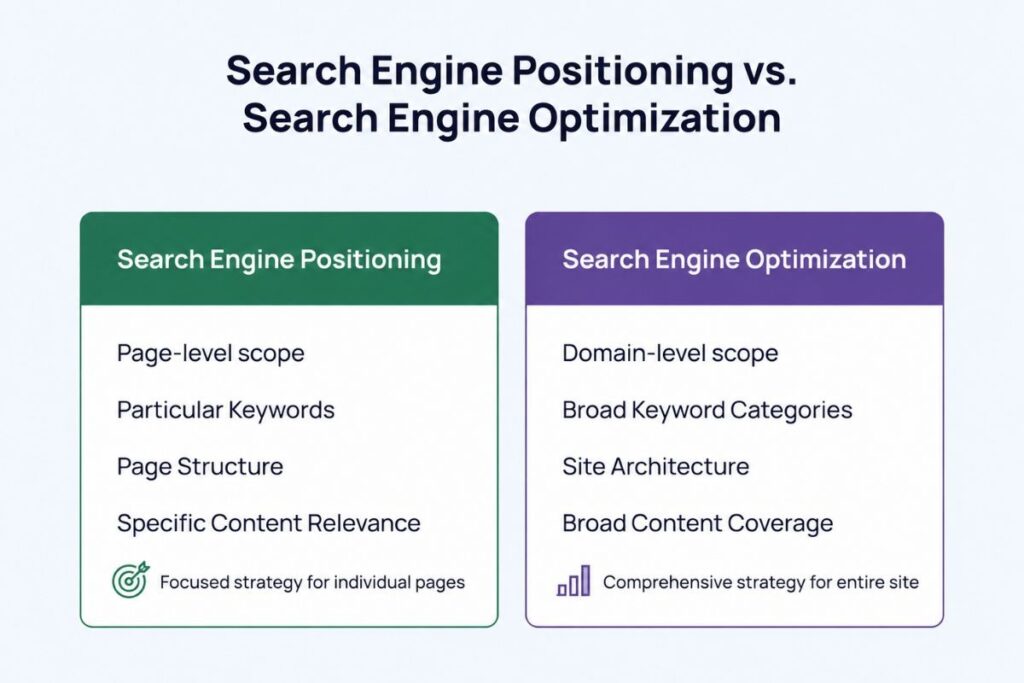
Many people use SEO and search engine positioning interchangeably but they are not exactly the same thing.
SEO is the broader process of improving a website’s overall search performance. It includes technical SEO keyword research site architecture content marketing backlink acquisition mobile optimization crawlability indexation and user experience improvements.
Search engine positioning is a smaller but highly focused part of SEO.
Instead of optimizing an entire domain positioning focuses on improving the visibility and rankings of specific pages for targeted search queries.
For example SEO may involve improving the authority of an ecommerce website overall. Search engine positioning focuses on pushing a single category page higher for a keyword with strong transactional intent.
SEO builds the foundation.
Search engine positioning maximizes page-level visibility.
How Search Engines Decide Rankings
Search engines use complex algorithms to determine which pages deserve visibility for specific queries.
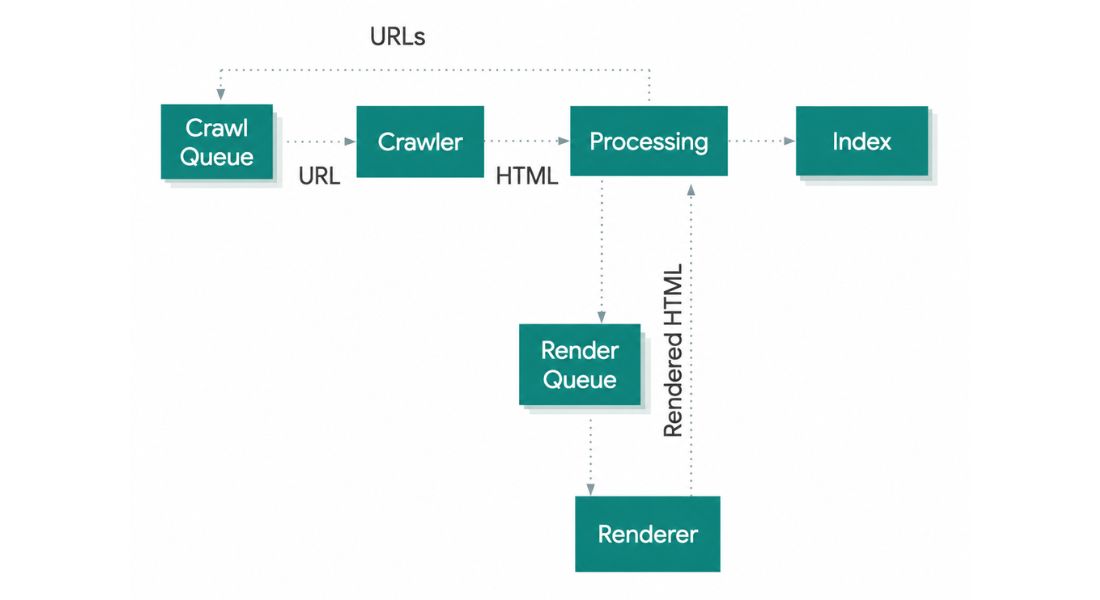
The process usually begins with crawling and indexing.
Googlebot crawls webpages, analyzes content, follows internal and external links and stores information inside Google’s index. Once indexed pages become eligible to appear in search results.
When someone performs a search Google evaluates indexed pages using ranking signals such as:
content relevance
semantic relationships
search intent alignment
content freshness
page quality
backlink authority
mobile friendliness
page speed
engagement signals
internal linking
E-E-A-T signals
structured data
Modern algorithms also rely heavily on semantic search and natural language processing.
Instead of matching exact keywords only Google now tries to understand meaning context entities topical relationships and user intent.
That is why pages with strong semantic SEO often outperform pages relying purely on keyword repetition.
User behavior also influences positioning.
If users consistently click a result, stay on the page longer, engage with content and avoid returning immediately to search results search engines interpret those signals positively.
Poor user experience creates the opposite effect.
The Most Important Factors That Improve Search Engine Positioning
Search engine positioning depends on multiple ranking factors working together rather than one isolated optimization tactic.
The strongest pages usually combine technical SEO, semantic optimization, content quality and excellent user experience.
Search Intent Alignment
Search intent is one of the most important ranking factors in modern SEO.
If your page does not satisfy what users actually want, rankings rarely hold for long.
Google typically classifies intent into four categories:
informational
navigational
commercial
transactional
A page targeting transactional keywords should not behave like an educational blog post. Similarly informational searches usually require detailed explanations rather than aggressive sales messaging.
The better your content aligns with intent the stronger your positioning becomes.
High-Quality Content
Thin content struggles to rank consistently.
Search engines prefer content that demonstrates expertise, depth, clarity , originality and usefulness.
Strong content answers questions directly, explains topics clearly, removes confusion and provides practical value without unnecessary fluff.
Pages that fully solve user problems generally outperform shallow content optimized only for keywords.
Topical Authority
Google increasingly rewards websites that demonstrate expertise across an entire topic cluster.
Instead of publishing isolated articles successful SEO strategies build interconnected content hubs covering related subtopics comprehensively.
This strengthens semantic relevance and helps search engines understand your authority within a subject area.
Internal Linking
Internal links help search engines discover content, understand page relationships and distribute authority across a website.
Well-structured internal linking improves crawlability and strengthens topical associations between related pages.
Keyword-rich anchor text also gives Google stronger contextual signals about linked pages.
Core Web Vitals and User Experience
User experience strongly influences positioning.
Slow pages, unstable layouts, intrusive popups and poor mobile usability often reduce engagement and increase bounce rates.
Core Web Vitals measure important UX metrics including:
loading speed
visual stability
interactivity
Pages that load quickly and provide smooth experiences generally perform better in search results.
Mobile Optimization
Google primarily uses mobile-first indexing.
If your website performs poorly on smartphones or tablets rankings can suffer even if the desktop version works well.
Responsive design, readable typography, optimized images and fast mobile loading speeds all contribute to stronger positioning.
Semantic SEO
Modern SEO relies heavily on semantic relationships.
Instead of repeating the same keyword, excessively strong pages naturally include related entities, NLP terms synonyms, topical phrases and contextual keywords.
Semantic optimization helps search engines understand the broader meaning behind your content.
E-E-A-T Signals
Experience Expertise Authoritativeness and Trustworthiness influence content quality evaluations.
Google wants to rank content that appears credible, accurate and reliable.
Strong E-E-A-T signals often include:
expert-level explanations
clear authorship
accurate information
trustworthy references
brand authority
real-world experience
How To Improve Search Engine Positioning
Improving positioning usually requires refining pages that already have ranking potential.
The fastest gains often come from optimizing existing content instead of creating entirely new pages.
Start by identifying pages ranking between positions five and fifteen in Google Search Console. These pages already have visibility and often need only targeted improvements to move higher.
Refresh outdated content regularly.
Old statistics, obsolete examples, weak formatting and outdated search intent alignment can reduce rankings over time.
Improving metadata also matters.
Title tags and meta descriptions strongly influence click-through rates. Better CTR signals can improve overall search performance.
Strong title tags usually:
- include the primary keyword naturally
- create curiosity or urgency
- stay within display limits
- match search intent clearly
Content readability matters more than many websites realize.
Large text blocks, poor formatting, weak structure and unclear explanations reduce engagement.
Using cleaner formatting logical heading structures, conversational writing and concise explanations improves usability significantly.
Improving internal links also helps strengthen weaker pages.
Link from authoritative pages within your site to pages requiring ranking improvements. This passes contextual relevance and authority signals naturally.
Optimizing for featured snippets creates additional visibility opportunities.
Google often pulls snippet content from pages that provide:
- direct definitions
- concise answers
- structured explanations
- clear formatting
- question-based headings
How Internal Linking Improves Rankings?
Internal linking remains one of the most underrated SEO strategies.
Search engines use internal links to understand how pages connect semantically across a website.
A strong internal linking structure helps:
- improve crawl efficiency
- distribute authority
- strengthen topic clusters
- increase time on site
- guide users toward relevant content
Contextual internal links also help Google understand which pages are most important within your website architecture.
Pages receiving more relevant internal links often gain stronger authority signals.
Anchor text matters too.
Generic anchors like “click here” provide very little contextual relevance. Descriptive anchors improve semantic understanding significantly.
How Featured Snippets and SERP Features Increase Visibility?
Modern SERPs contain much more than traditional organic listings.
Google frequently displays:
featured snippets
People Also Ask boxes
video carousels
image packs
knowledge panels
local packs
top stories
These features occupy valuable SERP real estate and often receive higher engagement than standard listings.
Optimizing for SERP features increases visibility even when you are not ranking in the absolute top organic position.
Featured snippets usually favor pages that:
- answer questions directly
- use structured formatting
- explain topics clearly
- include semantic relevance
- provide concise definitions
Video SEO also creates additional positioning opportunities.
Embedding relevant videos inside content can increase engagement and improve visibility across both Google Search and YouTube results.
Common Search Engine Positioning Mistakes
Many websites struggle because they focus on outdated SEO tactics rather than modern search behavior.
Keyword stuffing remains one of the biggest mistakes.
Repeating exact-match keywords unnaturally damages readability and weakens semantic quality.
Ignoring search intent creates another major issue.
A page may contain strong keywords but still fail because it does not satisfy what users actually expect.
Thin content also limits rankings.
Pages lacking depth, expertise , originality or usefulness rarely compete successfully against comprehensive resources.
Technical SEO problems often reduce visibility as well.
Broken links crawl errors, poor mobile UX slow loading times and weak site architecture can all negatively affect positioning.
Another common mistake is neglecting content updates.
Search engines favor fresh relevant and accurate information. Content decay can quietly reduce rankings over time if pages remain outdated.
How To Track Search Engine Positioning?
Tracking rankings helps measure SEO progress and identify opportunities for improvement.
Google Search Console provides valuable positioning data including:
impressions
clicks
average CTR
average position
query performance
Google Analytics helps measure behavioral metrics such as:
engagement
bounce rate
conversions
session duration
traffic sources
Advanced SEO platforms like Ahrefs and Semrush provide deeper ranking insights competitor tracking backlink monitoring and keyword visibility analysis.
Tracking positioning consistently helps identify:
- ranking improvements
- content decay
- CTR opportunities
- keyword growth trends
- SERP feature visibility
Advanced Search Engine Positioning Strategies
Modern SEO goes far beyond traditional keyword optimization.
Advanced positioning strategies focus heavily on semantic depth entity relationships and topical authority.
Topic clusters have become extremely effective.
Instead of publishing disconnected articles, successful websites build interconnected content ecosystems around broader themes.
Entity SEO also plays a major role.
Search engines now understand relationships between brands concepts, tools , locations, products and people through the Knowledge Graph.
Including related entities naturally improves contextual relevance and semantic understanding.
Search intent layering is another advanced strategy.
Some high-performing pages simultaneously satisfy informational commercial and transactional intent within one structured experience.
Content hubs semantic interlinking and SERP feature optimization all contribute to stronger long-term visibility.
Websites dominating modern search results usually combine:
- technical SEO
- semantic SEO
- UX optimization
- authority building
- content freshness
- internal linking
- engagement optimization
rather than relying on one isolated tactic.
Final Thoughts
Search engine positioning is no longer just about ranking for keywords.
Modern SEO requires semantic relevance, strong user experience search intent alignment topical authority and strategic SERP visibility optimization.
The websites winning today are not simply publishing more content.
They are creating better experiences, stronger semantic connections and more useful resources that genuinely satisfy user intent.
When your pages combine high-quality content technical performance internal linking semantic optimization and user-focused structure higher rankings become much easier to sustain over time.
FAQs
How long does SEO positioning take to show results?
Small improvements may appear within weeks especially after content updates or internal linking improvements. Competitive keywords usually take several months because rankings depend on authority competition backlinks and overall content quality.
Why is search intent important for SEO positioning?
Search intent helps Google determine whether your content matches what users actually want. If your page solves the user’s problem clearly and completely, rankings become much easier to achieve and maintain.
What improves SEO positioning the fastest?
Content refreshes stronger internal linking, better title tags, improved search intent alignment technical performance fixes and semantic optimization often create the fastest measurable ranking improvements.