AI systems like ChatGPT, Google AI Overviews and Gemini provide direct answers often bypassing traditional search results. An AI search monitoring platform helps you track how these systems interpret, cite and rank your content in real time.
It ensures your brand stays visible, authoritative and influential across both AI and traditional search. This article explains how leveraging such a platform transforms your SEO strategy from reactive optimization to proactive AI aligned growth.
What Is an AI Search Monitoring Platform?
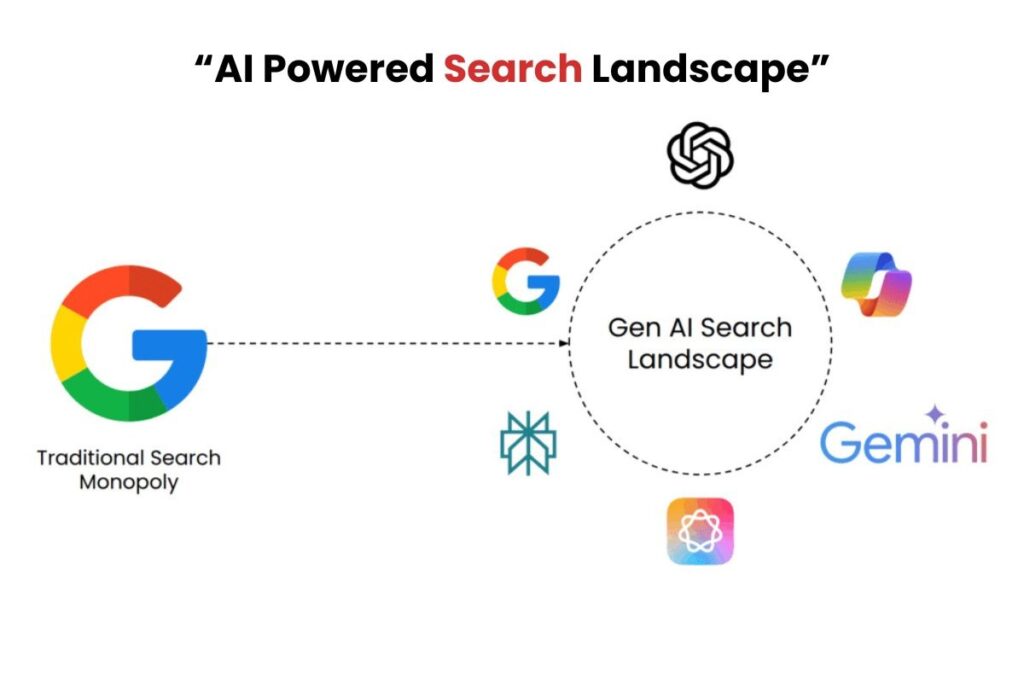
An AI search monitoring platform analyzes how search engines and generative AI systems interpret rank and reference online content. Instead of focusing only on keyword rankings these platforms evaluate deeper signals such as semantic relevance entity relationships search intent and AI citation frequency.
They track how often your content appears in AI responses, how generative search systems describe your brand and how users interact with those answers. These tools use machine learning, natural language processing and real time search analytics to uncover insights that traditional SEO platforms often miss.
For example an AI monitoring tool may detect that generative search engines frequently cite a competitor’s guide when answering questions about semantic SEO. With that information marketers can expand their own entity coverage, improve topical depth and structure content so AI systems recognize it as a reliable source.
By understanding how AI interprets content context authority signals and credibility indicators businesses can refine their content strategy and maintain visibility across both traditional search engines and AI-powered interfaces.
Why Traditional SEO Tools Are No Longer Enough?
Traditional SEO relies heavily on platforms such as Google Search Console keyword rank trackers and periodic site audits. While these tools provide useful historical data they rarely explain why rankings fluctuate or how emerging search technologies influence visibility.
Today search traffic can decline even when rankings remain stable because AI systems often extract information from authoritative sources and display it directly in summaries or conversational responses.
This shift has introduced a new challenge for businesses. Competitors can appear prominently in AI generated answers or dominate topical clusters even if their pages rank lower in standard search results.
For example a competitor’s article might be cited in a Google AI Overview while your page remains buried below the summary despite ranking well organically.
Without monitoring how AI systems interpret and reference your content, brands risk losing visibility in a growing number of zero click search environments where users receive answers instantly without visiting websites.
How AI Monitoring Enhances SEO Strategy?
AI monitoring shifts SEO from reacting to ranking drops toward anticipating search changes. Instead of waiting for traffic losses businesses gain real time insights into search performance AI citations and emerging trends.
Real time keyword monitoring allows teams to detect sudden ranking changes or new query patterns as they appear. When combined with automated alerts marketers can respond quickly to shifts in user behavior or algorithm updates.
Advanced search intent analysis also provides deeper insights into user expectations. Rather than optimizing content solely around keywords businesses can understand the informational navigational or transactional intent behind queries.
This knowledge helps teams produce content that answers real user needs rather than simply targeting phrases. AI monitoring tools also provide valuable competitor intelligence.
They reveal which websites dominate certain topics, which pages appear frequently in AI citations and how competitors build topical authority within semantic clusters. These insights help businesses identify gaps in their own content and develop stronger topic coverage.
In addition predictive analytics helps marketers anticipate potential algorithm updates or SERP feature changes before they impact traffic. By analyzing patterns in search behavior and ranking volatility, AI monitoring platforms allow organizations to adjust their SEO strategy early and maintain stable search visibility.
Semantic SEO: Context Entities and Topical Authority!
Modern search engines and AI models rely heavily on semantic understanding instead of simple keyword matching. They evaluate how effectively a piece of content explains a topic, connects related ideas and demonstrates authority within a broader knowledge domain.
Because of this shift successful SEO strategies focus on contextual relevance and topic depth rather than isolated keywords. Entities play a central role in semantic SEO.
Search engines identify real world concepts such as brands, technologies, products and people as structured entities within knowledge graphs. When content clearly explains these entities and their relationships search systems can better understand the context of the information.
Topical authority also strengthens search visibility. Websites that publish comprehensive content covering multiple aspects of a subject signal expertise and credibility. Clear headings, structured paragraphs and logical topic progression make it easier for AI systems to analyze and extract relevant insights.
For the primary keyword “how can an AI search monitoring platform improve SEO strategy” relevant semantic concepts include predictive analytics Answer Engine Optimization (AEO) Generative Engine Optimization (GEO) structured data behavioral ranking signals and algorithm updates.
Covering these interconnected topics naturally strengthens topical authority and increases the likelihood that AI systems reference the content when generating answers.
Optimizing Content for AI Interpretation

AI search systems often combine information from multiple sources to create concise answers for users. Because of this process content clarity and structure directly influence whether AI models cite a page. Clear paragraphs that explain concepts directly help AI systems extract meaningful insights without ambiguity.
Structured data markup also improves AI interpretation. Implementing schema types such as Article FAQ and How To provides additional context that helps search engines understand the purpose and structure of the content.
These signals guide AI systems toward key information and improve the chances of appearing in AI generated summaries. Content accuracy and credibility remain equally important. AI systems prioritize sources that provide reliable information, updated insights and clear explanations.
AI search monitoring tools reveal which pages appear in generative search responses and where gaps exist in entity coverage or topical depth. By improving these areas businesses increase the likelihood that AI systems cite their content as a trusted answer source.
AEO and GEO: Winning Generative Search Visibility!
Answer Engine Optimization (AEO) and Generative Engine Optimization (GEO) represent the next evolution of SEO. Instead of focusing only on ranking web pages these strategies aim to position content as the preferred source for AI generated answers.
AI monitoring platforms help identify the questions users frequently ask and reveal how generative search engines respond to those queries. With this information businesses can structure content so that answers appear clearly within paragraphs that AI systems can easily extract.
Monitoring tools also track how often AI systems cite a brand reference specific pages or summarize information from a website. These insights allow marketers to refine their content strategy and ensure their information appears in conversational search responses, AI summaries and knowledge based answers.
Over time this approach strengthens brand authority and increases visibility in environments where traditional search listings no longer dominate user attention.
Addressing Modern SEO Challenges
Modern SEO challenges extend beyond simple ranking fluctuations. Businesses frequently experience traffic volatility when search engines introduce new AI features or modify result layouts. AI monitoring platforms detect these changes early allowing marketers to adapt their strategy before traffic declines significantly.
Intent mismatch presents another common problem. When content does not align with the real intent behind a query engagement drops and search performance weakens. AI driven analysis helps identify these mismatches by analyzing search queries, behavioral patterns and user interactions.
Content saturation also affects competitive industries where multiple websites publish similar information. AI monitoring platforms highlight underrepresented entities overlooked topics and emerging trends that competitors have not fully covered. These insights help businesses create more distinctive content and strengthen their topical authority.
Strengthening EEAT Signals
Search engines and AI systems increasingly evaluate content using the principles of Experience Expertise Authoritativeness and Trustworthiness commonly known as EEAT. Strong EEAT signals indicate that a website provides credible and reliable information.
AI monitoring platforms support EEAT improvements by tracking brand mentions, citations and reputation indicators across digital ecosystems. They can identify outdated or thin content that weakens authority and highlight opportunities to strengthen expertise through deeper topic coverage.
Structured author profiles organization schema and consistent brand references further strengthen credibility signals. When AI systems repeatedly encounter reliable information associated with a recognizable entity they become more likely to cite that content in generative answers and AI-powered search summaries.
Integrating Technical SEO and Behavioral Signals
Technical SEO remains essential for ensuring that search engines and AI systems can crawl, interpret and index website content efficiently. Clear internal linking structures, structured data implementation, fast page loading speeds and mobile optimization all improve discoverability.
User behavior also influences how search systems evaluate content quality. Metrics such as dwell time engagement patterns and click distribution reveal whether users find information valuable and relevant.
AI monitoring platforms connect these behavioral signals with search performance data to identify which pages deliver the best user experience.
When technical optimization and positive engagement signals align, search engines gain stronger confidence in the quality of the content. As a result AI systems become more likely to recommend or cite those pages when generating answers.
Competitive Intelligence and Local/Global SEO
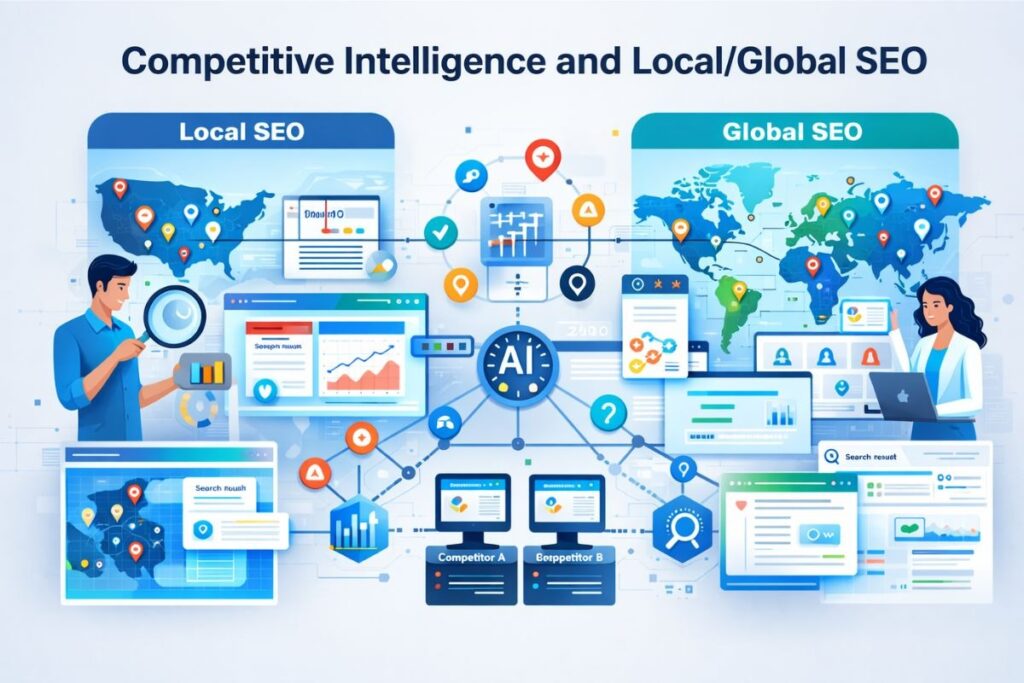
AI search monitoring platforms also provide powerful competitive intelligence. They reveal how competitors expand topic coverage, which entities they target and how often their content appears in AI generated responses or search features.
These insights help businesses identify strategic gaps and opportunities for improvement. For example a monitoring platform may reveal that competitors frequently appear in AI responses for specific long tail queries related to generative search optimization.
AI monitoring tools also support both local and global SEO strategies. Search behavior varies across regions and AI systems adapt responses based on location and language context.
By analyzing regional search patterns and local entity recognition businesses can optimize content for multiple markets while maintaining consistent topical authority.
Conclusion
Traditional SEO strategies alone can no longer guarantee consistent visibility in modern search environments. AI powered search experiences increasingly influence how users discover information, evaluate brands and interact with online content.
AI search monitoring platforms provide the insights businesses need to adapt to this evolving landscape. By combining semantic analysis entity tracking AI citation monitoring and behavioral insights organizations gain a deeper understanding of how generative search systems interpret their content.
This intelligence allows marketers to refine their strategy, strengthen topical authority and maintain visibility across both traditional search engines and AI driven platforms. Businesses that adopt AI monitoring tools today position themselves ahead of competitors that rely solely on conventional SEO methods.
FAQs
What features should an AI search monitoring platform include?
A strong AI monitoring platform should offer AI citation tracking real-time ranking insights competitor analysis search intent monitoring and predictive SEO alerts. These features help businesses understand how generative search engines interpret their content and where improvements are needed.
How does AI monitoring improve content strategy?
AI monitoring reveals how search engines interpret topics, entities and credibility signals within content. By analyzing citation patterns and user engagement data businesses can refine their content to provide clearer and more authoritative information.
Can AI search monitoring increase organic traffic?
Yes, By identifying AI generated answer opportunities and shifts in search intent, AI monitoring helps businesses optimize content for both traditional search results and generative AI responses which can increase overall visibility and traffic.
How do AI monitoring platforms analyze competitors?
These platforms evaluate competitors’ topic coverage entity relationships ranking patterns and AI citation frequency. This information reveals which competitors dominate specific topics and highlights opportunities for stronger content development.
How frequently should businesses review AI monitoring data?
Most businesses benefit from reviewing insights weekly or monthly depending on their industry competitiveness. Regular monitoring allows teams to react quickly to algorithm changes, search trend shifts or new AI features.
Is AI search monitoring important for long term SEO strategy?
Yes. AI monitoring provides predictive insights and deeper semantic analysis that help businesses adapt their SEO strategy to evolving search technologies and maintain long-term search visibility.