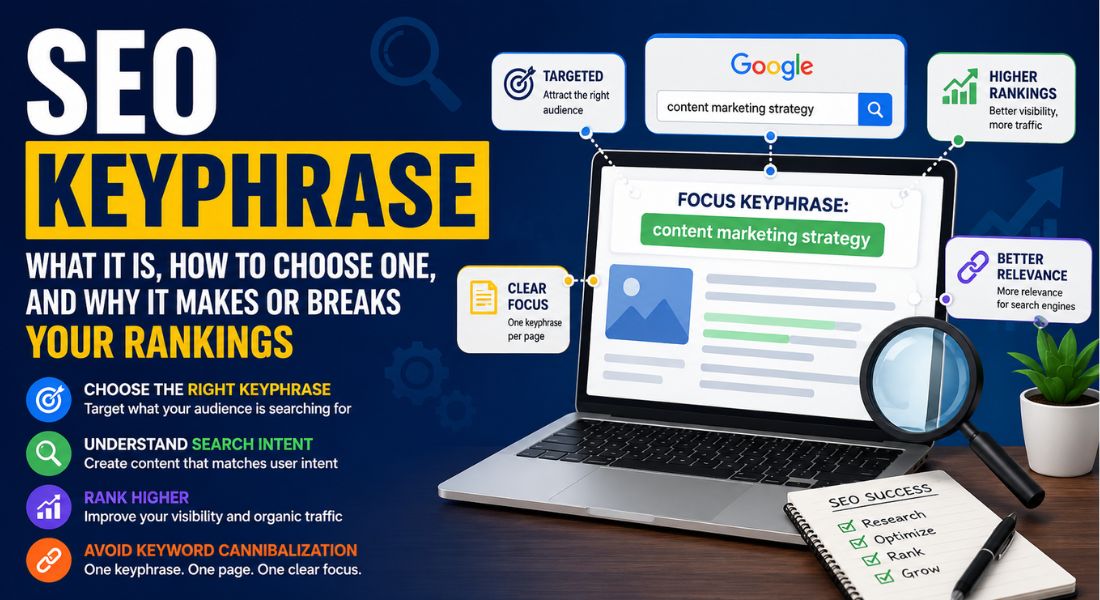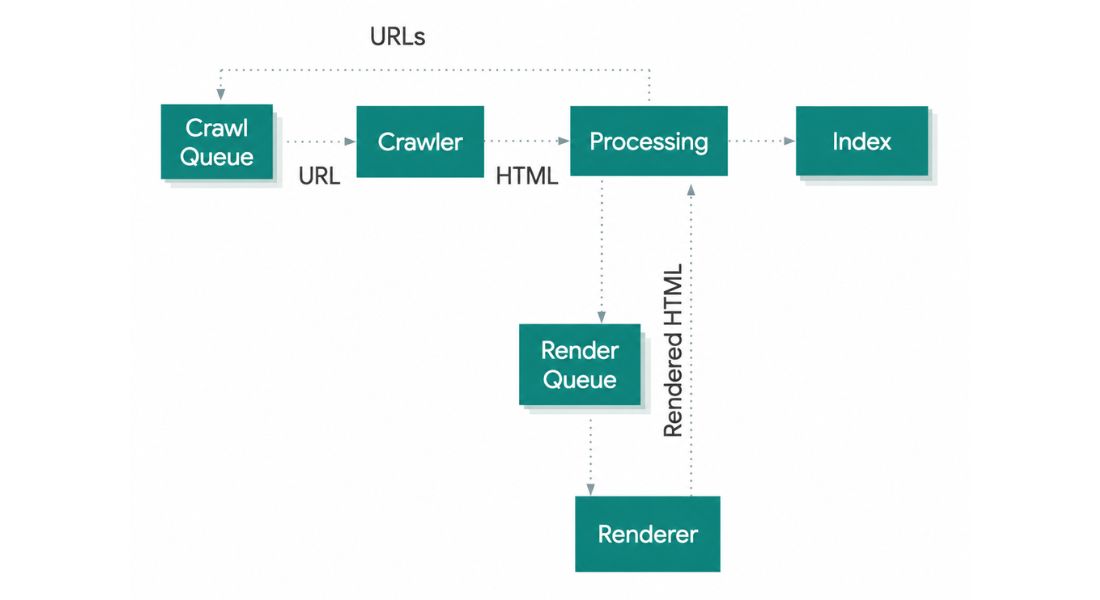
You can write the best article on the internet about a topic genuinely helpful, well-researched, beautifully structured and still watch it rank nowhere near page one. Most of the time, that happens because the page was never anchored to a specific, intentional target phrase that signals to Google exactly what the content is about.
That is the problem a well-chosen focus phrase solves. In this guide, you will learn what the term means, how it differs from a regular keyword, how to pick the right one, where to place it, and how the entire concept is evolving in the age of AI-driven search.
What Is an SEO Keyphrase?
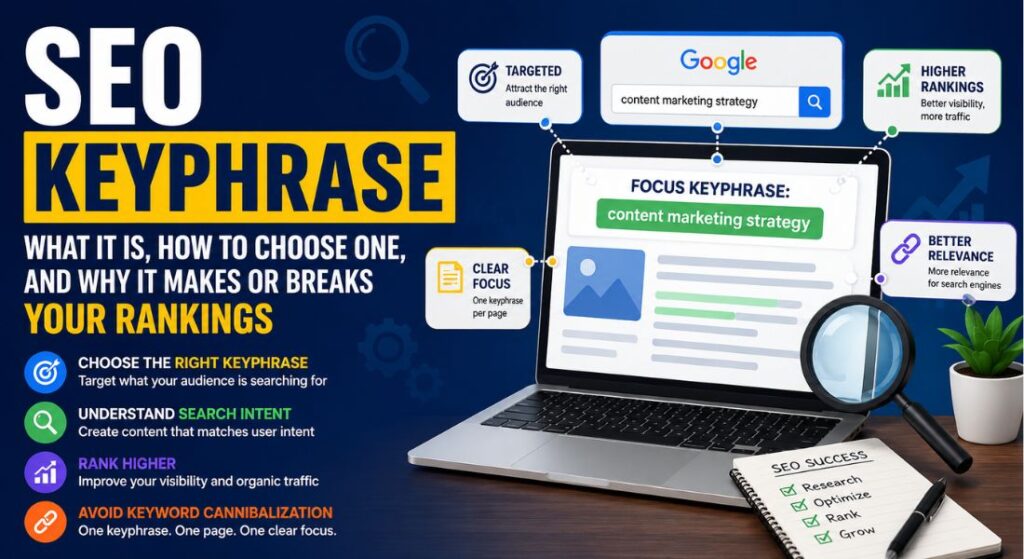
An SEO keyphrase is the primary search term a page is optimized around. It helps search engines and AI systems understand the page’s main topic and intended audience.
A focus keyphrase also called a target keyword, primary keyword, or SEO keyword phrase is the specific multi-word search term you choose to optimize a single page around.
It defines the page’s main topic and helps search engines and AI-powered search tools understand what the content is about. The goal is to create the most relevant and helpful answer for users searching that phrase or closely related variations.
The concept was popularized in the WordPress SEO space largely through Yoast SEO, which gives every post and page a dedicated “focus keyphrase” field.
When you enter a phrase there, the plugin evaluates your content checking whether the phrase appears in your title, meta description, headings, first paragraph, and image alt text and gives you a real-time optimization score.
Rank Math and All in One SEO work similarly. But the idea behind a focus phrase is not a plugin feature. It is a foundational content strategy principle that applies to any page, on any platform, in any CMS.
The Difference Between a Keyword and a Keyphrase
These terms are often used interchangeably, but there is a simple difference.
A keyword is a single word, such as “shoes,” “marketing,” or “insurance.” A keyphrase contains two or more words, such as “running shoes for flat feet” or “content marketing strategy for SaaS.” In modern SEO, keyphrases are usually more effective because they are more specific and better reflect user intent.
The reason keyphrases perform better is that they target a clearer search intent. Someone searching for “shoes” could be looking for many different things, while someone searching for “waterproof trail running shoes for wide feet” has a specific need. This makes it easier for search engines and AI-powered search tools to match the most relevant page to the query.
Why Does Your Page Need One Clear Target Phrase?
A common mistake is trying to optimize a page for several primary phrases at once or choosing a phrase that is too broad. This often creates unfocused content that struggles to rank or earn visibility in AI-generated answers.
A clear focus phrase defines the page’s main topic and gives the content a clear direction. Each heading, example, and section should help answer the intent behind that phrase. This makes it easier for both search engines and AI systems to understand what the page is about.
Targeting the same or highly similar phrases across multiple pages can also create keyword cannibalization. When multiple pages compete for the same topic, search engines may struggle to determine which one should rank. A single target phrase for a single page provides the clearest signal.
How to Choose the Right Target Phrase for a Page?
Picking a target phrase is where many content creators rely on guesswork. A better approach is to follow a repeatable process.
Start With Search Intent, Not Search Volume
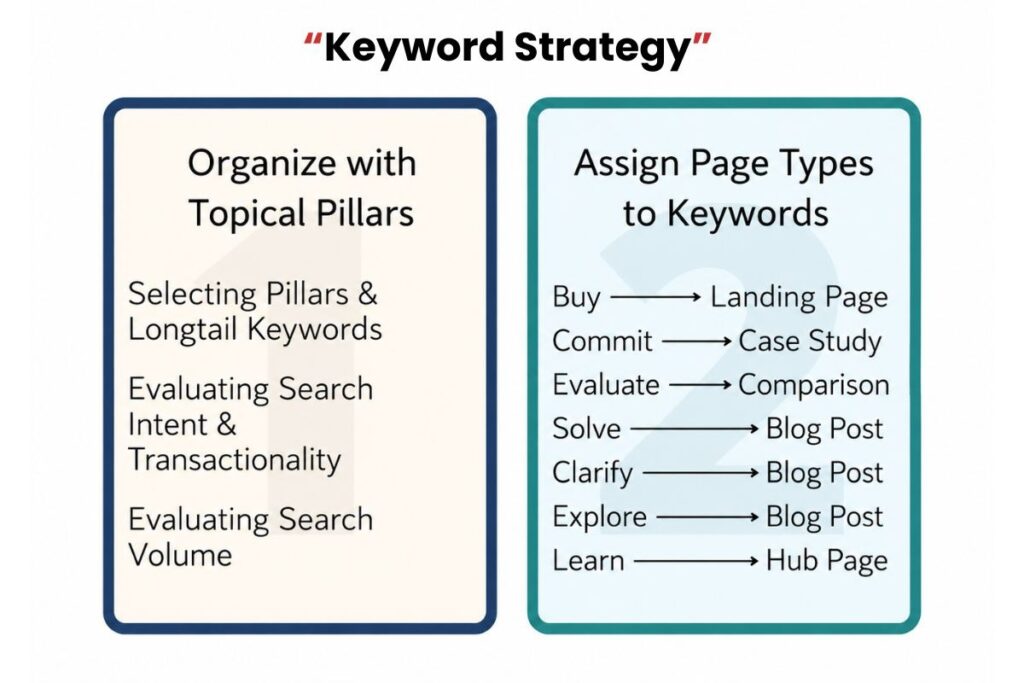
Search volume: the number of monthly searches for a phrase is useful, but it should not be your starting point. First, understand search intent: what does the searcher actually want? Are they looking to learn, compare options, make a purchase, or find a specific page?
Google prioritizes pages that match intent. An informational query like “how to reduce bounce rate” should lead to an educational article, while a transactional query like “buy keyword research tool” should lead to a product or pricing page. If your content does not match the intent behind the query, ranking becomes much more difficult.
Before choosing a phrase, search it on Google and review the top results. If blog posts, product pages, comparison articles, or videos dominate the results, that tells you the format users expect. Match your page to that format.
Balance Search Volume Against Ranking Difficulty
After identifying intent, evaluate search volume and keyword difficulty together. A phrase with 50,000 monthly searches and high competition may be unrealistic for a newer site, while a phrase with 800 searches and lower difficulty can be far easier to rank for and often drives more qualified traffic.
Long-tail phrases, usually four or more words, often have lower competition and stronger conversion intent. They are especially valuable for newer websites, niche topics, and local businesses. For example, a bakery targeting “artisan sourdough bread Manchester” is more likely to attract relevant visitors than targeting broad terms like “bread” or “sourdough bread.”
Confirm You Can Compete
Before finalizing a phrase, look at who currently ranks for it. Check their domain authority, the depth of their content, how many backlinks point to their ranking pages, and how long their content is.
If the top ten results are all major publications or established category leaders, ask yourself honestly whether your page brings something genuinely better to the table: more current information, a more specific angle, a different audience perspective, a more complete treatment of the topic. If it does, you can compete. If it does not, find a more specific variation where you can.
Where to Place Your Target Phrase for Maximum SEO Impact?
Choosing the right target phrase is only half the work. Where you place it matters just as much.
The Title Tag and H1
Your page title the HTML title tag that appears in the browser tab and in search results is the single most important placement for your target phrase. It should ideally appear near the beginning of the title, not at the end.
Google weighs the beginning of title tags more heavily, and front-loading your phrase also makes the relevance immediately clear to users scanning the search results.
Your H1 heading on the page should also contain the phrase, though it does not need to be identical to the title tag. Slight variations are fine.
The Meta Description
Your meta description does not directly affect rankings Google has confirmed this. But it absolutely affects click-through rate, which affects how much organic traffic your ranking actually generates. Including your target phrase naturally in the meta description makes it appear bolded in search results when it matches the user’s query, making your listing visually stand out. Write the meta description as a compelling reason to click, with the phrase woven in naturally, not stuffed at the start.
The First Paragraph
Getting your target phrase into the first 100 words of your content is important for two reasons. First, it signals immediately to both crawlers and readers what the page is about.
Second, Google often pulls content from the introduction area for featured snippets and AI Overview citations. A clear, well-placed phrase in the opening paragraph increases your chances of appearing in both.
Subheadings, Body Copy, and Image Alt Text
Your phrase should appear at least once in a relevant H2 or H3 subheading, naturally integrated within the section it introduces. In the body copy, use the phrase and natural semantic variations of it throughout the text without forcing repetition that disrupts the reading experience.
A phrase density of roughly 0.5% to 1.5% is a reasonable guideline, meaning a 1,200-word article might include the phrase six to fifteen times in its full form plus variations.
Image alt text is the final placement worth prioritizing to describe the image accurately and include the phrase where it genuinely fits.
Semantic Variations, LSI Terms, and Why Exact Match Is Not Enough
Modern search engines understand synonyms, related concepts, and context, not just exact keyword matches. Instead of repeating the same phrase throughout your content, use natural variations and relevant terms that support the topic.
For example, if your target phrase is “project management software for remote teams,” related terms such as team collaboration tools, task tracking, workflow management, productivity apps, and Agile project planning can naturally strengthen the content. This helps search engines better understand the topic and improves topical relevance.
Using semantic variations also prevents over-optimization. Repeating the same phrase too often can appear unnatural, while varied language improves both readability and SEO performance.
Focus Phrases in the Age of AI Search
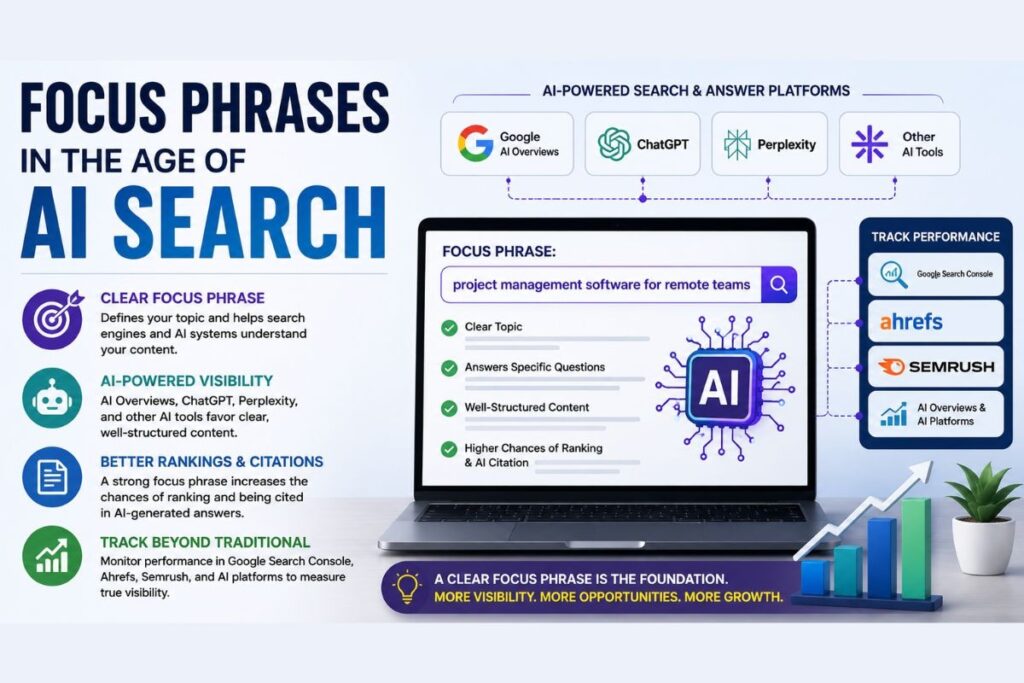
The relevance of the focus phrase concept has not weakened with the rise of AI-powered search. Google AI Overviews, ChatGPT, Perplexity, and other AI tools favor pages that clearly define their topic, answer specific questions, and use a clean structure.
A clear focus phrase helps both search engines and AI systems understand your content, increasing the chances of ranking and citation in AI-generated answers.
Tracking focus phrase performance now goes beyond traditional rankings. Alongside Google Search Console, Ahrefs, and Semrush, many SEO professionals also monitor visibility in AI Overviews and AI-powered answer platforms. The focus phrase remains the foundation, but the opportunities to gain visibility have expanded.
Conclusion
Choosing the right target phrase is not a checkbox exercise you complete before hitting publish and forgetting about it. It is a strategic decision that shapes the entire page of what you write, how you structure it, who finds it, and whether it converts. Get it right and your content finds the exact audience it was built for.
Get it wrong and even genuinely excellent content sits invisible. Take the time to research intent, check competition honestly, choose a phrase you can realistically rank for, place it where it counts, and surround it with the kind of semantic depth that tells search engines your page is the definitive resource on that topic.
That is the complete picture.
FAQs
Can I use the same focus phrase on multiple pages of my website?
No, Using the same phrase on multiple pages can cause keyword cannibalization, making it harder for Google to determine which page should rank. Use a unique focus phrase for each page.
How many words should a focus phrase ideally contain?
Three to four words is usually ideal. It is specific enough to match search intent while still having meaningful search volume.
Does the focus phrase need to appear in the URL slug?
Yes, including your target phrase in the URL slug is a recognized on-page SEO signal. Keep the URL short, use hyphens between words, and remove stop words like “a,” “the,” and “of.” For example, yoursite.com/content-marketing-strategy is better than yoursite.com/what-is-a-content-marketing-strategy-and-why-does-it-matter.
What is the difference between a focus phrase and a secondary keyword?
A focus phrase is the primary term a page targets. Secondary keywords support the topic and help the page rank for related searches.
How do I know if my chosen phrase is actually working?
Monitor rankings, impressions, and clicks in Google Search Console or SEO tools. Allow at least three to four months to evaluate performance accurately.