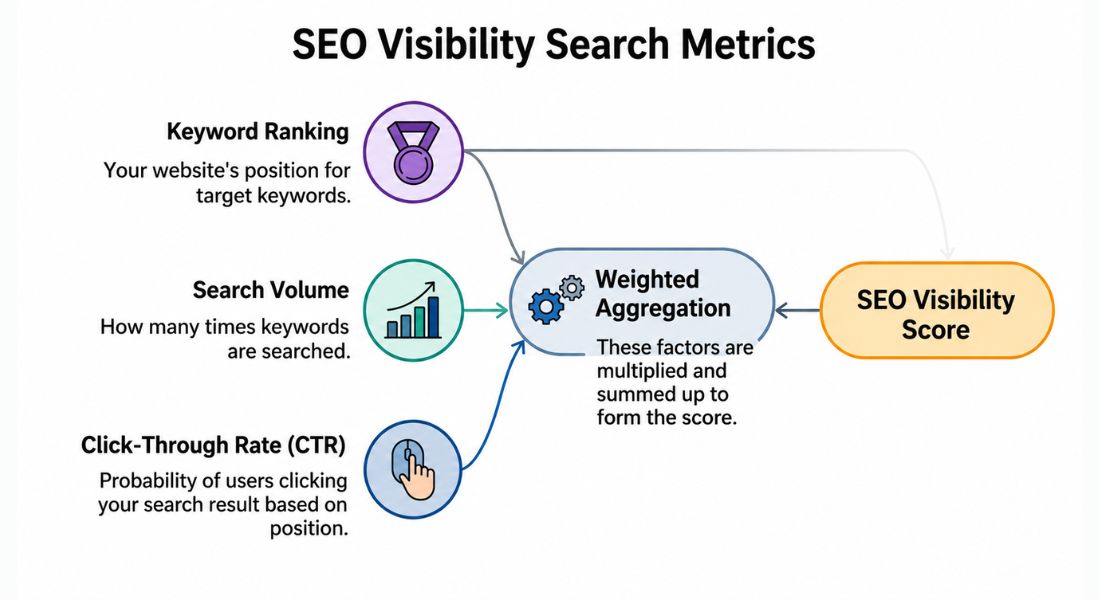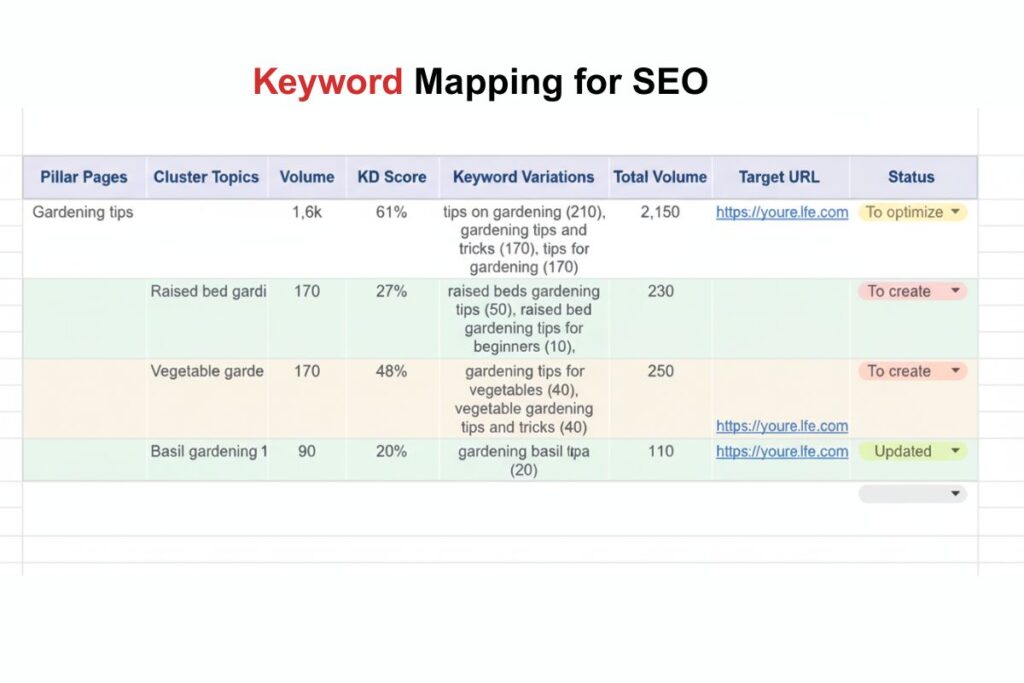
Most websites don’t fail because of bad content, they fail because of poor keyword organization. If your pages are competing with each other or not ranking at all, keyword mapping is the missing piece.
Keyword mapping is the secret ingredient to getting your website seen by the right audience. It ensures every page targets the perfect keyword, prevents pages from competing against each other and creates a structured path for search engines and users.
In this guide you’ll discover how to map keywords, strategically organize content around topics and clusters and leverage advanced tools like Ahrefs, SEMrush and AI-powered SEO solutions to dominate search results.
Reading this article will save you countless hours, prevent common SEO mistakes and help you build a website that search engines understand and users love.
What is Keyword Mapping and Why It Matters in 2026?
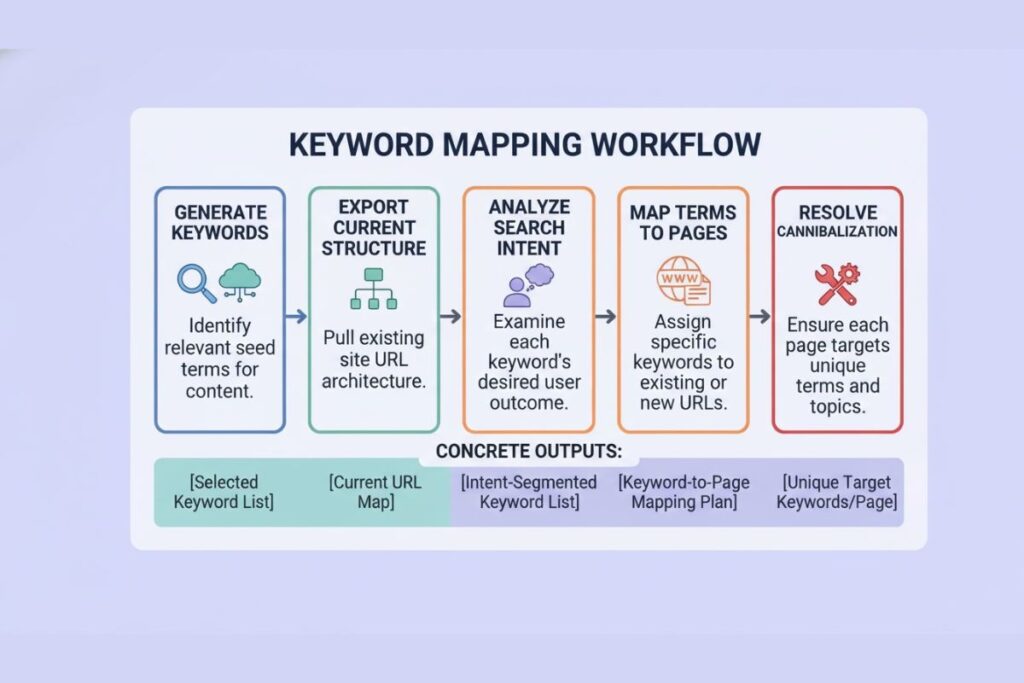
Keyword mapping is the process of assigning specific keywords to individual pages on a website to improve rankings, avoid keyword cannibalization and align content with search intent.
Keyword mapping allows you to align your content with search intent. By assigning primary secondary and long tail keywords to each page you create a structure that search engines understand.
This prevents keyword cannibalization, ensures your website answers user queries effectively and improves your overall SEO performance. It also forms the foundation for content clusters.
These clusters help search engines see your website as an authority on specific topics boosting rankings for multiple related queries. Integrating semantic terms, entity-based keywords and topic clusters ensures your site stays relevant in an evolving SEO landscape.
Steps for Keyword Mapping:
- Audit your website
- Identify target keywords
- Group keywords into clusters
- Assign keywords to pages
- Optimize content and internal links
The Core Benefits of Keyword Mapping
Effective keyword mapping enhances both user experience and search engine visibility. By strategically organizing your pages around target keywords you ensure users find the content they need quickly and search engines can index your pages accurately.
It helps identify content gaps. By mapping existing pages to their keywords you can see where opportunities exist to create new content or optimize underperforming pages.
Keyword mapping also guides internal linking. When you know which pages target specific keywords you can connect related pages logically helping both users and search engines navigate your website efficiently.
How to Perform Keyword Mapping Effectively?
To map keywords effectively, start by auditing your website. Identify high-value pages, analyze the keywords they rank for and determine which target keywords align with your business goals.
Advanced tools like Ahrefs, SEMrush, Ubersuggest and Google Search Console provide insights into search volume keyword difficulty and traffic potential. For enterprise-level websites AI-driven automation can streamline keyword assignment and tracking ensuring your content strategy scales efficiently.
Keyword mapping involves organizing keywords into clusters. Group similar topics together identify pillar pages and map supporting subpages to secondary keywords. This approach improves topical authority and helps your site rank for multiple related search queries.
Mapping Pages to Keywords
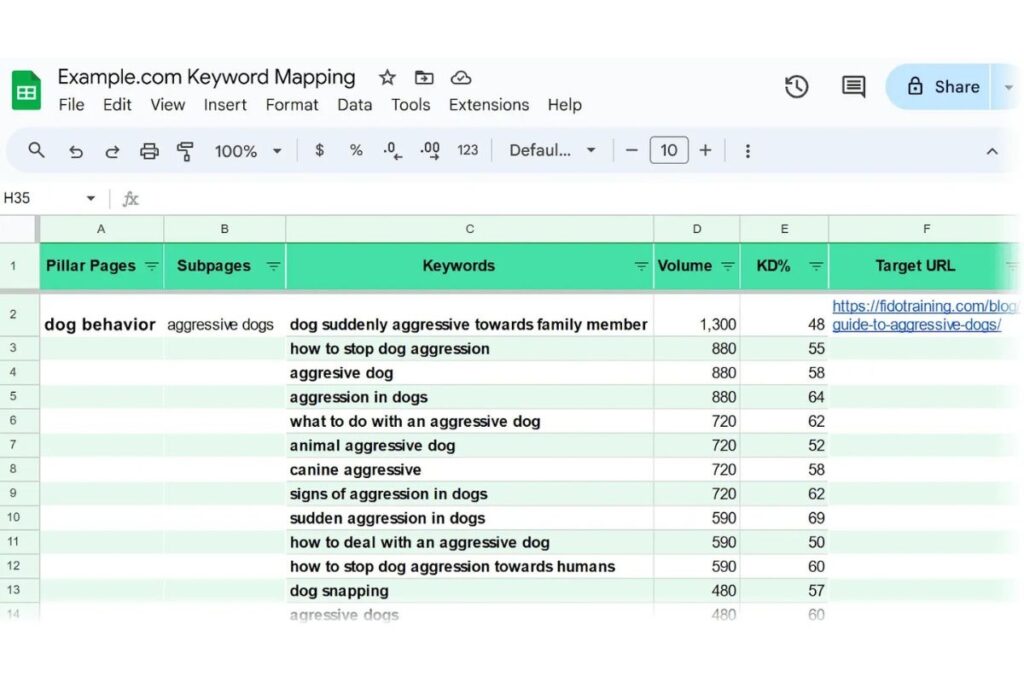
The first step is understanding your existing organic footprint. Use tools like Google Search Console to identify what keywords your pages already rank for. Export this data and organize it in a mapping template.
Assign each page a primary target keyword. Secondary and long-tail keywords should support the main term naturally within headings, body text and metadata. Pages without organic visibility should focus on target keywords aligned with your content strategy.
Regular updates are critical. As search trends evolve, revisit your keyword map to ensure pages remain optimized for current queries. AI tools can assist in predicting emerging keywords and integrating them into your clusters automatically.
Using Templates and Tools for Keyword Mapping
A structured template is essential. Google Sheets or Excel can serve as a starting point but advanced SEO platforms like Ahrefs Site Explorer, SEMrush Keyword Manager or Audience Key allow more sophisticated keyword assignments and data visualization.
Templates typically include fields for page URL primary keyword secondary keywords search volume keyword difficulty content type and action required. This allows SEO teams to prioritize pages, assign tasks and track performance over time.
Automation scripts can populate keyword data directly from analytics platforms reducing manual errors and saving hours. Manual overrides remain important to ensure strategic alignment with business goals.
How Keyword Mapping Integrates with Your Content Strategy?
Keyword mapping informs content creation optimization and internal linking. By knowing which keywords each page targets your team can create content that aligns with both search intent and business objectives.
Pillar pages serve as the foundation for clusters while supporting subpages provide in-depth coverage of related topics. This structure strengthens topical authority allowing search engines to rank multiple pages for related queries.
Content optimization based on keyword mapping ensures headings meta descriptions and anchor text align with target keywords. This approach increases CTRs and reduces bounce rates signaling value to search engines and improving rankings.
Avoiding Keyword Cannibalization
Keyword cannibalization occurs when multiple pages target the same keyword confusing search engines and diluting ranking potential. Mapping ensures each page has a unique primary keyword supported by secondary terms.
If overlapping keywords are detected, consolidate content or adjust target keywords. This not only improves rankings but also enhances user experience by providing distinct valuable content on each page.
Regular audits using Ahrefs or SEMrush help identify cannibalization issues and maintain a clean optimized site structure.
Advanced Techniques in Keyword Mapping
Modern keyword mapping goes beyond assigning keywords. Integrating entities LSI terms semantic clusters and NLP-based keywords ensures your content aligns with advanced search algorithms.
Entity based mapping involves connecting each keyword to recognized concepts in Google’s Knowledge Graph. This helps your pages appear in rich results, answer boxes and voice search queries.
Semantic and NLP-driven clustering allows you to group keywords by intent related topics and content gaps. This creates a roadmap for content development that is both user-focused and AI-friendly future-proofing your SEO strategy.
Leveraging AI and Automation

AI tools can analyze large websites, recommend optimal keywords for each page and detect emerging trends. Integration with workflow tools like n8n or AI-powered SEO platforms allows teams to automate mapping keyword assignment and performance tracking.
AI-assisted mapping can also suggest internal linking opportunities and identify content gaps faster than manual processes. Combined with templates and analytics this creates a scalable repeatable system for enterprise-level SEO.
Conclusion
Keyword mapping in 2026 is a strategic data-driven approach that organizes your website, aligns content with search intent and maximizes visibility. By assigning the right keywords to the right pages leveraging tools templates and AI you ensure every page contributes to your SEO goals.
The process strengthens topical authority, prevents cannibalization, identifies content gaps and integrates seamlessly with content strategy.
Properly implemented keyword mapping not only improves rankings but also enhances user experience making it a cornerstone of any modern SEO strategy. Start mapping today to future-proof your website, optimize content at scale and dominate search results with confidence.
FAQs
How often should I update my keyword map?
Keyword maps should be revisited at least quarterly but more frequent updates are ideal for fast-moving industries. Updating ensures alignment with changing search trends, competitor content strategies and evolving user intent. Regular adjustments prevent cannibalization and maintain high ranking positions.
Can small websites benefit from keyword mapping?
Yes, even small websites gain clarity by targeting specific keywords for each page. It improves search visibility guides content creation and prevents confusion between pages. For startups and niche sites keyword mapping ensures efficient use of limited SEO resources.
Should I map long-tail keywords separately?
Long-tail keywords are often included as secondary or supporting keywords within your map. They capture niche queries and help your pages rank for more specific searches complementing primary keywords and expanding organic reach without competing for the same terms.
How does keyword mapping help with internal linking?
By knowing which keywords each page targets you can strategically link subpages to pillar pages and related content. This improves user navigation, strengthens page authority and helps search engines understand the site hierarchy boosting rankings for related queries.
Is AI necessary for keyword mapping?
AI is not required but it greatly enhances efficiency for large websites. AI tools analyze vast amounts of keyword data, suggest clusters, detect content gaps and automate repetitive tasks enabling faster, more precise mapping and allowing SEO teams to focus on strategy and optimization.
What is Keyword Cannibalization?
Keyword cannibalization happens when multiple pages target the same keyword, causing ranking conflicts and reduced visibility.