SEO for web designers means creating websites that not only look great but also rank on search engines and drive real business results. It combines design structure content and technical optimization to improve visibility, user experience and conversions. Without SEO even the most visually appealing website can struggle to attract traffic or generate leads.
In this guide you’ll learn how to integrate SEO into your design workflow, avoid costly mistakes and build websites that rank higher, attract the right audience and convert visitors into clients.
Why Must Web Designers Understand SEO?

Your clients are investing in a website to grow their business not just to showcase a portfolio. They expect measurable results: increased traffic, better visibility and leads. A website that only looks good but performs poorly can damage your reputation and client trust. When clients don’t see results they often assume the entire project failed even if the design itself is visually perfect.
Design only websites focus on aesthetics often ignoring technical structure page hierarchy and content optimization. SEO-integrated design ensures that every design decision from layout to image selection supports search visibility.
This approach not only attracts traffic but also enhances user experience and boosts conversions. It ensures that users can find the website, navigate it easily and take action without confusion.
Many designers assume SEO is overly technical only for marketers or simply involves keyword stuffing and meta tags. In reality SEO is about aligning your site structure content and design with how Google crawls and evaluates websites.
Understanding SEO allows designers to create sites that perform well and delight clients simultaneously. It also gives designers a competitive advantage because they can offer more value than those who focus on visuals alone.
Core Principles of SEO Every Designer Should Know
Google’s algorithm evaluates websites based on relevance authority and user experience. Designers need to understand that site structure, page speed, mobile optimization and content hierarchy influence ranking.
When your design naturally supports these factors your clients’ sites perform better without extra fixes later. A well structured site makes it easier for search engines to understand content and rank it appropriately.
Effective on-page SEO includes titles, meta descriptions, headings and optimized URLs. Images must have alt text and proper compression while content should be structured for readability and search intent.
These elements ensure both Google and human visitors understand your website’s purpose. When content is clear and well organized users stay longer which signals quality to search engines.
Technical SEO focuses on site speed mobile responsiveness Core Web Vitals internal linking and schema markup. Designers play a critical role in implementing these correctly from the start.
Integrating technical SEO during the design phase avoids costly retrofits and ensures websites perform well under modern SEO standards. A fast stable and responsive website improves both rankings and user satisfaction.
Step-by-Step SEO Workflow for Designers
Understanding your client’s current rankings target audience and industry-specific keywords is the first step. This research informs page structure content blocks and navigation hierarchy. By starting with SEO designers can make informed decisions that maximize organic visibility.
Without this step designers risk creating pages that do not match user search intent. While designing, prioritize logical page architecture, intuitive navigation and scannable content. Every design choice should balance aesthetics with functionality.
Clear headings, internal links and visually appealing content blocks help users and search engines understand your website. When users can quickly find what they need they are more likely to stay and convert.
Before launch test for page speed mobile usability broken links and SEO compliance. Verify that meta tags alt text and schema markup are implemented correctly.
A thorough pre launch SEO checklist ensures the website starts strong and avoids common post launch issues. Launching without proper testing often leads to missed opportunities and poor initial performance.
Mistakes Designers Make
Creating a website focused purely on aesthetics can lead to poor search visibility, slow load times and low engagement. Retroactive SEO fixes are often expensive and may require redesigning sections. Many designers underestimate how much structural changes impact SEO which results in wasted time and budget.
Prioritizing SEO without considering design can result in sites that rank but fail to convert visitors damaging client trust and brand perception. A website must not only attract visitors but also guide them toward taking action. Poor design can push users away even if the site ranks well.
Keyword stuffing duplicate content and ignoring mobile optimization harm both user experience and search performance. Modern SEO focuses on quality relevance and user intent rather than outdated tactics. Over-optimization can make content feel unnatural and reduce credibility.
Ignoring mobile responsiveness and Core Web Vitals can hurt rankings and frustrate users. A website that performs poorly on smartphones loses traffic and credibility. Since most users browse on mobile devices designers must prioritize mobile-first experiences.
Clients often come with sites that look beautiful but receive no traffic proving that design alone isn’t enough. These failures highlight the importance of strategic integration of SEO from day one. A balanced approach prevents these issues and delivers better long-term results.
Integrating SEO and Conversion
A website must balance aesthetics with functionality. Every design decision from layout to typography should help users navigate easily while signaling relevance to search engines. When designers consider both clients benefit from higher traffic and better engagement while visitors enjoy an intuitive experience.
User experience and SEO are intertwined. Fast loading pages, clear navigation and accessible content increase dwell time, reduce bounce rates and improve rankings. Thoughtful placement of forms buttons and CTAs ensures visitors can take action immediately turning traffic into tangible results.
Strategic content blocks guide users while supporting SEO. Proper heading hierarchy keyword rich subheadings and visible CTAs not only make a page scannable but also signal relevance to search engines enhancing both visibility and conversions. When content flows logically users feel confident taking the next step.
Website Structure and Information Architecture
A clear and organized website structure helps both users and search engines navigate content. When pages follow a logical hierarchy search engines can easily crawl and index them while users can find information without confusion. Poor structure leads to higher bounce rates and lower engagement.
Designers should ensure that important pages remain easily accessible within a few clicks. A well planned navigation system, internal linking strategy and clear categorization improve usability and SEO performance. When structure aligns with user intent the entire website becomes more effective.
Mobile Optimization and User Experience
Mobile optimization is no longer optional. Most users access websites through smartphones and search engines prioritize mobile friendly designs. If your site does not perform well on smaller screens you risk losing both rankings and users.
Designers should focus on responsive layouts, touch-friendly navigation, readable fonts and optimized images. A smooth mobile experience improves engagement, increases time on site and boosts conversions. When users enjoy the experience they are more likely to return and take action.
Tools and Resources Every Designer Needs
These tools provide insights into site performance indexing status and traffic patterns. Designers can use them to identify issues, track improvements and ensure websites meet both technical SEO and user experience standards. Data driven decisions lead to better results.
Plugins simplify SEO implementation: from meta tags to schema markup designers can enhance technical SEO without heavy coding. Using the right plugins ensures sites are optimized from day one and reduces the risk of missing critical elements.
Optimized images reduce load times and improve Core Web Vitals. Using CDNs and compression tools ensures fast performance across devices enhancing both rankings and user satisfaction. Speed plays a major role in both SEO and user experience.
Pre-built SEO templates checklists and content guidelines save time while standardizing best practices. Designers can confidently implement SEO strategies without missing crucial steps. Consistency across projects improves efficiency and results.
Case Studies & Success Stories
A small business website that previously received minimal traffic underwent a design + SEO integration. Optimizing page structure headings and technical elements resulted in a 200% increase in organic traffic within six months proving that strategy pays off. The improvement came from aligning design decisions with search intent.
A client had a visually appealing site but zero conversions. After implementing SEO-aligned content blocks, internal linking and page speed improvements the website not only ranked higher on Google but also saw a significant lift in user engagement and lead generation. Better structure directly improved performance.
A local service provider integrated keyword research, alt-text optimization and intuitive navigation during design. Within three months the business reported higher search visibility and more client inquiries demonstrating the value of designer-driven SEO. Even small improvements can deliver meaningful results.
Actionable Checklist for Every Project
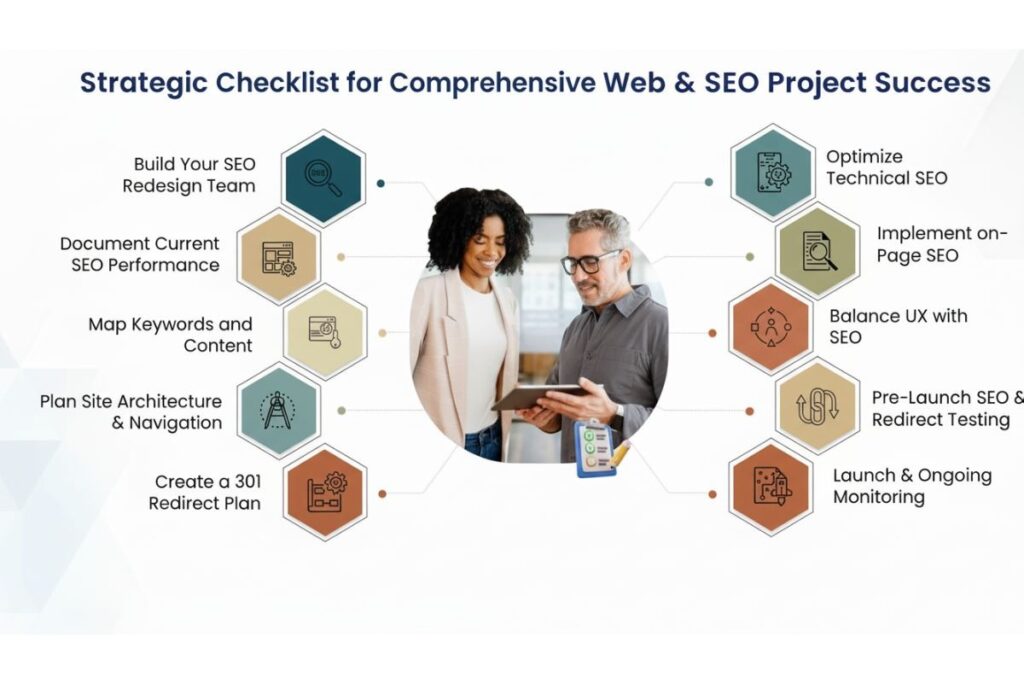
Conduct a full SEO audit including keyword research competitor analysis and performance metrics. Ensure URLs meta tags and internal links are structured properly before design starts. A strong foundation prevents issues later.
Focus on user-friendly navigation responsive layouts, fast-loading images and optimized content blocks. Incorporate SEO principles directly into the design phase to prevent post-launch fixes. Every decision should support both usability and visibility.
Monitor performance using Google Analytics, Search Console and speed testing tools. Track rankings, user behavior and conversions to continuously improve your client’s site. Ongoing optimization ensures long term success.
Conclusion
Integrating SEO with web design is no longer optional, it’s essential. Designers who embrace SEO from day one create websites that attract traffic, engage users and convert visitors into loyal clients. By adopting a strategic workflow you save clients money, avoid common pitfalls and boost ROI.
Start applying these strategies on your next project and turn every website you create into a high performing client-winning asset. When you combine design and SEO effectively you deliver real business results not just beautiful layouts.
If you want to build SEO optimized high converting websites without the guesswork our team can help you with professional SEO web design and digital marketing services tailored to your business goals.
FAQs
How much SEO knowledge do I need as a designer?
You don’t need to be an expert but understanding fundamentals like site structure meta tags and page speed ensures you create websites that rank and perform well.
Can I optimize a website after the design is complete?
Yes but retroactive SEO is often costly and time-consuming. Integrating SEO during the design process is far more effective.
Which tools are essential for designer-led SEO?
Google Search Console Analytics PageSpeed Insights and platform specific SEO plugins for WordPress Squarespace Wix or Showit are critical for ongoing monitoring and optimization.
How does SEO impact conversion rates?
SEO improves visibility while thoughtful design and UX ensure visitors engage and take action directly boosting conversions.