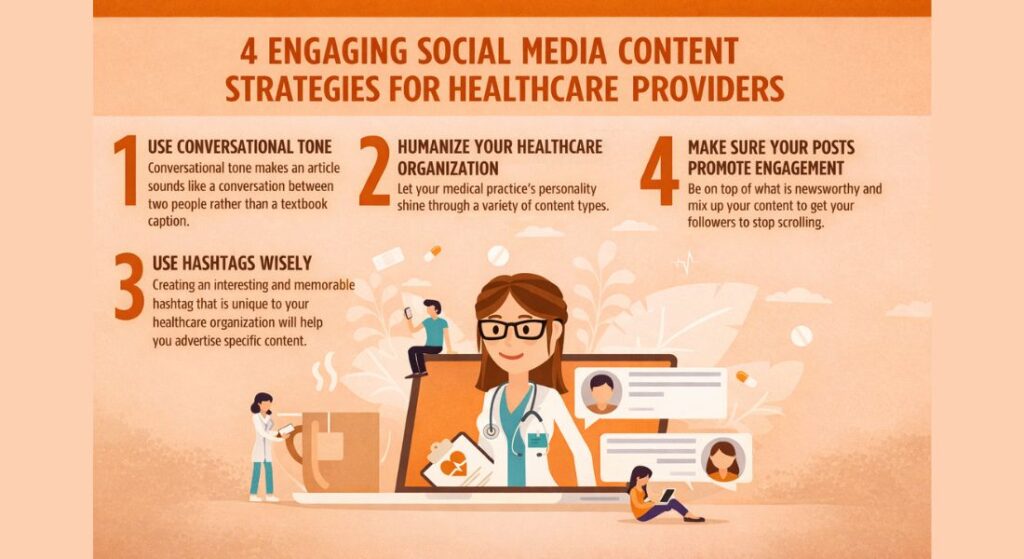
Social media has evolved from a digital billboard into the “virtual front door” of modern medical practice. Healthcare social media marketing now dictates how patients discover providers verify clinical expertise and ultimately book their first consultation.
You need a strategy that balances strict HIPAA compliance with the human centric storytelling that today’s savvy health consumers demand.
This guide provides the exact roadmap to convert scrolling “health seekers” into loyal long term patients. Read this to eliminate marketing fluff and implement a high authority digital presence that outranks your local competitors.
Strategic Foundation: Beyond Generic Posting!
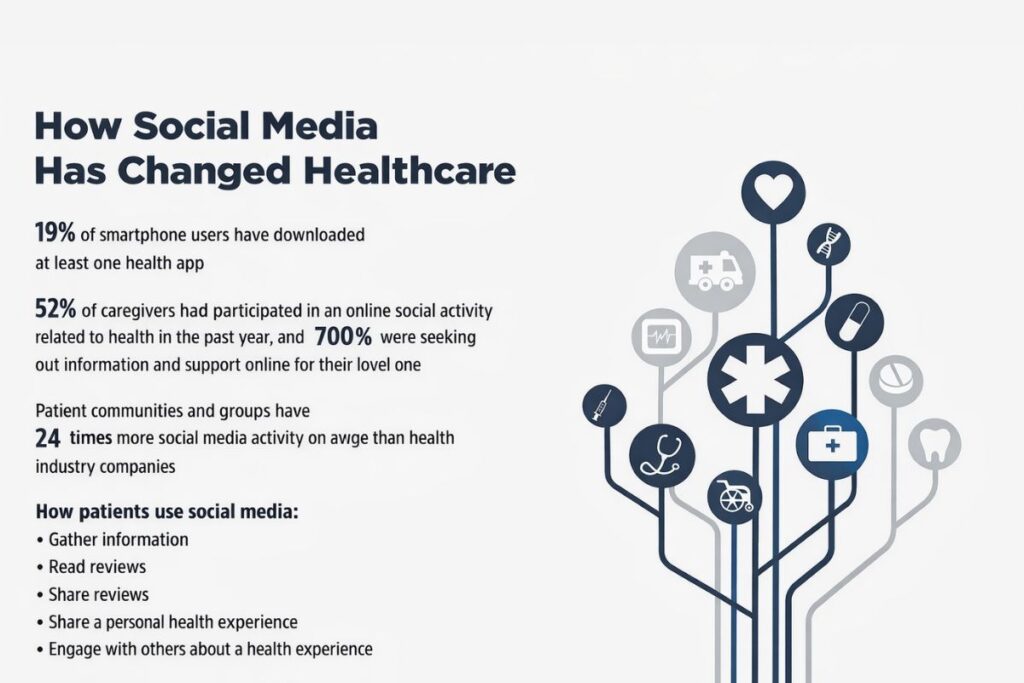
Most clinics fail because they treat social media as a megaphone rather than a bridge. To see a real return on investment (ROI) you must move beyond “Happy Monday” posts and build a multi layered funnel.
The 3 Pillar Patient Journey
You must align your content with the three specific stages of the patient decision-making process:
- Awareness (Educational): Use short form videos to answer “What is…” or “Why do I feel…” questions. You are solving a problem before the patient even steps into your office.
- Consideration (Authority): Share “Behind-the-scenes” glimpses of your facility and explain your unique treatment philosophies. Patients choose people not logos.
- Decision (Action): Provide clear Call to Action (CTA) posts such as “Click the link in our bio for a virtual consult” or “Direct Message us to check insurance eligibility.”
Platform Selection: Go Where Your Patients Live!
Stop trying to be everywhere. You must choose platforms based on the demographics of your specific specialty:
- Facebook: Best for community based practices (Pediatrics Family Medicine) and local event promotion.
- Instagram & TikTok: Vital for visual heavy specialties (Dermatology Plastic Surgery Orthodontics) where “Before & After” transformations and “Day in the life” videos build rapid trust.
- LinkedIn: The gold standard for B2B referrals, medical recruiting and establishing thought leadership.
Five Ways Healthcare Providers Are Using Social Media
Digital platforms offer a variety of opportunities for providers to connect with their communities. Discover five key ways healthcare professionals are leveraging social media to improve patient care and public health:
- Sharing Health Information:
Disseminate valuable health related information including updates on seasonal illnesses (like the flu) preventative care strategies medical breakthroughs and practice updates such as introducing new doctors.
- Enhancing Patient Engagement and Feedback:
Engage directly with the community by monitoring discussions to gain insights into patient concerns and satisfaction. Use polls and surveys to gather feedback and identify trends to enhance the patient experience.
- Training and Professional Development:
Utilize platforms like LinkedIn and specialized forums to share best practices case studies and participate in virtual conferences to foster collaboration among healthcare teams.
- Crisis Communication and Public Health Awareness:
Play a crucial role during public health emergencies by providing real time updates on disease outbreaks emergency protocols and sharing safety guidelines from organizations like the CDC.
- Live Updates from Medical Procedures:
Share live (and ethically compliant) updates from operating rooms to educate trainees and showcase innovative surgical techniques enhancing transparency in healthcare practices.
Platform Comparison: Finding the Right Fit for Your Medical Specialty!
Not every platform serves the same clinical goal. Use this matrix to align your specialty with the audience behavior of each network.
Specialized Content Recommendations
- For Surgeons: Prioritize YouTube and Instagram. Patients facing surgery crave “Visual Assurance.” Show the technology of the recovery room and (with consent) the surgical precision.
- For Primary Care: Prioritize Facebook and TikTok. Focus on “Family Health” and “Preventative Care.” Your goal is to be a friendly, accessible neighborhood expert.
- For Specialized Clinics: Prioritize LinkedIn. Build a referral network by sharing your latest successful case studies and advanced treatment methodologies with other healthcare professionals.
Content That Converts: From Medical Jargon to Human Stories!
High-performing healthcare social media marketing in 2026 is no longer about “viral trends”; it is about Topical Authority.
The “Plain Language” Rule
You must translate complex medical jargon into “Patient Speak” to improve Health Literacy.
- Bad: “We offer advanced laparoscopic cholecystectomy with minimal incision.”
- Good: “Gallbladder surgery that gets you home the same day with barely there scars.”
Short Form Video: The Trust Accelerator
In 2026 the “Doctor led Reel” is the #1 patient acquisition tool.
- The Explainer Series: Record 30 second clips answering the top 5 questions patients ask in the exam room.
- Myth Busting: Use the “Green Screen” effect to react to popular (but wrong) medical advice. This positions you as the “Voice of Reason.”
The Ironclad Rule: HIPAA & Legal Guardrails!
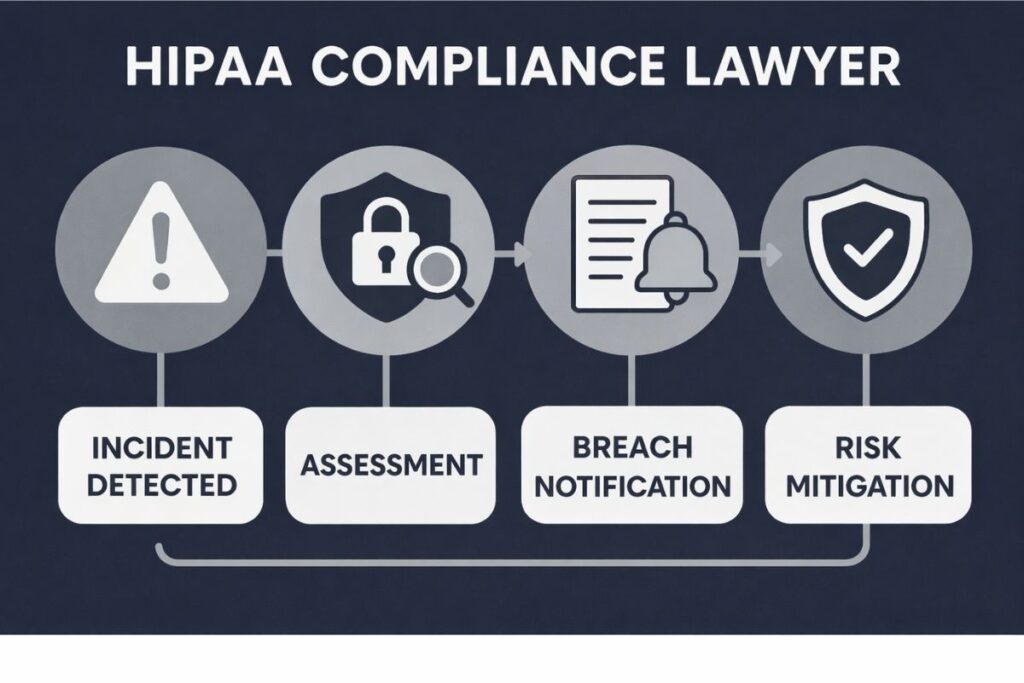
A single “thoughtless” post can lead to a Tier 4 HIPAA Violation costing up to $2.1 Million per year.
- The “Accidental Background” Leak: Never take photos where a patient’s name chart or face is visible in the background.
- The Acknowledge Without Consent Trap: If a patient praises you publicly do not confirm they are a patient in your reply without a signed release. Use generic responses: “We appreciate the kind words and are committed to excellent patient care!”
- Real World Case (2025): A dental practice was fined $182000 for disclosing a patient’s treatment history while replying to a negative Yelp review.
Advanced Engagement: The “Social Clinic” Model
2026 marketing requires Answer Engine Optimization (AEO). Patients now ask AI assistants like Gemini and ChatGPT for medical recommendations.
- AEO Strategy: Structure your captions in a Q&A format. For example: “How long is the recovery for ACL surgery?” This helps AI models cite you as a “Source of Truth.”
- Telehealth Synergy: Use Instagram “Link” stickers to drive traffic directly to your HIPAA compliant booking portal.
- Micro Moments: Target the exact second a patient feels a symptom. If they search for “sudden knee pain” your educational video should be the first thing they see.
Employee Advocacy: Your Staff as Brand Ambassadors!
Your nurses technicians and front desk staff are your most credible assets. In 2026 patients trust “people like them” more than corporate logos.
- Humanize the Clinic: Feature “Staff Spotlights” to show the friendly faces behind the masks.
- Recruitment Advantage: Use social media to showcase your workplace culture. This attracts top tier medical talent in a competitive market.
- Training: Ensure every staff member understands your social media policy to prevent accidental PHI leaks.
Crisis Management & Public Health Responsibility
In a health crisis or a wave of misinformation your social media serves as a Broadcast Network.
- Combatting Misinformation: When a false medical trend goes viral use your authority to provide factual evidence based corrections.
- Real Time Updates: During local emergencies (e.g. a flu outbreak) use social media to provide immediate guidance on symptoms and clinic availability.
- Service Recovery: Handle negative feedback publicly but professionally. Redirect specific complaints to a private secure channel immediately.
Strategic Influencer Collaboration
You don’t need a celebrity; you need a Patient Advocate.
- Micro Influencers: Partner with local fitness instructors or wellness advocates who share your patient demographic.
- Ethical Standards: Ensure all partners disclose the relationship (e.g. #Ad) and adhere to medical accuracy.
- UGC (User Generated Content): With explicit written consent, share patient filmed “Success Stories.” These are 10x more influential than any ad you could buy.
Measuring What Matters: Tracking Clinical Impact!
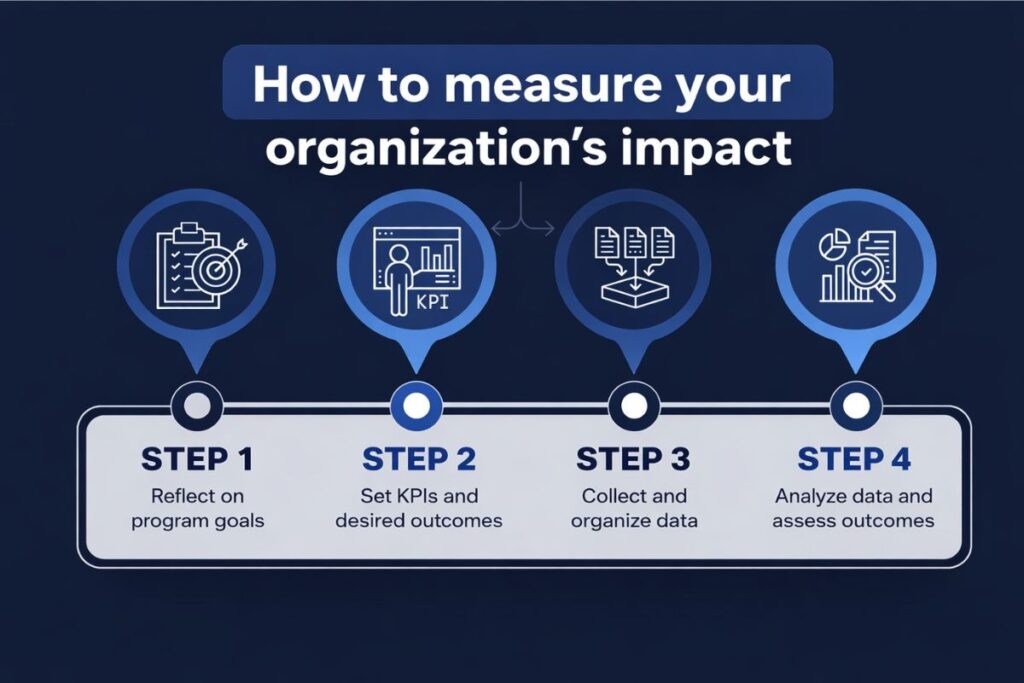
“Likes” do not pay for clinic overhead. You must focus on Patient Acquisition Metrics.
- Conversion Tracking: Monitor how many users clicked the “Book Appointment” link from your bio.
- UTM Tagging: Use tracked links to see if a new patient came from a specific TikTok video or a Facebook ad.
- Sentiment Score: Use AI tools to monitor if the online conversation about your practice is moving from “Neutral” to “Positive.”
Conclusion:
Healthcare social media marketing is no longer optional; it is a clinical requirement for growth. In 2026 the providers who win are those who prioritize Health Literacy Privacy and AI Ready Content.
Show up consistently, lead with empathy and provide genuine value. Trust is the ultimate currency in healthcare and social media is the best place to earn it.
FAQs
How can healthcare social media marketing improve patient retention?
By maintaining consistent engagement, sharing helpful updates, and providing educational content, practices build trust. Engaged patients are more likely to return and refer others.
What role does analytics play in healthcare social media strategy?
Analytics reveal which posts drive engagement, bookings and awareness. Tracking performance helps optimize content and allocate resources efficiently.
Can social media reduce no shows for appointments?
Yes, reminders, educational posts and timely updates can lower no show rates. Patients stay informed and feel accountable when clinics actively communicate online.
How can small clinics compete with larger hospitals on social media?
Small clinics can focus on personalized content, local storytelling and niche specialties. Authenticity and community engagement often outperform bigger budgets.
Should healthcare providers respond to every online comment?
Providers should respond selectively, prioritizing patient inquiries and public concerns. General praise can be acknowledged generically, maintaining HIPAA compliance.