If you’re searching for CTR bot SearchSEO you already understand what click through rate (CTR) is. You didn’t come here for definitions, you came because your rankings feel stuck. Maybe your site isn’t climbing fast enough, maybe competitors are overtaking you without building massive backlinks.
The real question on your mind: Can manipulating CTR actually boost rankings? And does SearchSEO really work? Let’s unpack this carefully.
Why CTR Matters in Modern SEO?
Search engines don’t just rank pages by keywords. They actively monitor how users interact with search results to understand relevance. Each keyword has an expected CTR curve based on historical data which estimates the typical clicks for every position.
If your page ranks at position seven but performs like a position three result the system registers a signal that your content might deserve higher placement. Behavioral metrics such as CTR dwell time pogo sticking scroll depth and repeat visits combine to influence these signals.
Tools like SearchSEO CTR bot attempt to replicate these behaviors but real ranking improvements come from consistent high quality engagement not just artificial clicks.
How SearchSEO Claims to Work?
SearchSEO positions itself as a CTR bot that uses residential IPs in over 150 countries to simulate natural traffic. It searches your keywords, scrolls through results, clicks your listing, stays on your page, navigates internal pages and even adjusts bounce rates and session duration.
Interaction data appears as engagement giving the impression of genuine user behavior. While this visibility looks convincing, search engines evaluate many more factors: behavioral patterns, session authenticity and historical baseline comparisons so simulated clicks alone rarely guarantee ranking improvements.
How Search Engines Really Evaluate CTR?
Modern search engines analyze multiple layers of user behavior beyond simple clicks. They examine device fingerprints, browser entropy, scroll velocity interaction randomness, return to SERP timing and query repetition patterns to determine authenticity.
Residential IPs help but behavioral fingerprints dominate. The unified ecosystem of browsers operating systems and search services allows detection of even subtle artificial engagement.
This means CTR manipulation is far more complex than most promotional guides suggest and only authentic user behavior drives reliable ranking changes.
Why Some See Short Term Gains
Temporary ranking boosts are possible when CTR bots slightly improve signals for already strong content. Search engines often run soft promotion tests temporarily bumping rankings to observe real user engagement.
If actual users respond positively staying longer scrolling and navigating multiple pages the ranking can stabilize. If not, pages revert to prior positions. Artificial CTR patterns rarely survive deep behavioral modeling so gains from bots tend to be short lived and unpredictable.
Residential IPs vs Behavioral Fingerprints
SearchSEO emphasizes residential IP diversity to avoid detection but behavioral fingerprints dominate. Systems track patterns like screen resolution rendering behavior time zone consistency plugin combinations mouse movement rhythms and session paths.
If multiple visits behave too similarly the signals are ignored rather than penalized. Understanding this distinction helps SEOs realize that IP manipulation alone cannot reliably influence rankings, a nuance that many guides fail to mention.
Common Misconceptions About CTR Bots
Many SEOs believe that artificially inflating CTR will guarantee top rankings. In reality search engines prioritize authentic user engagement and content relevance over manipulated clicks.
Misunderstanding this can lead to wasted effort and short lived gains. Knowing the limits of CTR manipulation helps set realistic expectations and avoid unnecessary risks.
The Hidden Risks of CTR Manipulation
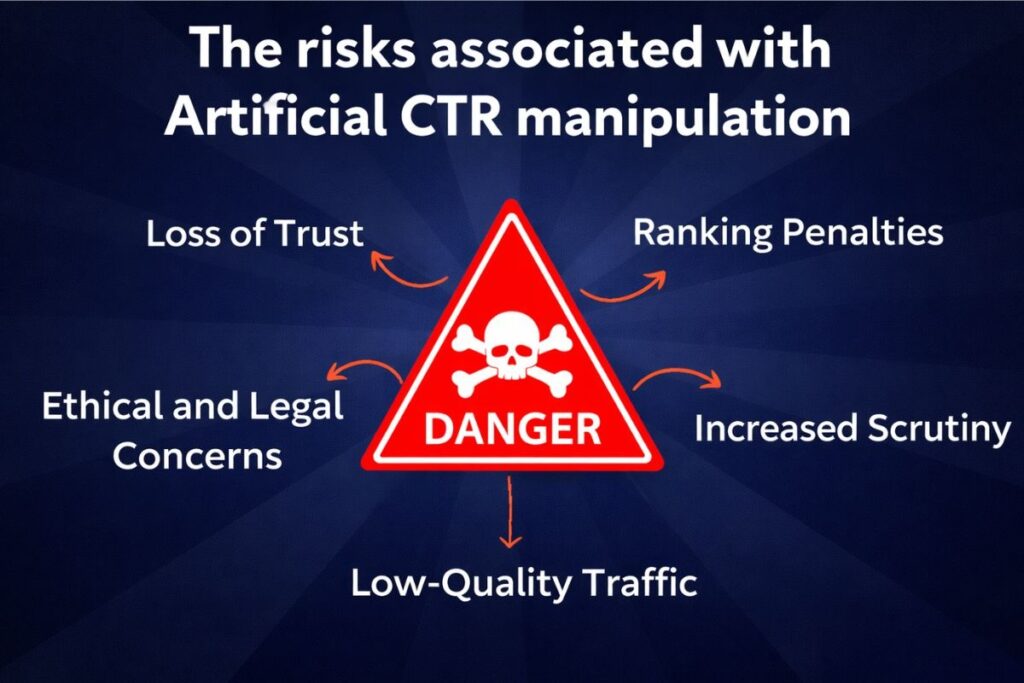
Using CTR bots can subtly erode a website’s trust in search algorithms. Algorithmic trust dampening slows ranking gains, makes breakthroughs for new pages more difficult, increases ranking volatility and heightens reliance on backlinks for progress.
Unlike penalties this effect is invisible you won’t receive notifications. Over time aggressive CTR manipulation can make growth feel stuck forcing SEOs to invest more in other strategies just to maintain positions.
Traffic Bots vs Manual Microtasks
Some marketers attempt small scale manual simulations of searches. While this reduces automation footprints it introduces challenges like geographic clustering, repetitive device patterns, inconsistent dwell times and higher effort.
Manual microtasks may mimic authenticity better than bots but they remain resource intensive and unsustainable at scale. Both approaches cannot replace strong content effective on page SEO and legitimate engagement from real users.
Analytics Pollution: The Overlooked Cost!
Artificial traffic not only risks trust but also pollutes analytics. Bots visiting random pages distort conversion rates, skew audience targeting, weaken retargeting campaigns and make A/B testing unreliable.
Misinterpreting this noisy data can lead to misguided decisions, wasted resources and ineffective optimizations. SEOs who rely heavily on synthetic traffic may think pages underperform when the problem is actually false engagement metrics.
The Role of SERP Features in CTR
Search engine results pages (SERPs) now include rich features like featured snippets, People Also Ask carousels and video results. These features influence CTR naturally by attracting clicks without requiring artificial boosts. Optimizing for these features through structured data and content formatting can improve CTR more reliably than bots.
When CTR Manipulation Makes Strategic Sense?
CTR experiments only make sense in highly controlled situations. Your content should be strong ranking between positions five and ten with clean backlinks fully optimized on-page SEO and a compelling snippet. Even then growth patterns must appear natural gradual increases mixed devices, varied session lengths and realistic user timing. CTR bots should act as a minor amplifier never as the foundation of your ranking strategy.
How User Experience Impacts CTR
Beyond titles and meta descriptions overall user experience affects click-through behavior. Factors like page load speed, mobile responsiveness, intuitive navigation and content readability encourage visitors to stay longer and return. Improving UX naturally increases CTR while reducing bounce rates giving real behavioral signals that search engines value.
Real Ways to Improve CTR
Rather than faking engagement focus on genuine CTR improvement:
- Write titles between 15–40 characters preferably question-based.
- Craft meta descriptions that clearly communicate benefits and value.
- Use structured FAQ sections with schema markup for enhanced visibility.
- Keep URLs keyword rich but readable and natural.
- Optimize snippets with visual bullet points and structured content.
In many industries, one averages around 31% CTR demonstrating that strong presentation often beats artificial manipulation. Real users clicking and engaging with your content sustainably drive rankings over the long term.
Integrating CTR Strategies with Content Planning
CTR improvements work best when combined with strong content planning. Analyze search intent target high traffic questions and create content clusters around related topics. When combined with well optimized snippets and structured markup these strategies naturally enhance CTR without artificial manipulation leading to sustainable ranking growth.
SearchSEO Pricing and Feature Reality
SearchSEO provides plans ranging from 25 clicks/day to 1000 searches/day with adjustable session duration pages per visit bounce rates, geo-targeting scrolling and unique device claims. While the features appear sophisticated no tool can fully replicate unpredictable human browsing psychology at scale. Understanding this helps set realistic expectations and highlights why synthetic CTR should never replace organic SEO efforts.
Is CTR Bot SearchSEO Worth It?
Expecting a magic ranking button? No. Using it as a controlled experiment on top of strong SEO fundamentals? Maybe. The trade off is algorithmic trust stability versus temporary speed. Experienced SEOs prioritize low risk leverage points like topical authority clusters, internal linking depth backlink velocity content gap domination and query intent matching. CTR bots can amplify strength but cannot replace it. Sustainable ranking growth comes from real user engagement and strong foundational SEO.
Long Term Effects on Domain Authority
Frequent reliance on CTR bots does not improve your site’s domain authority. Sustainable ranking growth requires building topical relevance quality backlinks and content depth. Over time sites that focus on authentic engagement gain stronger long term authority whereas short term CTR manipulation provides only temporary visibility.
Conclusion
CTR bots exist because ranking pressure exists. The temptation is understandable but search engines model human behavior at scale. Artificial clicks might temporarily improve rankings but long term growth depends on snippet quality content depth and domain authority. Make your page the obvious choice for users, not a forced click.
FAQs
How do CTR bots affect user analytics?
CTR bots distort analytics reducing conversion rate accuracy misaligning audience targeting and corrupting A/B tests. Relying on bot traffic can lead to misinformed decisions and wasted marketing efforts.
Can CTR manipulation impact new pages differently?
Yes. New pages are more sensitive to algorithmic trust. Aggressive CTR manipulation can prevent them from gaining initial traction making natural growth slower and more difficult to achieve.
Should I combine CTR bots with link building?
Combining CTR bots with link building is risky. Links provide authority but artificial CTR cannot fully complement it. Focus on authentic engagement first; then CTR experiments can act as minor amplifiers.
What metrics matter most when testing CTR bots?
Monitor dwell time scroll depth repeat visits and bounce rates. Search engines evaluate these behaviors alongside CTR and artificial patterns that lack these signals rarely influence rankings meaningfully.
Are there safer alternatives to CTR bots?
Yes. Improving snippet quality, implementing structured FAQs, optimizing meta descriptions and enhancing user experience offer long-term CTR growth without risking algorithmic trust or analytics pollution.