Most people think chatbot conversations disappear after the chat ends.
They don’t.
Every interaction you have with tools like ChatGPT, Google Gemini or Microsoft Copilot leaves behind something valuable. A record. A pattern. A signal.
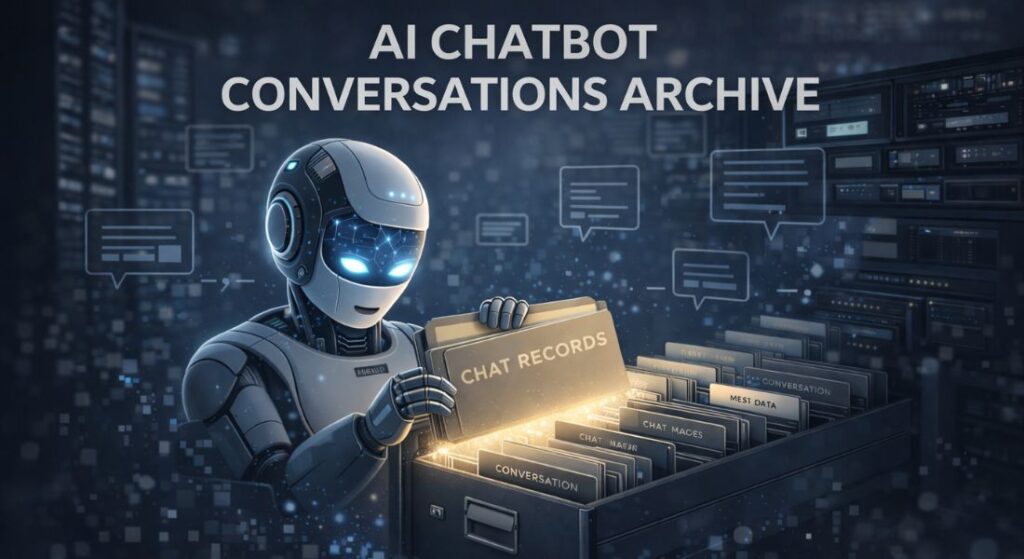
That’s where an AI chatbot conversations archive comes in.
It quietly organizes and turns everyday chats into something much bigger than intelligence. What most users don’t realize is that these archives are not just passive storage systems.
They actively shape how AI improves over time, how businesses understand users and how future responses become more accurate and context aware.
What Is an AI Chatbot Conversations Archive?
Think of it like this. If a chatbot is a conversation partner the archive is its memory bank.
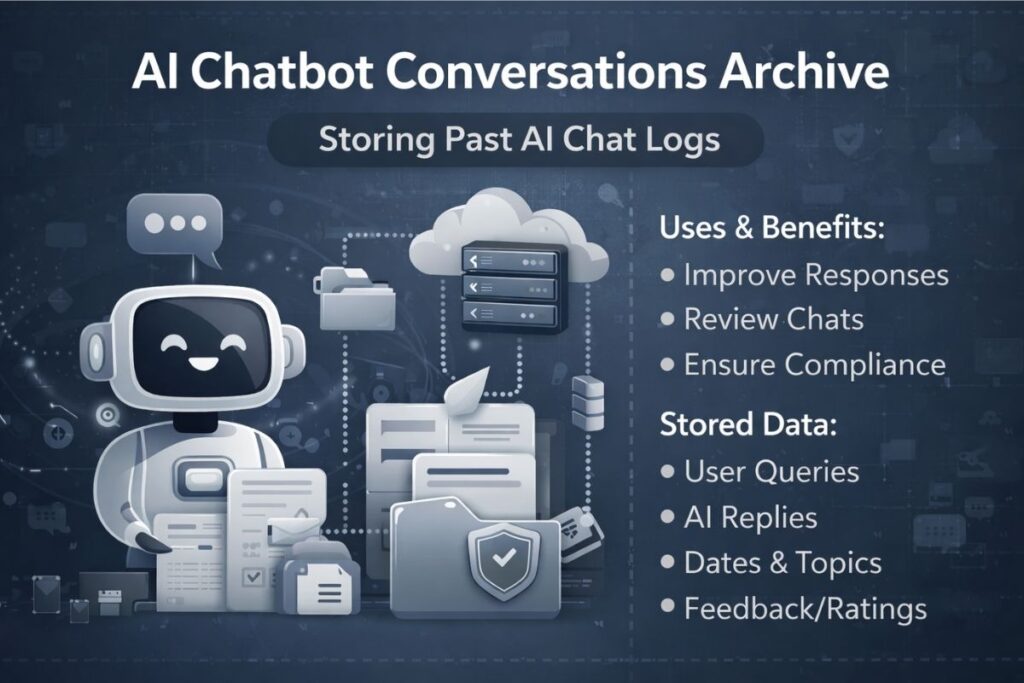
An AI chatbot conversations archive is a structured system that saves user questions, chatbot responses, timestamps , context intent and in many cases even sentiment and outcomes. It does not simply store text. It organizes conversations in a way that makes them searchable and reusable.
Without this system every chat remains temporary and disappears after use. With it every conversation becomes a long term asset that you can revisit, analyze and build upon.
For beginners this feels like a simple chat history with purpose. For advanced users it becomes a powerful data layer that supports learning automation and continuous improvement.
Why These Archives Matter More Than People Realize?
Most people see chatbots as tools that provide instant answers but they overlook the deeper value. Chatbots constantly generate data through real user interactions. Every conversation reveals what people want, how they ask questions, where they struggle and what kind of answers they expect.
When these conversations are not stored all that insight disappears. An archive changes that completely. It turns everyday chats into learning material for AI systems, customer insight for businesses and reusable knowledge for individuals.
At a deeper level these archives allow organizations to make decisions based on actual behavior instead of assumptions. Instead of guessing what users need they can clearly see patterns, trends and gaps.
What Actually Gets Stored Inside an Archive?
A modern AI chatbot conversations archive goes far beyond a simple record of messages. It captures the full conversation between the user and the AI allowing complete replay of interactions when needed. This helps identify exactly where the conversation succeeded or failed.
It also stores context and intent meaning the system tries to understand what the user meant, not just what they typed. Alongside this metadata is recorded including model version response time token usage and session level identifiers. This technical layer is essential for debugging and improving system performance.
In more advanced setups the archive also tracks AI actions. If the chatbot uses external tools or APIs those interactions are recorded with both input and output details.
On top of that privacy layers are applied to protect sensitive information often guided by regulations like GDPR and HIPAA. As a result the archive becomes a complete replay and analysis system rather than just a storage solution.
Real World Use Cases (Where Archives Become Powerful)
When you look at real world applications the value of chatbot archives becomes very clear.
For AI training archived conversations help teams identify where the chatbot fails, misunderstands queries or gives incomplete answers. These gaps are then used to improve the model leading to more accurate and reliable responses over time.
From a business perspective chat archives act as a powerful source of customer insight. They reveal the exact language users use which helps improve website content product descriptions and SEO strategies. This is especially important for capturing long-tail and conversational keywords.
In customer support archives allow teams to identify frequently asked questions, reduce repetitive issues and improve help resources. Instead of guessing user problems they can directly see them.
For individuals, chat archives work like a second brain. They allow you to revisit past ideas, reuse prompts, recover solutions and build your own knowledge system over time. This is particularly useful for freelancers, students and marketers who rely on AI regularly.
In regulated industries archives also support compliance and accountability. They provide a clear record of what the AI said, why it said it and how decisions were made which is essential for audits and trust.
How AI Chatbot Archives Actually Work (Behind the Scenes)?
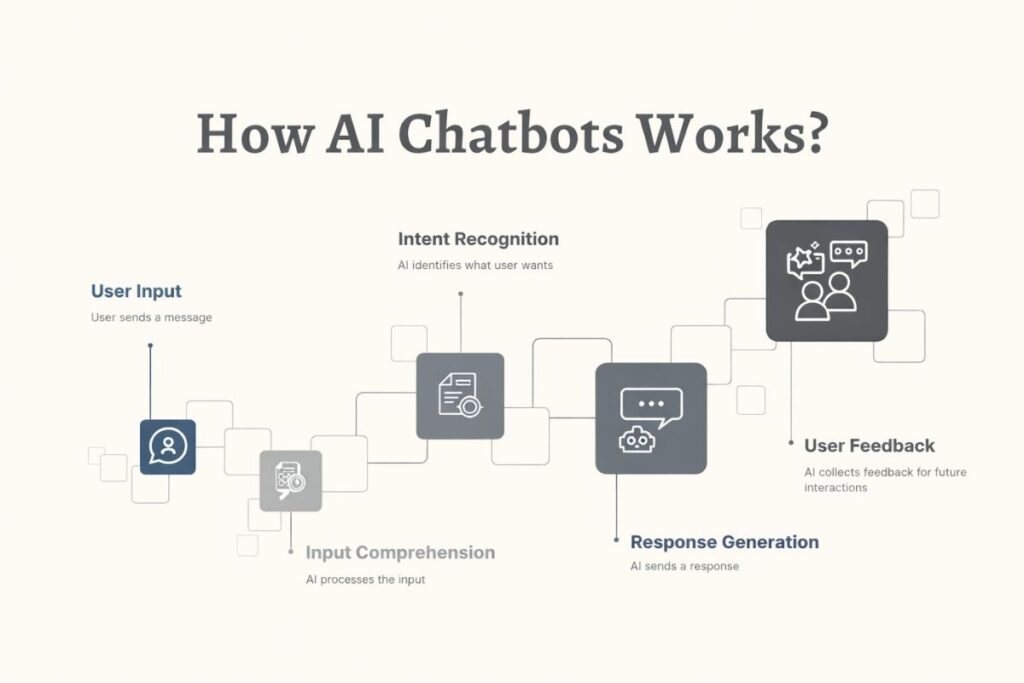
Behind the scenes these systems operate in a structured and intelligent way. Every conversation is first captured as structured data where each message is stored with clear attributes and relationships.
Next the system converts conversations into embeddings using techniques from Natural Language Processing. This process transforms text into numerical representations that capture meaning, intent and context.
These embeddings are then stored in advanced databases including vector databases and cloud based systems. This allows the system to handle large amounts of data efficiently while maintaining fast access.
Finally semantic search enables users and systems to retrieve conversations based on meaning rather than exact words. This is what makes modern archives intelligent, allowing deeper analysis pattern recognition and insight generation.
Archive vs Delete vs History (Important Difference)
Many users misunderstand the difference between archive delete and chat history.
In platforms like ChatGPT chat history refers to visible conversations that you can access directly. Archiving a chat removes it from the main view but keeps it stored in your account. Deleting a chat on the other hand removes it permanently often after a retention period.
The key point is that archiving does not remove data. It simply helps you organize your interface. Deleting removes both the conversation and any associated data making it unrecoverable in most cases.
Privacy Data Retention and Control
Privacy is one of the most important aspects of chatbot archives. Most modern platforms provide options to control how your data is used. Users can often disable training usage, apply retention settings and manage stored conversations.
Advanced systems also use anonymization techniques to remove sensitive information while keeping the data useful for analysis. Organizations must carefully balance data utility with user privacy and regulatory requirements.
The way a system handles privacy directly impacts user trust and long-term adoption.
Common Mistakes People Make
Many users underestimate the importance of managing their chat data properly. They often fail to save important conversations, rely on memory instead of documentation or keep their chats disorganized. Some ignore archive features completely while others accidentally delete valuable conversations.
Even advanced users sometimes miss opportunities by not analyzing conversation patterns or extracting insights. Over time these small mistakes lead to lost knowledge and missed improvements.
The Future: From Chat Logs to AI Memory Systems
AI chatbot conversation archives are evolving rapidly. They are no longer just storage systems. They are becoming long term memory layers for AI.
In the future AI systems will remember past interactions, connect conversations across sessions and deliver highly personalized responses. Instead of starting from zero each time AI will build on previous knowledge and experiences.
This shift will transform chatbots into intelligent assistants capable of long term reasoning and contextual understanding.
How to Start Using Chat Archives Effectively

You do not need complex tools to start using chat archives effectively. Begin by reviewing your past conversations regularly and saving important ones in a single organized place. Categorizing chats reusing successful prompts and identifying repeated patterns can significantly improve your workflow.
For more advanced use you can analyze conversations, tag them based on intent and build structured datasets. The key is consistency. Even small efforts over time create meaningful results.
Conclusion
An AI chatbot conversations archive is not just a technical feature. It is a hidden layer of intelligence behind modern AI systems. For businesses it enables better decisions. For developers it improves AI performance. For users it becomes a personal knowledge system.
The real opportunity lies in not letting valuable conversations disappear. The more intentionally you use and manage these archives the more value you unlock from every interaction.
FAQs
How can businesses use AI chatbot conversation archives to increase revenue?
Businesses analyze archived conversations to understand customer intent and buying behavior. This helps improve sales funnel messaging and personalized offers.
Better insights directly lead to higher conversions and revenue growth.
Can AI chatbot archives help in identifying user pain points?
Yes archives reveal repeated questions, complaints and confusion areas. This allows businesses to fix issues in products, services or content.
Over time it improves user experience and reduces friction.
Are AI chatbot conversation archives secure from cyber threats?
Most platforms use encryption and security protocols to protect stored data. However security also depends on system configuration and access control.
Businesses should always follow best practices to prevent data breaches.
How do AI chatbot archives support content creation strategies?
They provide real user language questions and topic ideas.
This helps create highly relevant SEO-optimized and engaging content.
Content built on real conversations performs better in search results.
Can AI chatbot archives be used for automation and workflows?
Yes, archived data can trigger automated responses and workflows.
Businesses use it to build smarter chatbots and reduce manual tasks.
This improves efficiency, speed and scalability of operations.