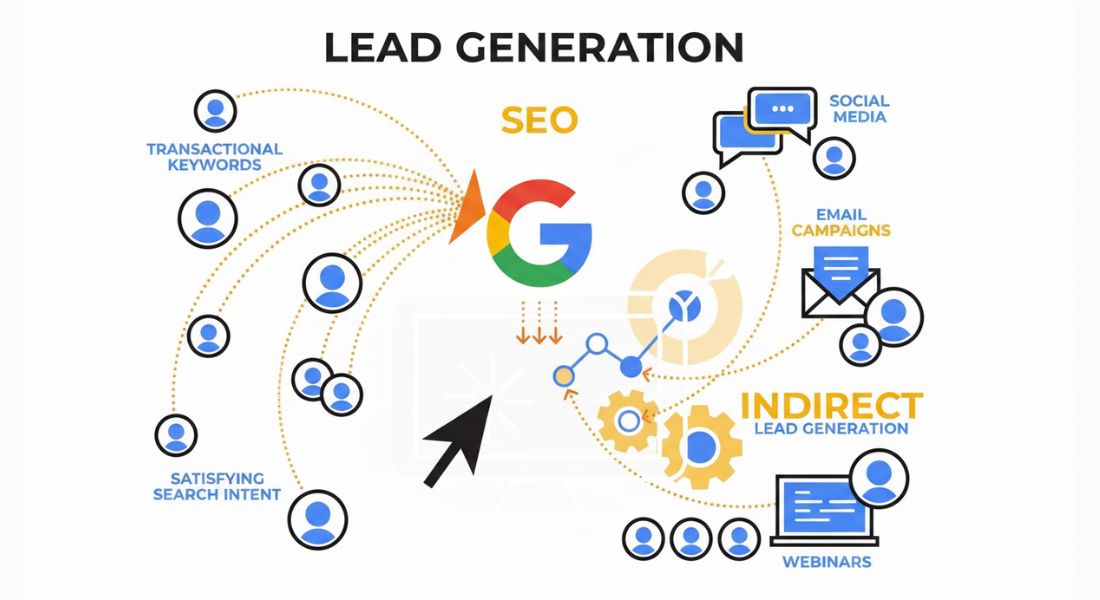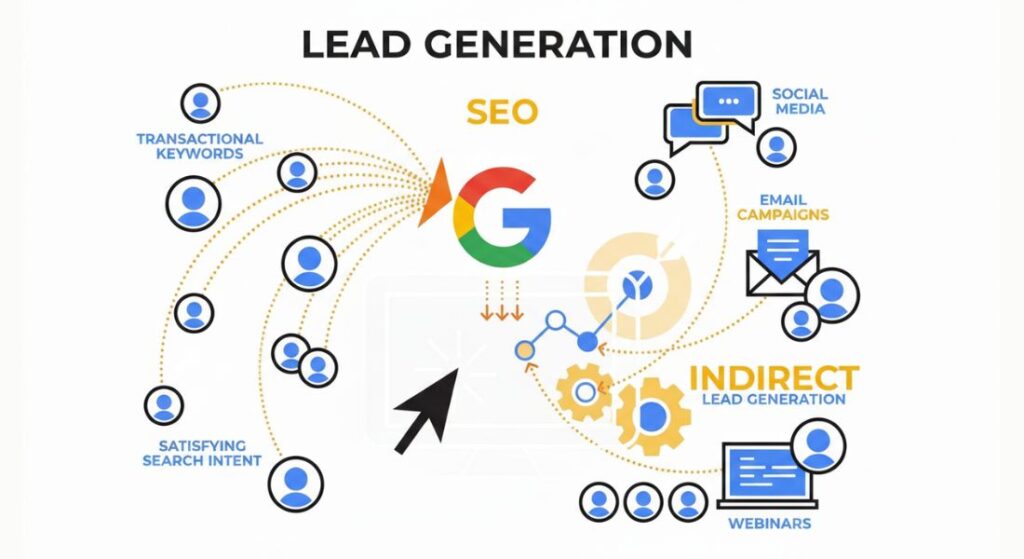
Most people misunderstand SEO. They think ranking higher means more business. More traffic means more leads. And more keywords mean more growth.
That sounds logical. But it’s not how things work in reality.
You can have thousands of visitors coming to your site every month and still struggle to generate a single qualified lead. At the same time another business with far less traffic can consistently generate high-quality leads and close deals.
The difference is not traffic.
The difference is how SEO is used.
To make SEO work for lead generation you need to understand search intent conversion paths and buyer behavior not just rankings or impressions.
Why Most SEO Traffic Never Turns Into Leads?
Here’s the uncomfortable truth.
SEO does not generate leads by default. It generates visibility. If your strategy is built around traffic alone you are solving the wrong problem.
Most websites target broad keywords. They create generic blog posts. They attract people who are curious and not ready. These visitors read your content and leave. No action. No conversion. No revenue.
That is why many businesses say SEO does not work.
In reality their strategy was never designed for lead generation. To convert SEO traffic into leads you need three missing layers:
First intent alignment so you attract users already close to a decision. Second conversion architecture so every page pushes users toward an action. Third tracking and attribution so you actually know what is working. Without these, SEO becomes a content exercise instead of a revenue system.
What Is SEO for Lead Generation?
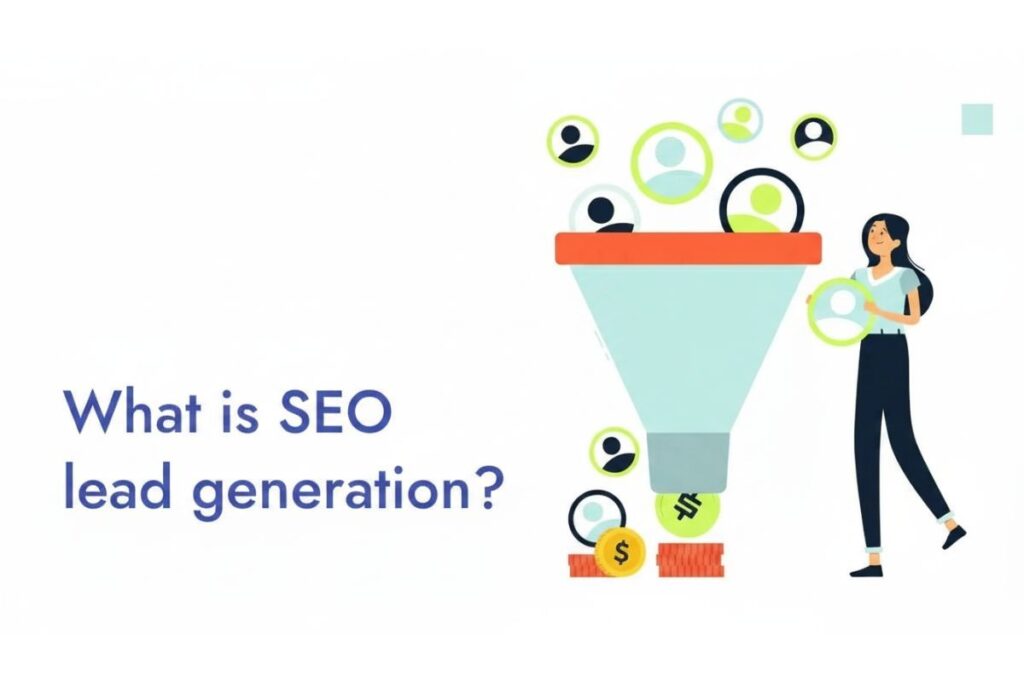
SEO for lead generation is the process of attracting high-intent users through search and converting them into potential customers using optimized content and conversion strategies.
It combines three elements:
- Intent-based keyword targeting
- Conversion-focused content
- Structured lead capture system
But in practice it goes deeper than that. Modern SEO lead generation also includes CRM integration, user journey mapping, behavioral tracking and funnel-based content design.
Without all three SEOs remain incomplete.
The goal is not just to bring users to your site.
The goal is to move them from search → trust → action → pipeline.
How SEO Actually Generates Leads?
The process is simple but most people skip parts of it. A user searches for a specific problem. They land on a page that directly matches their intent. The page builds trust and gives a clear next step. The user takes action. That action becomes a lead. This is the real flow behind SEO lead generation.
Not traffic. Not rankings. But alignment.
To make this system stronger you need supporting elements:
- A clear offer that matches search intent
- Fast-loading landing pages with low friction
- Strong CTA placement across the page
- Trust signals like reviews case studies and proof
- A tracking system that captures every conversion
When these elements work together SEO becomes predictable lead generation.
Understanding Search Intent: The Real Key?
Not all keywords are equal. Some bring curiosity. Others bring buyers.
You need to understand the difference.
TOFU keywords
These are informational searches. People are learning, exploring and not ready to act. They bring traffic but rarely convert unless nurtured properly. These keywords are useful for awareness and brand introduction.
MOFU keywords
These users are comparing options. They already understand their problem and are evaluating solutions. This is where trust positioning and differentiation matter most. Case studies and comparison content work best here.
BOFU keywords
This is where leads come from. These users are ready to take action. They search for services pricing alternatives or direct solutions. Conversion pages must target this intent aggressively.
If your SEO strategy is not balancing all three stages you are either getting traffic without leads or leads without scale.
Building an SEO Lead Generation Funnel
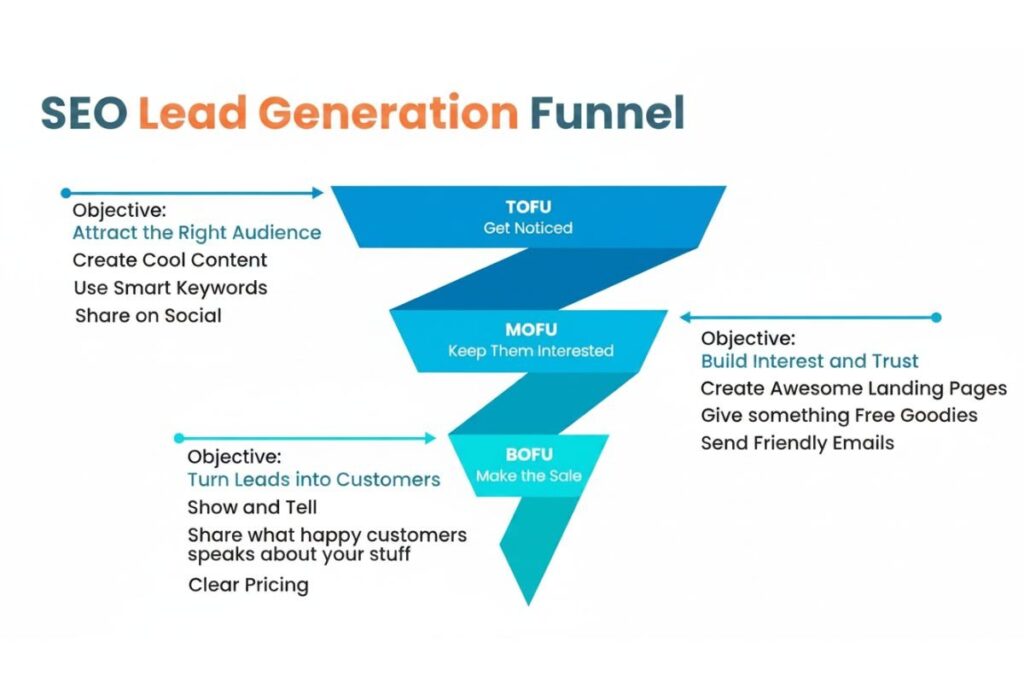
SEO is not about pages. It is about flow.
You need a structure that moves users from awareness to decision.
Awareness stage
Educational content attracts visitors. This includes blog posts, guides definitions and problem-explaining content. The goal here is not conversion but trust building and topical authority.
Consideration stage
Users start comparing options. At this stage they need deeper clarity. Comparison pages case studies solution breakdowns and “best tools/services” content perform strongly because they reduce decision friction.
Decision stage
This is where conversions happen. Users are ready to take action so your pages must be built for conversion. Service pages landing pages pricing pages and consultation offers work best here.
Each stage has a role. Skipping any stage breaks the system and reduces conversion rates even if traffic is high.
Keyword Strategy That Brings Leads
Most people chase high-volume keywords. That is a mistake. High volume often means low intent. Instead focus on specific queries that show problem awareness or buying behavior.
Long-tail keywords may have lower traffic but they bring users who already understand what they want. A search like “best CRM for real estate agents” shows clear commercial intent. A search like “CRM” does not.
But modern SEO goes beyond just long-tail keywords. You also need:
- Semantic keyword clusters around a topic
- LSI terms that reinforce topical authority
- Entity-based SEO that connects tools industries and problems
- Buyer-intent modifiers like “best” “pricing” “agency” “vs” “solution”
This combination is what allows Google and AI systems to understand your content depth.
Content That Converts
Ranking content is not enough.
Your content must guide users toward action.
That means:
- Answering real business problems clearly
- Explaining solutions in a simple structured way
- Building trust through examples and proof
- Removing confusion before it appears
- Leading users toward a clear next step
Content should feel like a conversation not a lecture. If a reader finishes your page and still does not know what to do next the content has failed.
High-performing SEO content also uses intent layering meaning it serves multiple user stages in one page while still pushing toward a primary conversion goal.
Conversion Optimization: Turning Visitors Into Leads
This is where most SEO strategies break. Even with good traffic, poor conversion kills results.
You need:
- Clear and intent-matched calls to action
- Simple lead capture forms with minimal friction
- Strong value proposition that answers “why now”
- Trust signals like testimonials case studies and proof
- Strategic CTA placement inside content not just at the end
Also important is micro-conversion tracking. Not every user will become a lead immediately. Some will download, some will click, some will revisit. Optimizing these micro-actions significantly increases overall lead volume. A small improvement in conversion rate can double your leads without increasing traffic.
The Role of Technical SEO
Technical SEO does not generate leads directly. But it removes friction that kills them. If your site is slow users leave. If your navigation is confusing users drop off. If your pages do not load properly on mobile you lose conversions.
Technical SEO ensures your system actually works by improving:
- Page speed and Core Web Vitals
- Mobile responsiveness
- Indexability and crawl efficiency
- Site structure and internal linking flow
- Structured data for enhanced search visibility
Think of technical SEO as the foundation that allows all other SEO efforts to perform.
SEO vs Paid Ads for Lead Generation
Paid ads are fast. SEO is slow. But SEO compounds. Ads stop the moment you stop spending. SEO continues to generate leads over time without additional cost per click.
Paid ads are best for testing quick validation and immediate demand capture. SEO is best for long-term scalability, brand authority and consistent inbound pipeline. The strongest systems use both together instead of choosing one.
How Long SEO Takes to Generate Leads
SEO is not instant. But it is predictable when done correctly.
In most cases:
- Early signals appear within a few months as impressions and rankings improve
- Consistent leads start coming once pages reach stable rankings
- Strong results build over time as authority and content depth increase
The key is consistency, intent alignment and continuous optimization.
Measuring SEO Lead Generation
Traffic is not the right metric. Leads are. But even more important is lead quality.
You should track:
- Organic conversion rate per landing page
- Cost per lead compared to paid channels
- Lead quality and sales qualification rate
- Revenue generated from organic search
Modern SEO requires CRM integration so you can trace every lead back to:
Keyword → page → session → conversion → revenue
Without tracking you are guessing instead of optimizing.
Common Mistakes That Kill SEO Leads
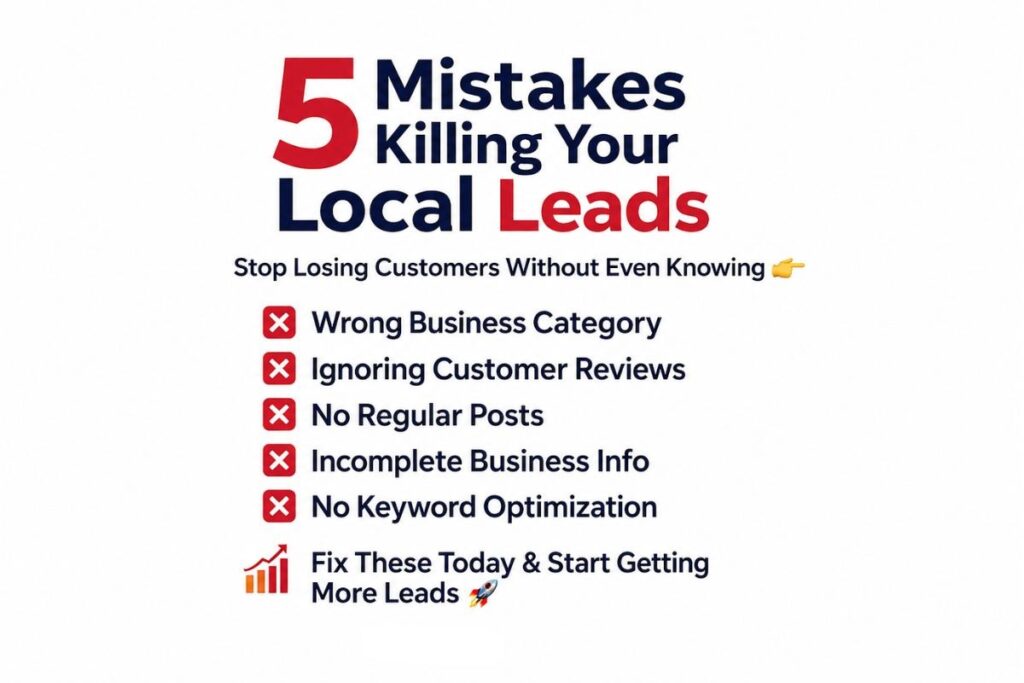
Most SEO strategies fail to generate leads because they focus on visibility instead of conversions. Many businesses chase traffic without considering intent which brings in visitors who never planned to convert.
They also ignore the buyer journey treating every visitor the same instead of guiding them toward a decision. Weak or unclear calls to action make things worse as users don’t know what to do next.
Many websites lack a proper funnel so even interested visitors drop off without taking action. On top of that there is often no lead capture or tracking system which means performance can’t be measured or improved.
Finally a major mistake is creating content without a clear conversion goal resulting in pages that rank but fail to generate real business results.
The Future: SEO + AI + Lead Generation!
Search is changing fast. People are no longer relying only on Google; they now use AI tools to research, compare options and make decisions. This shift means your content must do more than just rank.
It needs to be clear, easy to extract and structured in a way AI systems can understand without confusion. Content should be fact-based authoritative and built around strong entities and complete semantic coverage so it answers queries with precision.
Visibility no longer depends only on rankings; it also depends on whether AI systems choose your content as a reliable source. Moving forward SEO success will come from how often your content gets cited, summarized and used in AI-generated answers, not just how high it ranks in search results.
Final Thoughts
SEO for lead generation is not about doing more. It is about doing the right things in the right order. When intent content and conversion align, SEO becomes more than a marketing channel. It becomes a system that generates consistent high-quality leads. And once that system is in place it keeps working.
FAQs
Can SEO really generate leads for a new website?
Yes but it takes time. New websites need to build topical authority and trust signals before ranking for competitive high-intent keywords. Early results usually come from long-tail and low-competition keywords first. Consistency and content depth are more important than speed.
What type of content generates the most SEO leads?
Content targeting high-intent keywords performs best. This includes comparisons pricing pages and solution-focused guides. Case studies also convert very strongly because they build trust.
Is SEO better than paid ads for lead generation?
SEO is better for long-term sustainability and lower acquisition cost. Paid ads are better for instant traffic and quick testing. Most businesses get the best results by combining both.
How do I know if my SEO is generating leads?
You track conversions through analytics and connect them to your CRM system. This shows which keywords and pages generate real leads. Without attribution tracking SEO performance cannot be measured accurately.
Why am I getting traffic but no leads?
This usually happens due to low-intent keyword targeting. It can also be caused by weak CTAs or missing conversion structure. Traffic without intent or funnel design rarely converts into leads.