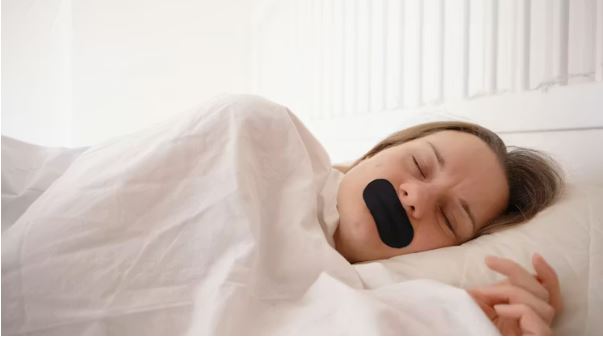
Here is something that gets missed in most sleep health discussions. Two people sleeping identical hours in identical conditions can have dramatically different physiological outcomes overnight — and the differentiating variable is sometimes nothing more than which airway they’re breathing through. The research connecting chronic nocturnal mouth breathing to specific, measurable physiological costs has been building for years in sleep medicine literature without making much impression on mainstream health conversation. Sleep mouth tape addresses one of those costs directly, and understanding the specific mechanisms involved is what separates people who use it with genuine results from people who try it once and conclude it doesn’t work.
The Switch Nobody Feels Happening
Sleep onset reduces muscle tone throughout the body — including the muscles that maintain nasal airway patency. When nasal resistance exceeds a threshold the relaxed body won’t work against, the jaw drops, the oral airway opens, and breathing continues through the mouth without interruption. The person never registers this because they’re unconscious when it happens. The morning evidence — dry mouth despite adequate hydration, a faintly raw throat without illness present, bad breath that returns within an hour of brushing — gets attributed to ambient dryness, air conditioning, or dietary choices. Years pass before someone connects the symptom cluster to a single upstream cause.
What Nasal Nitric Oxide Actually Does
Nitric oxide produced in the paranasal sinuses during nasal breathing isn’t a minor biochemical footnote. It travels to the lungs with each inhaled breath and directly improves haemoglobin oxygen saturation efficiency at the alveolar level. It also provides antimicrobial protection in the upper respiratory tract and contributes to bronchodilation that improves airflow dynamics downstream. Mouth breathing bypasses sinus exposure entirely — the lungs receive air without it for the full sleep duration. The consequences are diffuse rather than dramatic. Slightly reduced exercise recovery that doesn’t match training input. Immune function that underperforms relative to other health variables. Sleep that feels physiologically inadequate despite adequate hours. These patterns resist attribution to their cause because the cause is invisible and nocturnal.
Pharyngeal Collapse Is a Pressure Problem
Nasal breathing generates positive nasopharyngeal back pressure that keeps pharyngeal walls, the soft palate, and the uvula in a passively tensioned state during sleep. This isn’t muscular effort — it’s fluid mechanics. Remove the nasal route and back pressure drops to zero. Pharyngeal tissues relax beyond their structurally supported position and become susceptible to flow-induced vibration. Sleep mouth tape that restores nasal breathing reinstates this pressure immediately — pharyngeal tissues regain passive support and the snoring pattern driven by oral airway tissue collapse, characterised by low-frequency irregular noise rather than the whistle of pure nasal snoring, often resolves on the first night of correct use.
The Dental Consequences That Get Misattributed
Saliva is not passive moisture. It contains antimicrobial proteins that actively suppress acid-producing bacterial populations and maintains oral pH within the narrow range that permits continuous enamel remineralisation during sleep. Mouth breathing reduces salivary flow to near zero for hours. The resulting environment allows Streptococcus mutans populations to shift dramatically, producing acid against enamel for the full duration of sleep. The cavity appearing despite diligent brushing, the gum inflammation without obvious plaque, the enamel erosion that confuses the dentist — these are nocturnal oral desiccation consequences. Sleep mouth tape used consistently addresses this at its origin. No toothpaste formulation compensates for an oral environment that spends eight hours without saliva.
Why Some People Fail With Mouth Tape
The failure cases follow a predictable pattern. The person has unresolved nasal valve restriction or turbinate hypertrophy from allergic rhinitis. Taping the mouth creates uncomfortable respiratory effort because the nasal route can’t comfortably handle full breathing load. The tape gets blamed. The manual widening test — pressing outward gently on the cheeks while inhaling — identifies nasal valve contribution to restriction in seconds and predicts whether nasal strips should accompany tape use.
Material Failure Is a Product Problem
The lip margin is thinner and more reactive than forearm skin used in standard adhesive testing. Products not formulated for prolonged lip contact cause cumulative irritation that appears after consistent use — exactly when discontinuation feels most frustrating. Breathable backing prevents occlusive reactions. Gentle release adhesive prevents morning trauma on removal.
Conclusion
Nocturnal mouth breathing removes physiological systems the body depends on during sleep — nasal nitric oxide production, pharyngeal structural support, salivary oral defence — and the consequences compound quietly across years. Sleep mouth tape, applied correctly using a product designed for lip skin, with nasal patency confirmed beforehand, restores these systems from the first night of use. For people whose sleep quality has resisted other explanations, the airway variable is frequently where the answer was always sitting.