If you are exploring a creative career planning to freelance switching industries or hiring a designer for your business one question always comes first:
How much do graphic designers make?
The short answer is simple. Income varies.
The real answer is more interesting. Earnings shift based on experience location specialization industry tools and how well a designer connects creativity with business results. When you break those layers down the numbers start making sense.
Let’s go deeper than the surface averages most articles repeat.
Average Graphic Designer Salary
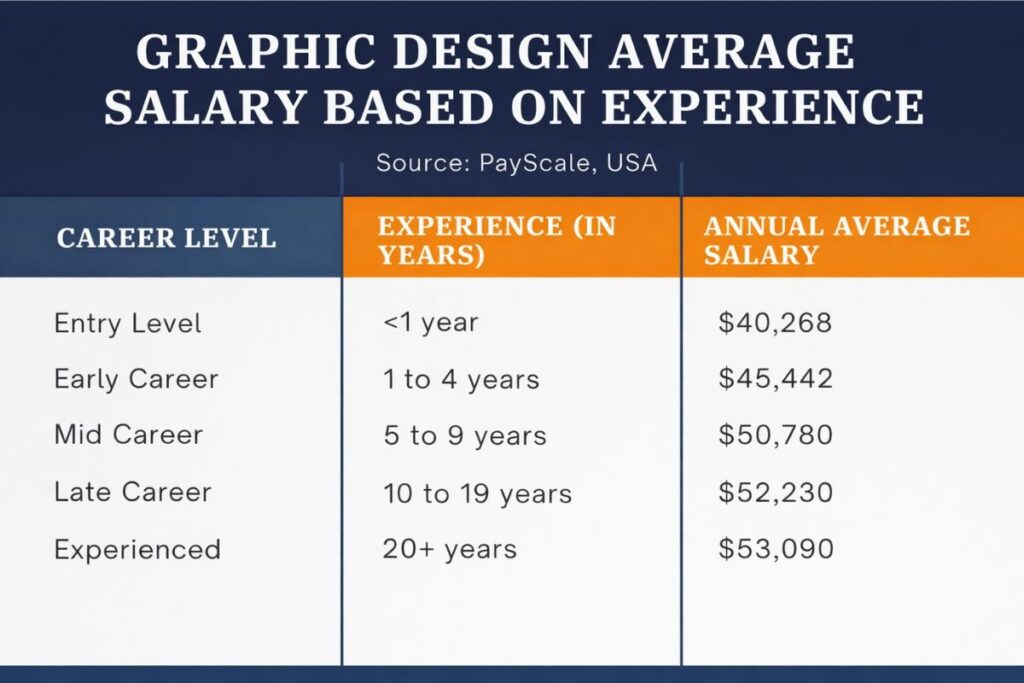
According to data from the U.S. Bureau of Labor Statistics the average graphic designer salary in the United States sits around the low to mid 60000 range per year. Many salary platforms such as Glassdoor Indeed and PayScale report similar figures, usually between 58000 and 65000 annually.
Hourly pay typically ranges from 25 to 30 per hour for full time designers.
Here is a realistic breakdown:
- Entry level graphic designer salary: 40000 to 50000
- Mid level designer salary: 55000 to 75000
- Senior graphic designer salary: 75000 to 95000
- Art director or creative director: 100000 plus
These are national averages. Individual results can look very different.
Entry Level Graphic Designer Salary
Beginners and recent graduates often start at the lower end. A junior graphic designer usually works on production tasks resizing assets preparing files for print creating social media graphics or supporting senior team members.
At this stage employers focus on software proficiency in tools like Adobe Photoshop Illustrator and InDesign. Strong typography layout design and branding basics help but companies still see juniors as developing talent.
Most entry level designers earn between 40000 and 50000. In smaller markets it may dip slightly lower. In large cities or tech companies it can go higher. The early years feel slow financially. But skill growth compounds quickly if you choose the right projects.
Mid Level and Senior Graphic Designer Salary
After three to five years designers start managing projects independently. They present concepts, communicate with marketing teams and influence brand identity decisions. That shift often pushes income into the 60000 to 75000 range.
Senior graphic designers bring more than visuals. They understand brand strategy marketing design packaging design digital media and campaign consistency. They mentor juniors and handle client communication confidently.
At this level salaries frequently reach 80000 or more. In strong industries seniors cross 90000 without stepping into management. Leadership roles such as art director increase pay further because companies reward decision making and team oversight not just execution.
Location and Cost of Living Impact
Location still plays a big role in graphic design salary even in the remote era. Designers in cities like New York City or San Francisco often earn more than designers in smaller towns. The high cost of living pushes companies to offer stronger compensation.
States like California and New York generally report higher salary ranges compared to rural regions. Remote work has changed the game. A designer living in a lower cost city can now work for a tech startup based in Los Angeles or Seattle.
That difference creates income leverage. Smart professionals evaluate both salary and living expenses before accepting offers.
Industry Matters More Than You Think
Not all industries pay equally. Graphic designers in tech SaaS fintech healthcare and ecommerce usually earn more than those in traditional print media or publishing. Why? Because design in digital products connects directly to revenue, user experience and conversion rates.
When design influences customer acquisition and product engagement companies see measurable return on investment. They pay accordingly.
In contrast nonprofit organizations may offer lower pay but stronger work life balance. Advertising agencies often provide competitive compensation especially for high performing creative teams. Industry choice can shift income by tens of thousands over time.
Specialization Increases Earning Potential
Many beginners stay generalists too long. Traditional graphic design focuses on logos, brochures, print materials and social media content. Valuable skills yes. But when designers expand into adjacent fields earning potential rises.
Designers who transition into user interface design and user experience design often see significant salary growth. Platforms like Figma and advanced Adobe workflows help bridge that gap.
UI designers commonly earn around 80000 to 90000. UX designers frequently reach 90000 to 110000. Product designers in tech environments can exceed that.
Motion graphics web design and digital product design also command higher rates because demand continues to grow. Specialization creates positioning power.
Freelance Graphic Designer Income
Freelancing introduces a completely different income structure. Freelance graphic designers often charge between 25 and 150 per hour depending on expertise niche and reputation. Some price per project instead of hourly.
A logo design project might cost 300 for a beginner. A brand identity system from an experienced designer can reach 5000 or more. Freelancers can out earn salaried designers. But they manage taxes, health insurance marketing expenses, software subscriptions and inconsistent workload.
Revenue does not equal profit. A freelancer generating 100000 in annual revenue might take home significantly less after expenses and downtime.
Successful freelancers focus on value based pricing. They connect branding and marketing design to business growth rather than selling isolated graphics.
Why Do Two Designers With the Same Title Earn Very Different Salaries?
The gap rarely comes from talent alone. One designer focuses purely on visual output. Another understands brand positioning, customer psychology, sales funnels and digital marketing performance.
Companies reward impact. Designers who show how their work increases conversions strengthens brand recognition or improves user engagement often negotiate higher salaries faster.
Communication skills also matter. Clear presentation, confident explanation of design decisions and strategic thinking influence raises more than many people realize.
How to Increase Your Graphic Designer Salary
If you want to grow income, focus on leverage, not just effort.
Upgrade digital design skills.
Learn UI and UX fundamentals.
Build a portfolio showing measurable results.
Work with industries that generate revenue.
Network with marketing managers and product teams.
Switch companies strategically instead of waiting for small annual raises.
Many professionals double their salary over several years simply by shifting into higher value environments rather than staying comfortable.
Job Outlook and Future Trends
The overall graphic design field grows steadily. But digital design, user interface and product related roles grow faster. Artificial intelligence tools assist with layout generation and repetitive tasks.
They speed up workflows. They do not replace strategic branding, creative direction or high level problem solving. Designers who combine creativity with business literacy will stay competitive.
So How Much Do Graphic Designers Make?
At the beginner level expect around 40000 to 50000.
With experience 60000 to 75000 becomes realistic.
Senior professionals often reach 90000 or more.
Specialists in UI UX and product design can exceed six figures.
Freelancers range widely depending on positioning and client base.
Graphic design is not a fixed income career. It is flexible. Skill depth specialization industry selection and strategic growth shape earning potential.
For students it offers a creative starting point.
For aspiring freelancers it offers scalable income.
For career professionals it offers leadership paths.
For business owners it represents a strategic investment in brand growth.
The better question is not only how much do graphic designers make. It is how much value can a designer create in a competitive digital economy. That number has room to grow.
Conclusion
Graphic design is a career full of flexibility and opportunity. Beginners start at modest salaries but skill growth specialization and smart career moves can quickly multiply earning potential. Freelancers enjoy independence but must manage business responsibilities.
Mid level and senior designers can earn six figures by combining creativity, business impact and strong communication. Choosing the right industry tools and specialization matters as much as talent.
In the end your income isn’t fixed, it’s tied to the value you create, the problems you solve and the opportunities you seize. Whether you’re a student freelancer or professional there’s room to grow scale and achieve financial success in a thriving design career.
FAQs
Do graphic designers earn more with certifications?
Yes certifications in Adobe Suite UX/UI or motion graphics can boost credibility and justify higher pay.
Can learning coding or web development increase a designer’s income?
Designers with HTML CSS or basic JavaScript skills often earn more, especially in web and product design roles.
How do freelance designers manage inconsistent income?
Successful freelancers maintain a buffer fund, diversify clients and use value-based pricing to handle gaps.
Do graphic designers get paid more in agencies or in-house?
Agencies may pay higher for high profile projects but in house roles offer stability benefits and predictable hours.
How does portfolio quality affect salary?
A strong results focused portfolio demonstrating business impact leads to faster raises and better opportunities.