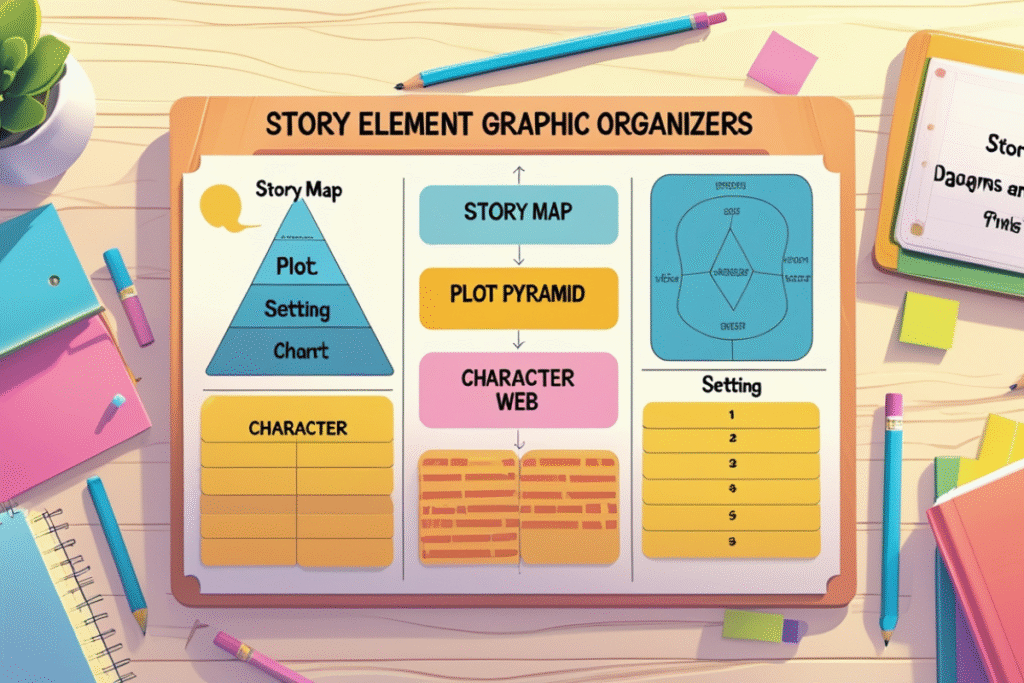
Understanding the structure of a story becomes far easier when students are provided with visual learning tools. This is where a story elements graphic organizer becomes a central part of reading instruction.
These templates help young readers and advanced learners explore characters plot structure setting conflict and resolution in a clear and organized format. Whether students are in first grade third grade fifth grade or high school these organizers support deeper comprehension and stronger storytelling skills.
Teachers around the world use these templates as graphic tools for story comprehension because they simplify narrative analysis. When students visually separate story components they gain higher clarity and improved reading confidence.
These organizers are available as story elements graphic organizer PDF printable worksheets illustrated templates and free downloads for classroom or home use.
What Is a Story Elements Graphic Organizer?
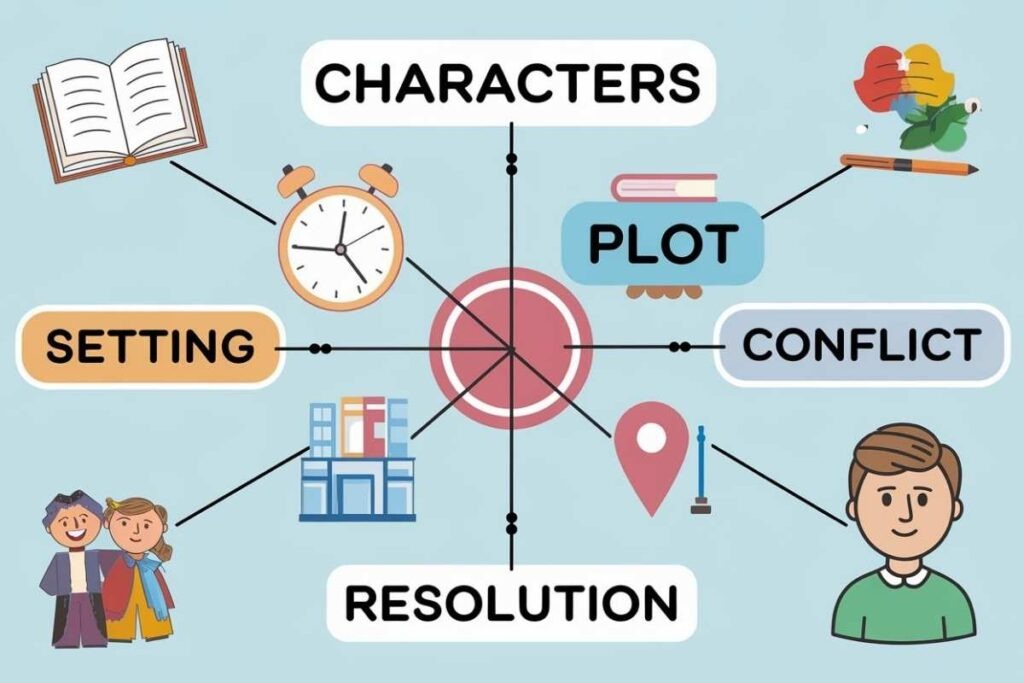
A story elements graphic organizer is a structured chart that visually divides a narrative into essential components such as characters setting plot conflict and resolution. These visual frameworks enhance understanding because they allow students to map out a story step by step.
With the help of narrative graphic organizers for students learners see how story events connect and how each character contributes to the plot.
Teachers often use these organizers as reading instruction graphic organizers in guided reading literacy centers and writing workshops. Since the templates simplify complex text they are extremely useful for struggling readers ESL students and elementary grades.
Advanced learners can also use them for literary analysis theme exploration symbolism and interpreting an author’s purpose.
Why Story Elements Matter in Reading Instruction
Every narrative contains specific building blocks that make it meaningful. When students identify these parts they develop a deeper understanding of how authors craft stories.
Using structured templates for fiction analysis they begin recognizing patterns sequencing events analyzing character development and predicting outcomes.
Readers who engage with organizers for breaking down story components learn to observe how rising action builds suspense how conflicts shape character behavior and how resolutions tie the story together.
Without these visual organizers students often skip over essential details. The organizer serves as a bridge between reading and thinking making comprehension more active and intentional.
How a Story Elements Graphic Organizer Helps Students
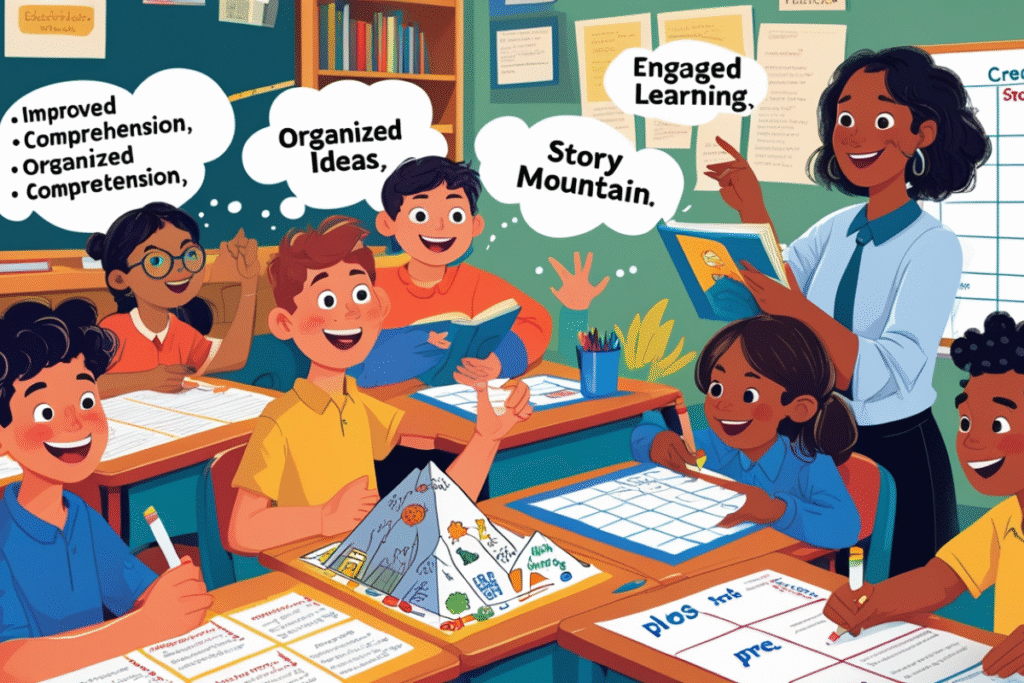
When students use a story elements graphic organizer worksheet they engage with the text more thoughtfully. The organizer turns reading into an interactive experience where learners must understand what they read rather than simply rushing through it. The visual structure encourages recall organization sequencing and critical thinking.
In classroom settings teachers introduce a story ask learners to discuss key events and then guide them through filling out the organizer. This process strengthens retention because students revisit each part of the narrative.
During group activities learners compare their organizers with peers which supports collaborative learning and deeper interpretation.
Understanding the Components of a Story Elements Organizer
At the heart of every story elements chart is the breakdown of the narrative into sections that readers must analyze. The character portion focuses on who the story is about and how these individuals influence events. The setting emphasizes where and when the story takes place allowing readers to understand context.
The plot section covers the storyline and major events. Students explore how the narrative begins what challenges the characters face and how the situation changes over time. The conflict highlights the main problem tension or struggle that pushes the story forward. Finally the resolution explains how the problem is solved or how the story concludes.
These elements are the backbone of any elements of a story template helping learners structure their understanding clearly.
Story Structure in Graphic Organizers
Most schools teach narrative structure through a five-part model. The exposition introduces the characters and setting. The rising action expands on challenges the characters face as tensions build.
The climax marks the turning point often the most exciting or dramatic moment. The falling action reveals the consequences of the climax and finally the resolution brings the story to an end.
A story structure graphic organizer presents these stages visually helping students recognize how stories develop and why certain events occur when they do.
Story Elements Graphic Organizers by Grade Level
Story Elements Graphic Organizer for 1st Grade
A story elements graphic organizer 1st grade PDF is simple and visually friendly. It includes pictures icons and short sentences that help beginners identify characters setting and basic problems. The goal for first graders is not to analyze deeply but to recognize the main parts of the story and retell them in an organized manner.
Story Elements Graphic Organizer for 3rd Grade
A story elements graphic organizer 3rd grade introduces more detailed thinking. Students begin identifying the beginning middle and end of a story explore simple character traits and notice how actions change the plot. Third graders also learn to summarize paragraphs and connect ideas using the organizer layout.
Story Elements Graphic Organizer for 5th Grade
A story elements graphic organizer 5th grade PDF requires deeper analysis. Students at this level examine themes motivations character transformations and the influence of setting on plot. Fifth graders explore more advanced story structure allowing them to build stronger writing and comprehension skills.
Middle School and High School Story Organizers
Older learners use more advanced templates such as story elements organizer high school or story elements graphic organizer middle school PDF. These organizers explore symbolism foreshadowing theme development author’s purpose conflict types motifs literary devices and narrative perspective. High school students also use these organizers to prepare for literature essays and comprehension exams.
Story Elements Graphic Organizer with Pictures
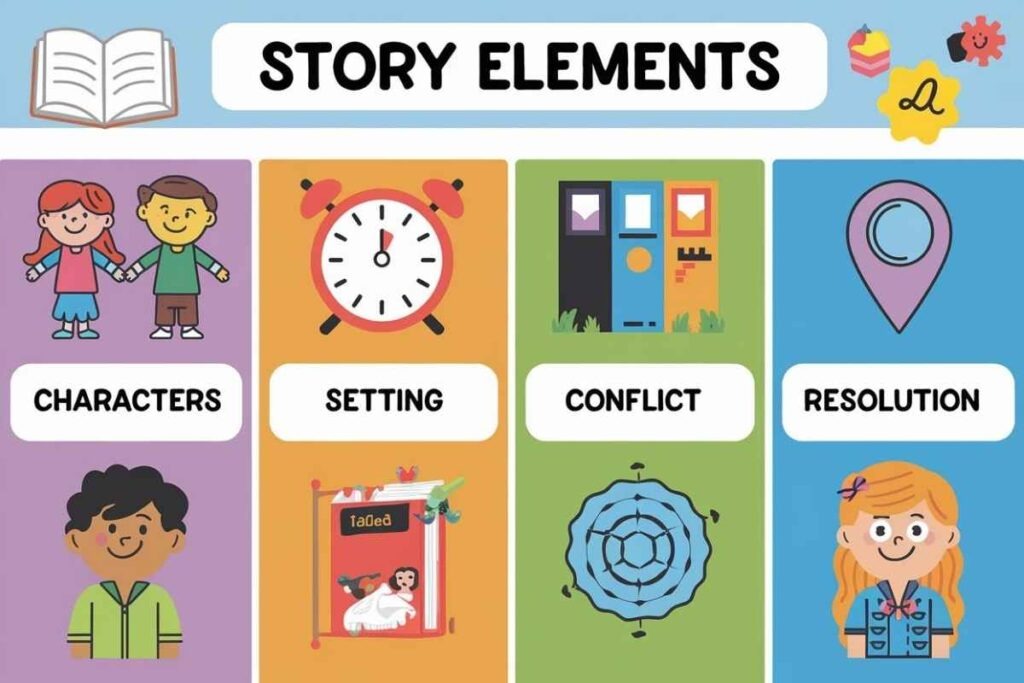
A story elements graphic organizer with pictures benefits visual learners by providing icons for characters scenery for settings and image-based boxes for events. This approach simplifies reading for young children and English language learners.
These visual templates transform abstract story concepts into concrete images making storytelling more interactive and enjoyable.
Free Printable Story Elements Graphic Organizers
Many teachers search for story elements graphic organizer free templates that are easy to download and print. Websites offering story elements graphic organizer PDF free allow educators to provide students with consistent and professionally designed tools for reading instruction.
These templates also come in different styles including boxed layouts story maps flow charts and picture-based organizers.
Parents who homeschool also benefit from free printable organizers because they help children practice reading comprehension at home. A story elements graphic organizer worksheet often includes guided questions that strengthen a child’s understanding of narrative structure.
Using Story Elements Organizers in Writing Instruction
Graphic organizers are not limited to reading. They play an important role in helping students create their own stories. When learners use character setting plot organizers they plan narratives more effectively.
The organizer acts as a blueprint for the entire writing process allowing students to outline characters describe the setting and build a clear plot with a beginning middle and end.
This approach makes writing more structured and reduces confusion during storytelling. Many writing instructors encourage students to brainstorm using organizers before drafting.
Benefits of Story Elements Graphic Organizers
One of the biggest advantages of using a story elements graphic organizer is that it promotes active engagement with text. Instead of passively reading students observe think interpret and evaluate the story as they fill out their organizer.
Comprehension improves because the story is broken into manageable parts. Younger readers especially benefit from visual frameworks because images and diagrams help them remember story events.
These organizers also encourage discussion allowing students to talk about the story in groups and compare their interpretations.
For struggling readers and ESL learners story organizers simplify complex text making narrative understanding more accessible. Students who find long paragraphs difficult feel more comfortable when the information is presented in a visual template.
Conclusion
A story elements graphic organizer is a powerful educational tool that transforms the way students understand and analyze stories. By dividing narratives into characters setting plot conflict and resolution these templates make reading more interactive.
Whether students are beginners in first grade or advanced learners in high school story organizers provide clarity structure and confidence.
With the availability of story elements graphic organizer PDF free downloads and printable worksheets parents and teachers can easily support reading development. These templates encourage creativity improve comprehension and guide students toward stronger storytelling skills.
Story organizers make reading an active process allowing students to connect meaningfully with every story they explore.
FAQs
What is a story elements graphic organizer?
It is a visual learning tool that divides a story into core parts such as characters setting plot conflict and resolution.
How does a story organizer help students?
It enhances comprehension supports writing and helps students retell and analyze stories more effectively.
Where can I find free printable story organizers?
Many educational websites offer free story elements graphic organizer PDF downloads for different grade levels.
Can these organizers be used for movies or plays?
Yes the same structure applies to analyzing films plays and short stories.
What is the main difference between a beginner and advanced organizer?
Beginner organizers focus on simple story parts while advanced organizers include themes symbolism and deeper analysis.