In the evolving digital landscape businesses need a smart approach to stand out. With billions of online searches daily appearing on the Search Engine Results Page (SERP) has never been more critical. Two of the most powerful digital marketing strategies are Search Engine Optimization (SEO) and Pay-Per-Click (PPC) advertising.
But which one is right for your business? In this guide we’ll explore the benefits, drawbacks and best practices for SEO and PPC including modern trends like AI search optimization tools zero-click SERP audience targeting and display networks so you can make informed marketing decisions in 2026.
What is SEO?
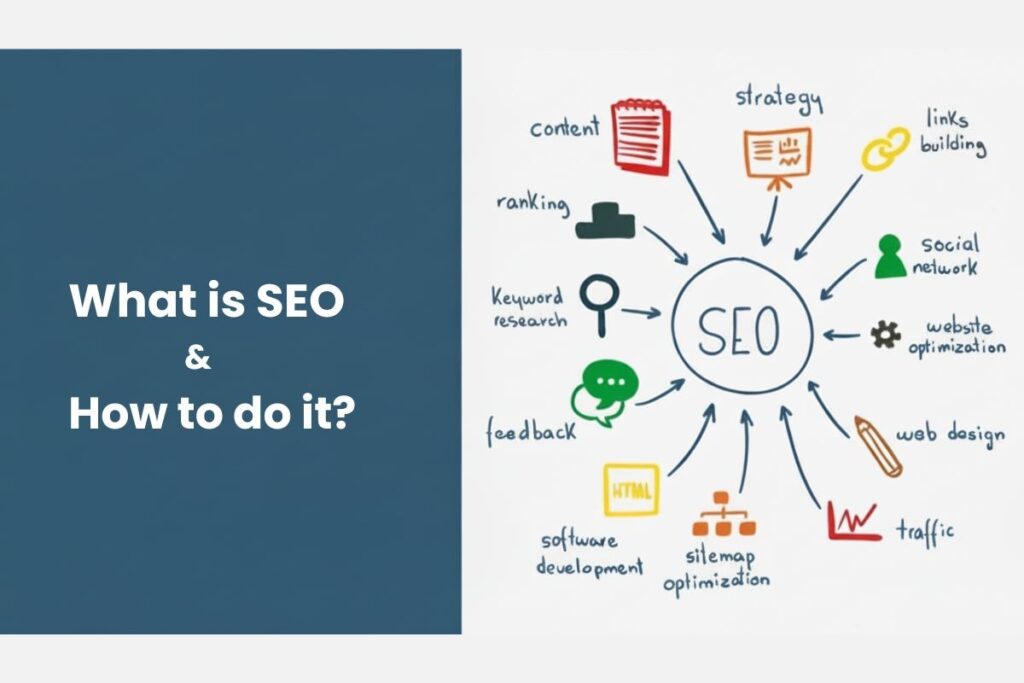
SEO or Search Engine Optimization is the practice of optimizing your website and digital content to rank higher in organic search results. Unlike PPC SEO focuses on long-term visibility attracting organic traffic and building brand credibility.
Key Elements of SEO
- On-page SEO – Crafting high-quality content using relevant headings keywords semantic clusters optimizing images and improving site structure.
- Off-page SEO – Acquiring backlinks increasing domain authority and enhancing site trust signals.
- Technical SEO – Ensuring fast load times mobile-friendliness, secure HTTPS connections and proper schema markup.
- Local SEO – Targeting local audiences for geographically relevant searches like “restaurants near me” or “plumbers in [city].”
Benefits of SEO
- Sustainable traffic growth – Once content ranks it can continue to drive traffic without ongoing ad spend.
- Higher credibility and trust – Users perceive high-ranking organic results as more authentic than paid ads.
- Long-term ROI – SEO generates consistent conversions and helps with brand awareness.
Drawbacks of SEO
- Delayed results – SEO requires patience; rankings can take months.
- Competitive keywords – Highly competitive industries may need expert strategies to outperform established players.
- Constant updates – Search engines frequently update algorithms requiring ongoing monitoring and optimization.
Use tools like Google Search Console and analytics platforms to track ranking improvements, identify top-performing pages and monitor click-through rates.
What is PPC?
Pay-Per-Click (PPC) is a paid advertising strategy where businesses bid for their ads to appear at the top of the SERP or on platforms like Google Ads or Bing Ads. Advertisers pay only when a user clicks making it cost-effective for immediate traffic.
Key Elements of PPC
- Keyword targeting – Select specific terms that potential customers search for.
- Ad copywriting – Craft compelling ads with clear calls-to-action (CTA).
- Landing page optimization – Ensure ads lead to pages optimized for conversions.
- Audience segmentation – Use geographic demographic and behavioral targeting for precise campaigns.
- Retargeting & Display Ads – Show ads on the Google Display Network (GDN) or other partner websites to reach users outside search results.
Benefits of PPC
- Immediate visibility – Appear at the top of search results as soon as campaigns go live.
- Precise targeting – Reach users based on location device or search intent.
- Measurable ROI – Metrics like click-through rate (CTR) cost per acquisition (CPA) and return on ad spend (ROAS) are easily tracked.
Drawbacks of PPC
- Ongoing cost – You pay for every click which can become expensive.
- Temporary visibility – Stop paying and your ads disappear instantly.
- Competitive bidding – High competition for keywords can drive up cost per click (CPC).
PPC campaigns do not influence your organic SEO rankings. Google prioritizes relevant content for searchers so paid ads and organic rankings operate independently.
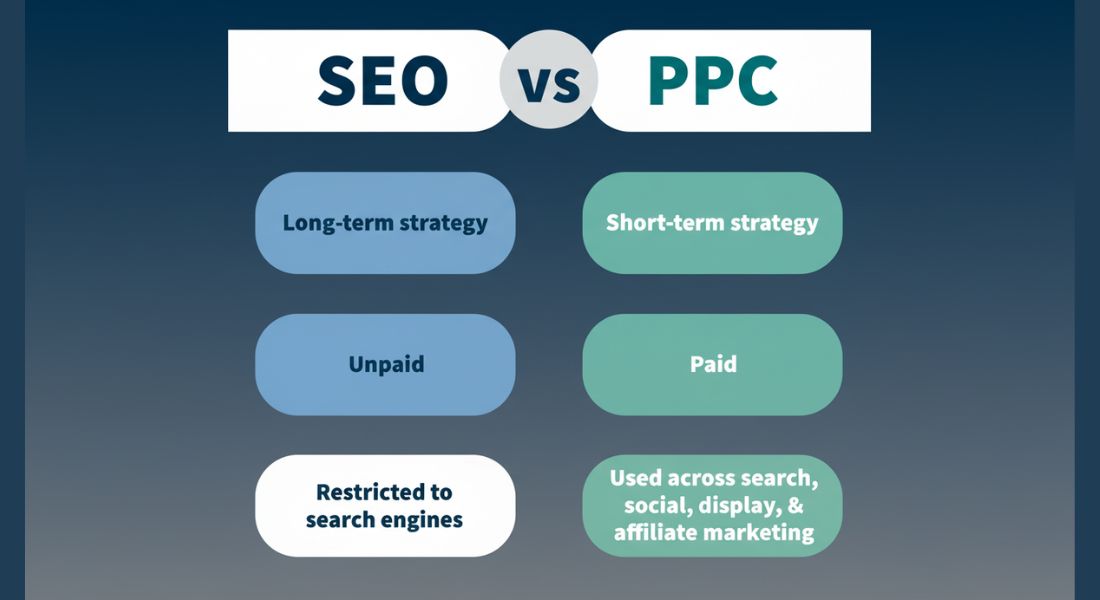
SEO vs PPC: Key Differences
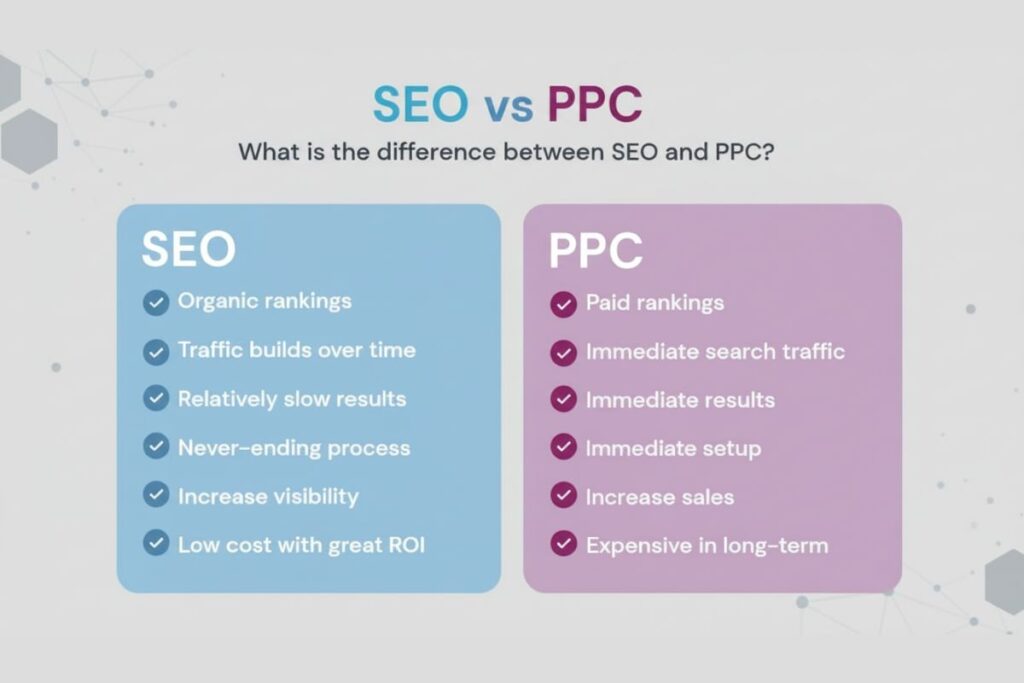
| Factor | SEO | PPC |
| Visibility | Organic listings on SERP | Paid search ads with “Ad” label |
| Timeline | Long-term results | Immediate results |
| Cost | Investment in content technical SEO backlinks | Pay-per-click ongoing budget required |
| Trust | Builds credibility and authority | Users may skip paid ads (94% according to RankPay) |
| Traffic Type | Organic traffic | Paid traffic |
| Targeting | Broad targeting via keywords & intent | Highly specific: location device interests retargeting |
Modern Considerations for 2026
- AI Search Optimization Tools – Platforms like SEMRush Ahrefs and ChatGPT-powered tools help identify high-performing keywords, predict trends and optimize both SEO and PPC campaigns.
- Zero-Click SERP & Featured Snippets – Many searches now end directly on the SERP so content needs to be optimized for rich results.
- Voice Search – Optimizing for natural queries is essential especially for local SEO.
- Integrated Digital Marketing Strategy – Combining SEO and PPC maximizes brand awareness while driving both immediate and sustainable traffic.
- Display Network Ads – Reach users outside search results with GDN campaigns retargeting and interest-based placements to expand visibility.
Combining SEO and PPC for Maximum Impact
Many businesses achieve the best results by using SEO and PPC together:
- Boost short-term visibility with PPC – Launch campaigns to drive traffic while waiting for organic content to rank.
- Enhance organic results with SEO – High-quality content improves landing page relevance which can reduce CPC in PPC campaigns.
- Cross-channel insights – PPC data shows which keywords convert while SEO data reveals audience engagement patterns.
Example: A local bakery can use Google Ads PPC campaigns for seasonal promotions while investing in local SEO to rank organically for “best bakery near me” capturing both immediate and long-term customers.
Making the Right Choice
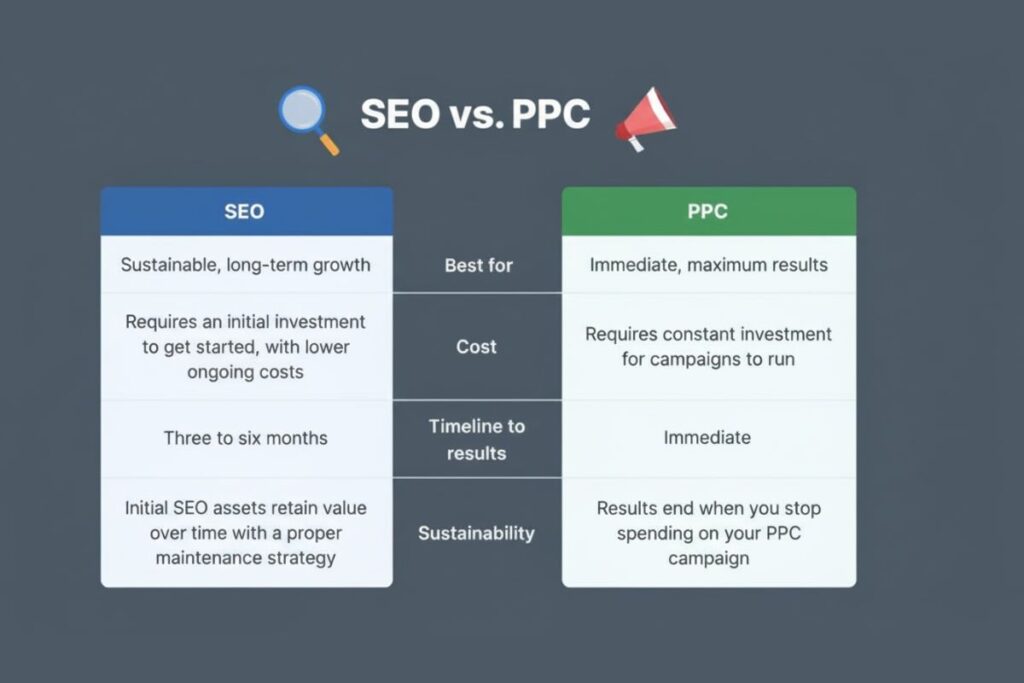
When deciding between SEO vs PPC consider:
- Business goals – Long-term brand credibility vs immediate traffic.
- Budget – SEO requires time and resources; PPC requires financial investment.
- Timeline – Quick results or long-term growth?
- Competition – Highly competitive niches may need combined strategies.
- Target audience behavior – Are users researching or ready to buy?
Often a hybrid strategy using both channels provides the highest ROI improved brand visibility and more audience insights.
Conclusion
SEO and PPC are not mutually exclusive, they complement each other.
- SEO delivers sustainable organic traffic and long-term credibility.
- PPC offers immediate exposure and highly-targeted conversions.
Combining the two leverages the strengths of both enabling businesses to dominate SERPs, optimize ROI and stay ahead in the competitive digital landscape of 2026.
By understanding your audience monitoring results with Search Console and analytics and using AI search optimization tools you can craft a digital marketing strategy that ensures both short-term wins and long-term growth.
FAQs
Can I use SEO and PPC together for better results?
Yes! Combining SEO and PPC creates a hybrid strategy where PPC drives immediate traffic while SEO builds long-term organic visibility. Using both allows you to optimize ROI, analyze audience behavior and dominate search results across SERPs.
How long does it take to see results from SEO compared to PPC?
SEO usually requires months of consistent effort to rank high in organic search while PPC provides instant visibility once campaigns go live. A combined approach leverages short-term gains from ads and sustainable growth from optimized content.
Which is more cost-effective SEO or PPC?
SEO is an investment in long-term traffic and brand authority requiring resources for content creation and technical optimization. PPC delivers immediate results but involves ongoing ad spend. Balancing both maximizes cost efficiency and conversions.
How does targeting differ between SEO and PPC campaigns?
SEO relies on keywords search intent and content relevance to attract organic traffic while PPC allows precise targeting by demographics location devices retargeting and display network placements. Using both ensures full audience coverage.
Can AI tools improve both SEO and PPC performance?
Absolutely! AI search optimization tools help identify high-performing keywords, predict trends, optimize landing pages and enhance ad copy for PPC campaigns. Leveraging AI ensures campaigns are data-driven, efficient and aligned with modern search behaviors.