Publishing content alone won’t grow your business. Your audience won’t find it and your hard work may go unnoticed. That’s where SEO driven inbound marketing comes in. It doesn’t just attract visitors, it guides them, educates them and turns them into loyal customers. In this guide we break down everything from beginner tips to advanced strategies showing you exactly how to make your content work harder in 2026.
Breaking Down the Definitions: What Are SEO and Inbound Marketing?
SEO (Search Engine Optimization) is the practice of optimizing your website and content to rank higher in organic search results. It focuses on improving visibility for specific keywords, enhancing site performance and ensuring search engines recognize your content as relevant and authoritative.
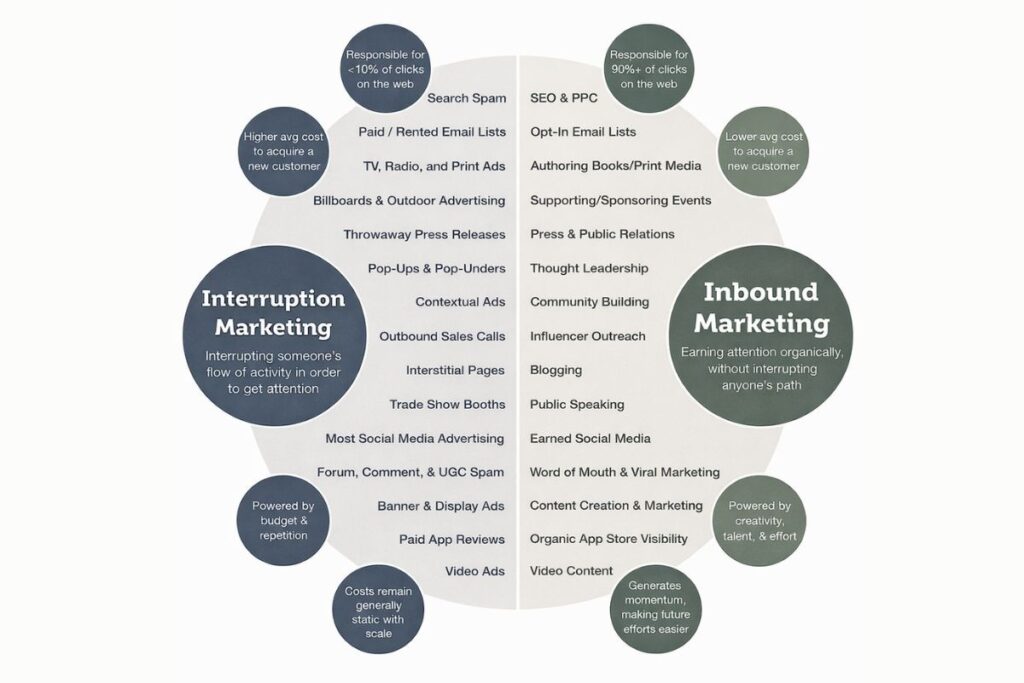
Inbound marketing is a customer-centric approach that attracts prospects by providing valuable content and experiences. Unlike traditional marketing tactics like cold calls or paid ads, inbound strategies focus on engagement education and building trust.
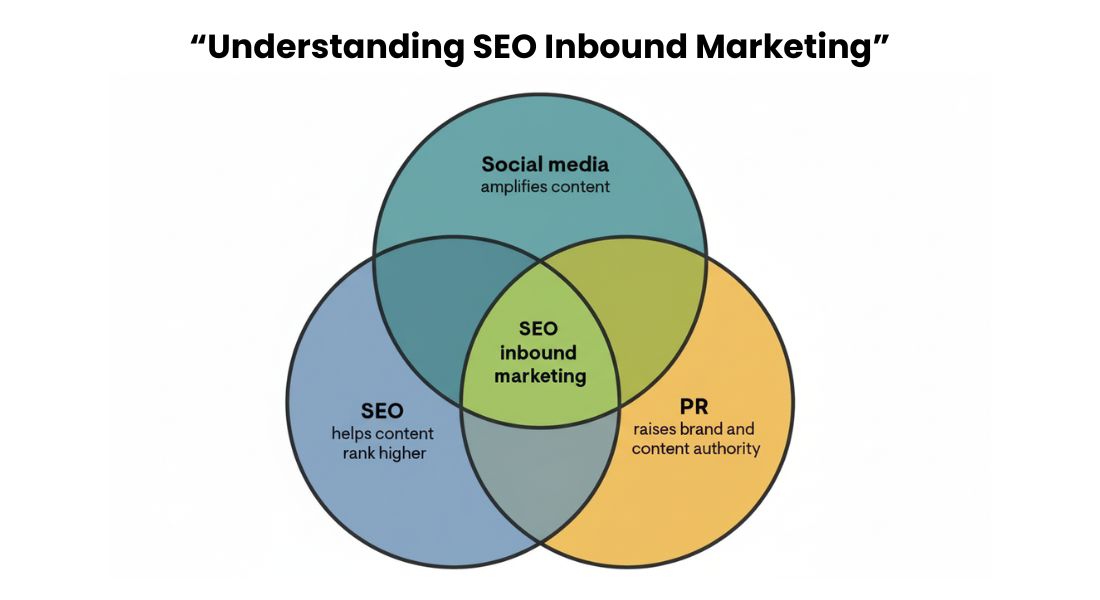
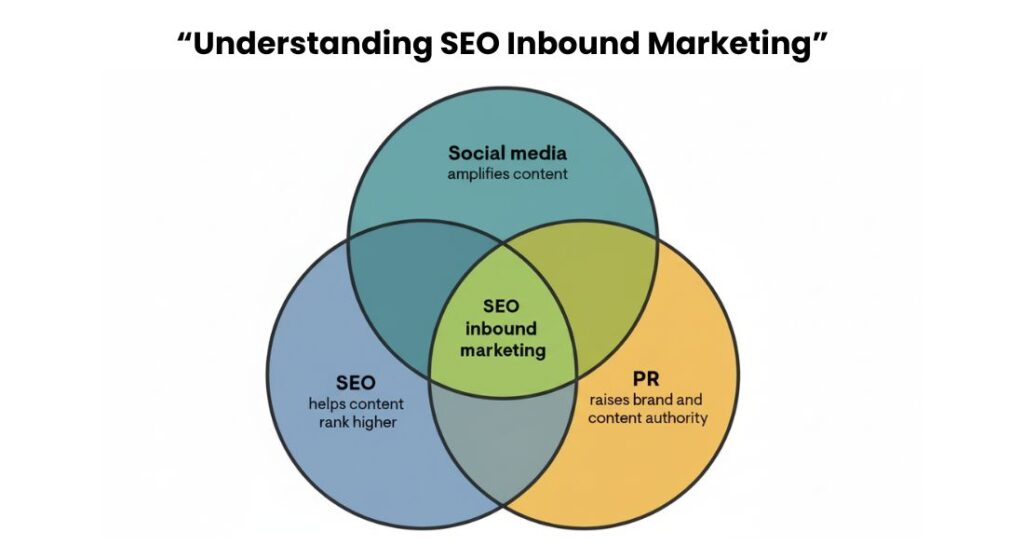
When combined SEO ensures your content is discoverable while inbound marketing ensures that discovered content converts visitors into leads and eventually paying customers.
Why Combining SEO and Inbound Marketing Matters?
Integrating SEO with inbound marketing creates a powerful synergy. SEO attracts users actively searching for solutions while inbound marketing engages and nurtures them. This combination increases organic traffic, improves lead quality and reduces acquisition costs.
Brands also benefit from enhanced authority and credibility as consistent visibility and helpful content position them as industry leaders. Research shows B2B buyers consume multiple pieces of content before engaging with sales making discoverability critical for capturing high-intent prospects early in their journey.
Core Components of an SEO Strategy
An effective SEO strategy requires multiple layers of optimization:
- On-page SEO: Optimize titles meta descriptions headings and content to align with target keywords and search intent. Ensure content answers user questions clearly and naturally.
- Technical SEO: Improve site speed, mobile responsiveness, structured data and crawlability to ensure search engines index your content efficiently.
- Off-page SEO: Acquire backlinks from authoritative sources leverage social mentions and build brand recognition outside your website to boost credibility.
- Keyword research: Identify high-value search terms semantic variations and long-tail keywords that align with audience intent helping prioritize content creation effectively.
A strong SEO foundation ensures that all inbound marketing efforts reach the right audience and have maximum discoverability.
Core Components of an Inbound Marketing Strategy
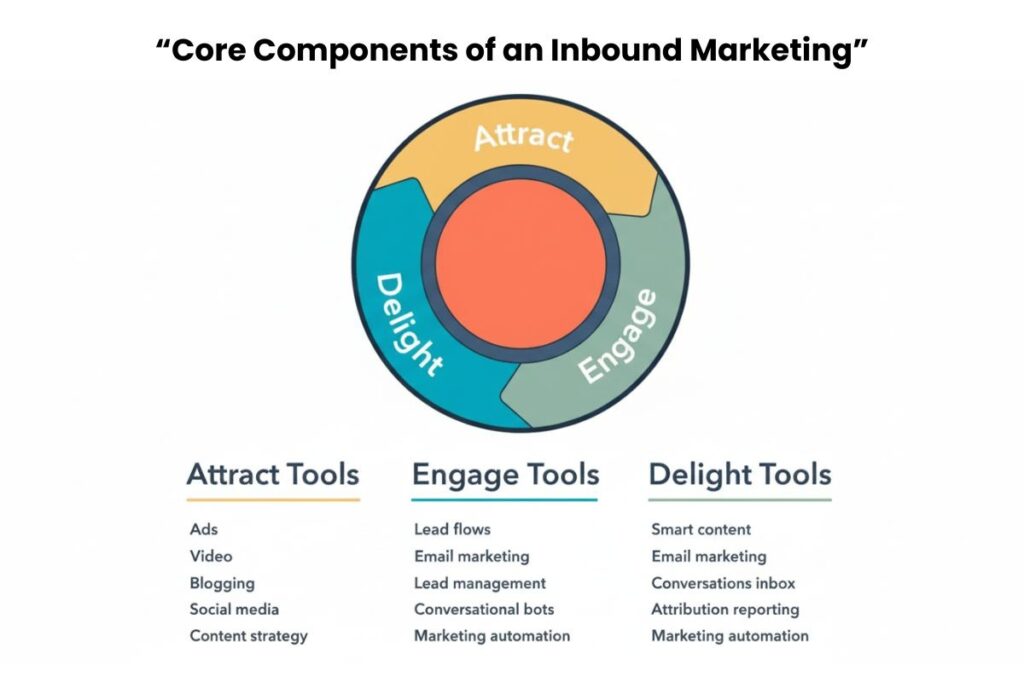
Inbound marketing relies on delivering value at every stage of the customer journey. Key components include:
- Content marketing: Develop informative blogs, guides videos and whitepapers tailored to your audience’s needs. Focus on topics that solve real problems and address search intent.
- Email marketing: Nurture prospects with personalized campaigns that guide them through the funnel while building long term relationships.
- Social media marketing: Share content across platforms like LinkedIn Instagram TikTok and YouTube to engage audiences, generate discussion and expand reach.
- Landing pages & CTAs: Create high-converting landing pages with clear calls to action that guide visitors toward a desired goal such as signing up for a newsletter or requesting a demo.
- CRM integration: Connect tools like HubSpot or Salesforce to automate workflows, track engagement and optimize lead nurturing efficiently.
Together these elements ensure your inbound marketing strategy attracts, engages and converts prospects.
How SEO and Inbound Marketing Work Together?
SEO and inbound marketing complement each other throughout the buyer journey. SEO drives organic traffic by making your content visible for relevant searches while inbound marketing converts traffic into leads and loyal customers.
To achieve this align keyword research with content strategy ensure landing pages answer search queries effectively and maintain consistency with brand messaging.
Without SEO your inbound content remains invisible; without inbound marketing traffic may not convert. The integration ensures your content generates tangible business results and builds long term relationships.
The Secret Sauce: Essential SEO Inbound Marketing Tactics!
Implementing SEO and inbound marketing effectively requires practical tactics:
- Build a unified content strategy: Align content with business goals and map it to the buyer journey’s awareness, consideration and decision stages.
- Prioritize high-quality content: Focus on value relevance and clarity rather than volume. Content should solve real problems and match search intent.
- Optimize every piece of content: Audit blogs landing pages and resources for SEO readability and engagement to maximize performance.
- Strengthen off-page SEO: Acquire authoritative backlinks engage users on social media and build brand mentions to increase credibility and reach.
- Improve technical SEO: Ensure pages load quickly mobile experiences are seamless structured data is implemented and content is accessible to search engines.
These tactics guarantee your content attracts, engages and converts effectively over time.
Step-by-Step Strategy to Implement SEO Inbound Marketing
- Define your target audience: Identify ideal customer profiles and segment personas to target relevant prospects.
- Map content to funnel stages: Create content for awareness consideration and decision stages to guide users effectively.
- Collaborate across teams: Align content SEO social demand generation and marketing operations for cohesive execution.
- Audit your content: Evaluate existing assets for quality relevance and gaps optimizing underperforming content.
- Create helpful content: Answer audience questions comprehensively and provide actionable solutions.
- Develop a culture of SEO: Train teams to integrate SEO principles into every content initiative.
- Leverage social media strategically: Use platforms your audience engages with to amplify reach and authority.
- Track measure and refine: Monitor KPIs analyze traffic and adjust strategies based on performance data.
Benefits of SEO Driven Inbound Marketing in 2026
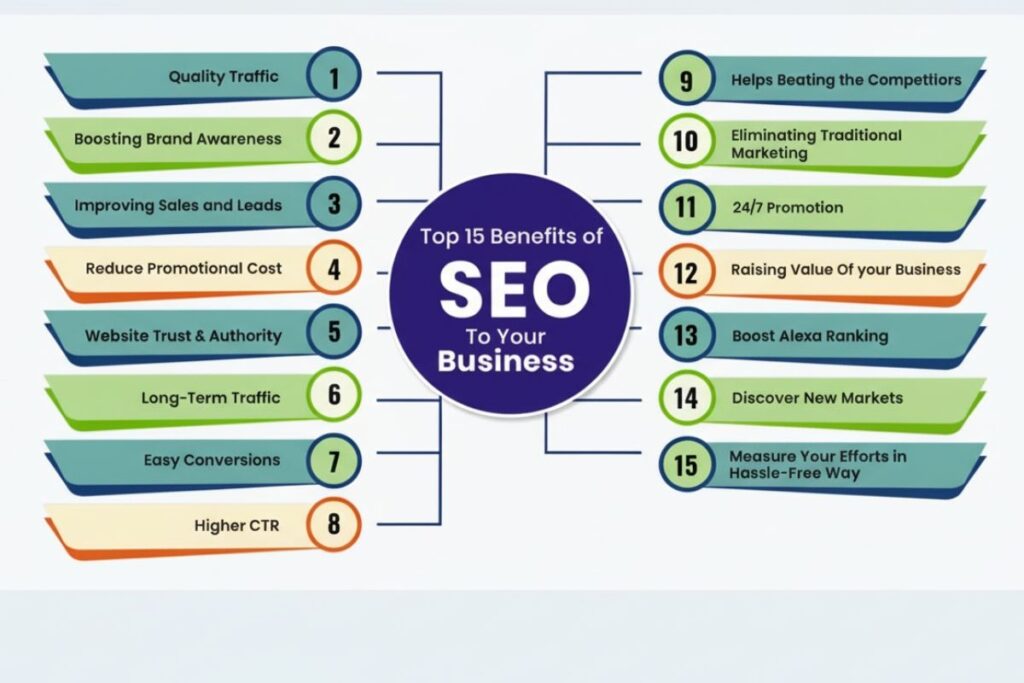
Brands adopting SEO-focused inbound marketing enjoy:
- Increased organic traffic: Optimized content attracts highly relevant visitors seeking solutions.
- Better lead quality: Leads are pre-qualified through content engagement boosting conversion rates.
- Stronger brand awareness: Regular visibility builds credibility and trust over time.
- Improved marketing ROI: Organic leads reduce dependence on paid campaigns while delivering long term results.
- Future-ready marketing: Integration of SEO and inbound strategies adapts to evolving search algorithms AI-driven results and changing customer behavior.
Conclusion
Bringing SEO and inbound marketing together isn’t just a strategy, it’s a game-changer for attracting, engaging and converting your audience. SEO makes your content discoverable while inbound marketing ensures that traffic turns into meaningful relationships and loyal customers.
By focusing on value optimizing for search intent and mapping content to the buyer journey you guide prospects naturally at every stage. Consistently auditing and updating your content keeps you ahead of search trends and audience expectations.
Whether you’re a beginner or a seasoned marketer these strategies create lasting results and stronger brand authority. With SEO driven inbound marketing your content doesn’t just exist, it educates and converts. Start small, stay consistent and watch your digital presence grow steadily.
FAQs
How do I measure the success of SEO-driven inbound marketing?
Track key metrics like organic traffic keyword rankings and engagement rates. These show whether your SEO efforts are attracting the right audience.
Can SEO content work for both B2B and B2C marketing?
Absolutely. B2B buyers often research extensively before purchase making in-depth content and SEO critical for guiding decisions.
How often should I update my SEO and inbound content?
Review content at least quarterly to ensure it remains relevant, accurate and aligned with current search trends.
What role does AI play in modern SEO and inbound marketing?
AI helps identify emerging topics semantic keywords and search intent patterns allowing content to target high-value queries efficiently.
How can small businesses compete with large brands using SEO inbound marketing?
Focus on niche topics and long-tail keywords where larger competitors may not dominate. This attracts highly targeted traffic.