Search rankings change because websites and algorithms never stand still. Even a beautifully designed site quietly decays if it isn’t inspected and tuned. That’s why professional marketers perform regular SEO audits.
You might be reading this because you typed sample SEO audit to find out what a real world audit looks like and how to build one yourself. This guide is your hands on blueprint. It combines insights from the leading sources Backlinko, HubSpot, Rebekah May and fills every gap they left.
You’ll learn exactly what to check, which tools to use and how to read the story your data tells. By the end you will have an evergreen process that keeps organic traffic stable even when Google shakes things up.
The Purpose of an SEO Audit: Why Every Site Needs It?

An SEO audit is a diagnostic check up for your website’s technical health, content quality and authority signals. Just as a doctor identifies where a body is under stress an audit highlights where your site underperforms.
Core objectives:
- Uncover barriers blocking visibility errors, crawl traps, broken links.
- Measure alignment between content and user search intent.
- Reveal opportunities competitors exploit that you haven’t.
Regular audits prevent sharp traffic drops and maintain ranking stability across algorithm updates. For small businesses a well documented audit doubles as proof of SEO ROI when clients ask what exactly are we fixing?.
Key Elements Inside a Sample SEO Audit
A professional audit divides naturally into four pillars on‑page, technical, off‑page and content/UX. Ignoring any one area is like tuning only one guitar string.
On‑page factors: Review title tags, meta descriptions, headings, keyword placement, internal links and schema markup. Search engines read these elements to infer meaning; optimizing them is the easiest visibility win.
Technical foundation: Here you verify crawlability, speed, indexing, mobile usability and HTTPS security. PageSpeed Insights, Lighthouse and CrUX Reports reveal where performance fails real world visitors.
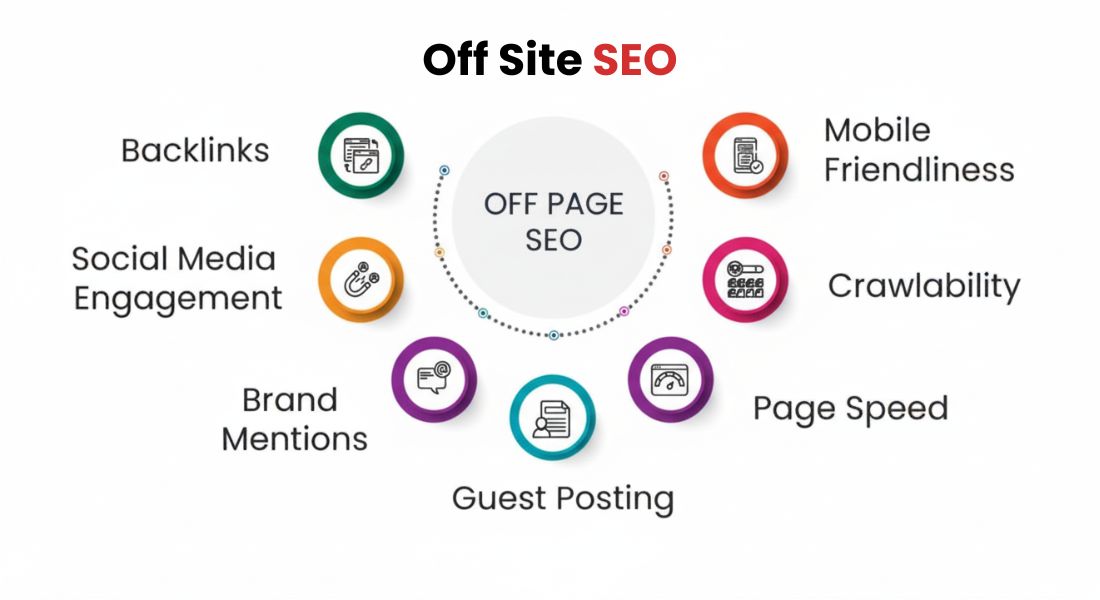
Off‑page profile: Links remain a major ranking signal. A sample SEO audit inspects link quantity and quality through Ahrefs or Moz to uncover toxic backlinks and new outreach targets.
Content and UX: Algorithms reward useful current material. Audit each page for word count adequacy, freshness and engagement metrics from GA4. If users bounce within seconds something isn’t matching intent.
Step by Step Walk Through of a Sample SEO Audit
Let’s follow a practical example using tools available to anyone. Assume you manage brighttrailmarketing.com and want to diagnose declining organic visits.
For a downloadable checklist that matches this process exactly open our SEO audit checklist and follow each step as you crawl.
Crawl the site
Use Screaming Frog to crawl every URL. Export the list and note response codes, redirect chains, meta tag duplication and canonical issues. Fixing these earns quick technical improvements.
Check index coverage
In Google Search Console, check which pages appear as Discovered currently not indexed or Excluded due to a noindex tag. Important pages missing here may indicate crawl blocking or thin content.
Analyze ranking data.
Under Performance → Search Results sort keywords by position. Pages sitting on page 2 offer instant potential. Add semantic companions and internal links targeting those terms.
Review content quality.
Inspect top traffic pages and underperformers side by side. Are headings descriptive?
Does text directly answer the query? Updating examples, stats and visuals typically boosts dwell time and CTR.
Evaluate backlinks and authority.
Run Ahrefs’ Site Explorer to identify lost or broken referring domains. Reclaiming even five high trust links often lifts domain rating substantially.
Assess Core Web Vitals.
LCP < 2.5 seconds, INP < 200 ms, CLS < 0.1 meeting these ensures your UX passes Google’s Page Experience signals. Compress images, preload hero assets and lazy load videos to reach targets.
Document findings and prioritize.
Group issues by severity:
- Critical: indexing and server errors.
- High: slow mobile pages, duplicate title tags.
- Medium: thin articles, light internal linking.
- Low: cosmetic elements like inconsistent icon sizes.
Turn this list into your action plan.
Essential Tools and Metrics for Auditing Success
You don’t need twenty subscriptions four tool families cover 95 % of use cases.
Google Suite (Free):
Use Search Console to monitor index health, Analytics to track traffic trends and PageSpeed Insights to evaluate performance..
Crawlers:
Screaming Frog and Sitebulb visualize site architecture, flag broken links and highlight on-page issues. For visual mapping Sitebulb’s crawl map shows clients how deeply key pages sit within the site hierarchy.
Backlink Platforms:
Ahrefs, Semrush and Majestic quantify domain authority and reveal link sources competitors rely on. Use them to run a link gap analysis once a quarter.
Content Optimizers:
Surfer SEO and Clearscope suggest semantic topics used by ranking pages. Integrating their data in updates creates topical completeness one of Google’s subtle ranking differentiators.
Key metrics to monitor:
index ratio (indexed/total URLs), average CTR, page speed score, Core Web Vitals pass rate and new referring domains per month. An upward curve in these usually aligns with sustainable traffic growth.
Building Your Own SEO Audit Template
Having a ready‑to‑use framework converts scattered findings into a repeating system.
Layout:
Create spreadsheet columns for Category, Issue, Evidence, URL, Priority, Owner and Status.
Scoring system:
Rate each issue 1, 5 for impact and 1, 5 for effort. Tackling high impact/low effort fixes first maximizes speed to improvement.
Maintenance schedule:
- Monthly mini audits for content and links.
- Quarterly technical scans for index and CWV changes.
- Bi annual deep audits covering full strategy alignment.
Mini Checklist at a Glance
• Run crawl & fix errors. • Validate mobile usability. • Confirm HTTPS redirects. • Test speed (Lighthouse). • Update top performing content. • Inspect new/ lost links. • Refresh schema markup.
Recording these consistently produces a living SEO journal evidence that progress isn’t accidental.
Common Mistakes and Quick Wins

Even experienced teams slip on basic items that drag rankings down. Below are fixes that outperform large overhauls.
- Orphan pages: Connect every asset through at least one internal link.
- Duplicate metadata: Give each page a unique CTA‑driven title ≤ 60 characters.
- Bloated images: Resize before upload use WebP where supported.
- Neglected schema: Add FAQ or HowTo markup for potential snippet gains.
- Neglecting page experience: Check tap targets on mobile font > 16 px avoid intrusive pop ups.
- No follow up: Audit data is meaningless without implementation. Schedule immediate fixes while data is still fresh.
Applying just these adjustments commonly lifts visibility within four to six weeks.
Future Proof Your SEO Audits
SEO in 2025 and beyond isn’t only about keywords it’s about comprehension by both humans and AI systems. Modern audits now include:
- Entity optimization: ensuring your brand, authors and content topics are correctly identified in Google’s Knowledge Graph.
- Experience signals: expert bylines, cited sources, trust elements (build EEAT).
- Automation usage: Using AI tools for pattern analysis but validating insights with human judgment.
Integrate these layers into your sample audit so you never lag behind the evolving definition of quality.
Conclusion
Your sample SEO audit journey ends with one truth auditing isn’t guesswork it’s a structured path to ongoing improvement. Each crawl or analytics report tells you where to act now while steady updates turn quick wins into lasting results.
Audit one section weekly, record the progress and re‑evaluate quarterly as trends and algorithms evolve. Treat your audit template as a living system refining it with new metrics or automation keeps your strategy future proof.
That steady discipline separates consistent growers from sites chasing lost traffic. Fix, measure and repeat until optimization becomes habit the reward is lasting visibility and a website that thrives through every search update.
FAQs
How frequently should I run a full SEO audit?
A mini audit every month keeps you proactive a full technical + content review every 3, 6 months ensures algorithm updates never catch you off guard.
Can small blogs or personal sites benefit from an SEO audit?
Absolutely audits show even tiny sites which pages earn visibility and which waste crawl budget helping small creators compete beyond their size.
What is the quickest way to spot critical SEO issues?
Run a crawl with Screaming Frog or Sitebulb then check Google Search Console’s Coverage report red Error or Excluded flags reveal instant fixes.
Do I need paid tools to run a sample SEO audit successfully?
No. Free Google tools plus basic crawler software can handle 90% of auditing tasks premium tools mainly speed up analysis and reporting.
How can AI assist in future SEO audits?
AI can summarize crawl data, group issues by impact and spot patterns humans miss but final priorities should always be set by human judgment.
Which SEO audit mistake do professionals most often overlook?
They fix technical errors but forget to re check analytics after implementation without measuremen you can’t prove success or ROI.