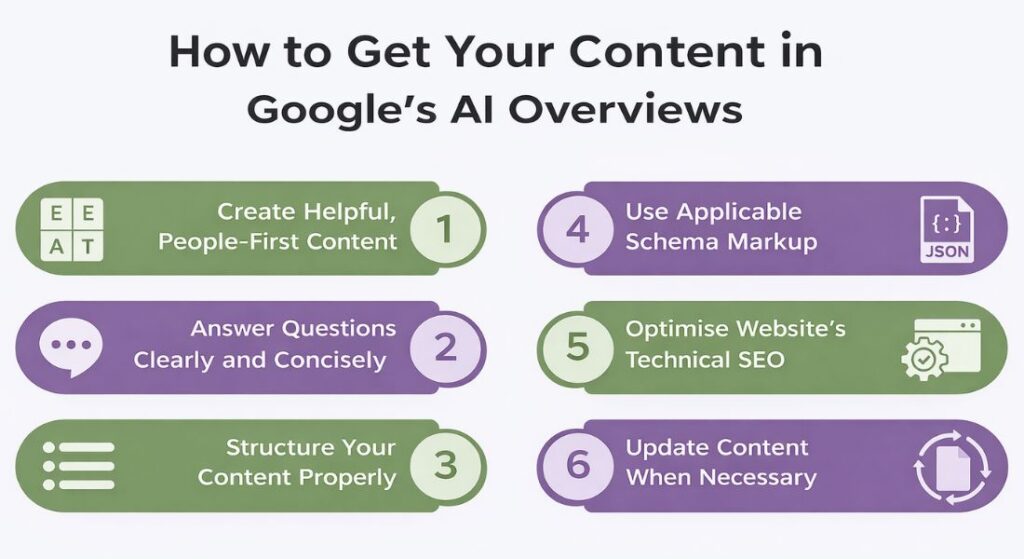
Search is evolving quickly. In many Google results today users see AI generated answers before they even click a website. These summaries called AI Overviews pull information directly from multiple web pages to answer a query instantly.
When your content explains ideas clearly and logically Google can use it as a source. When the structure feels confusing or scattered the system may skip the page entirely. Understanding how to structure content for Google AI Overviews feature has therefore become essential for modern SEO.
Understanding How Google AI Overviews Select Content?
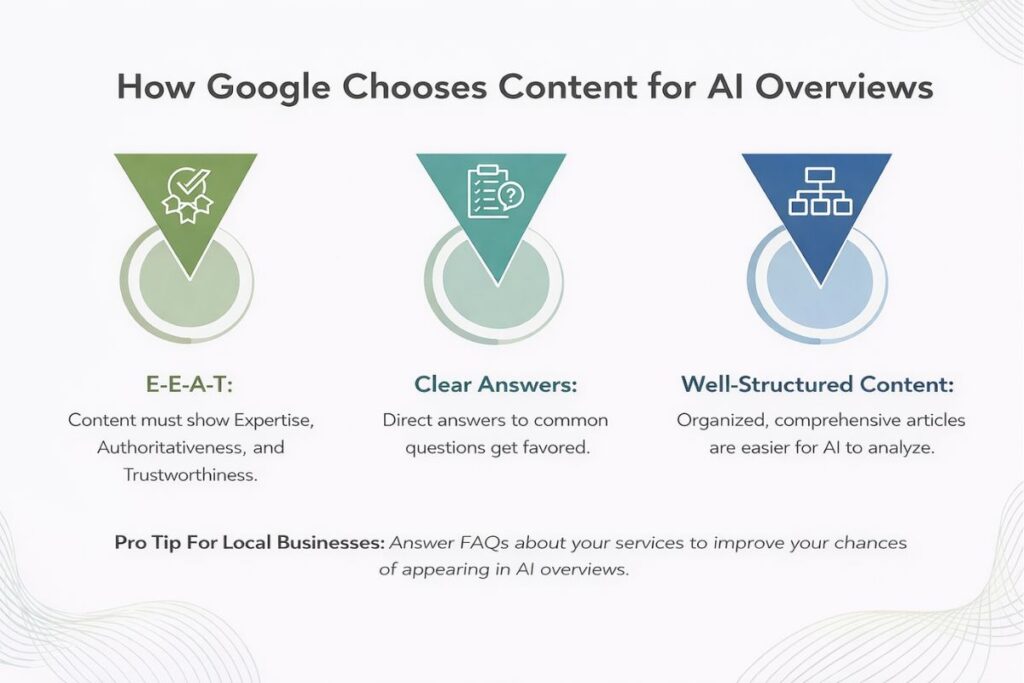
Before adjusting your content structure it helps to understand how AI summaries actually work. Google AI systems scan millions of indexed pages and retrieve passages that best answer the search query. Instead of copying entire articles the system extracts small sections that contain the most relevant explanation.
These extracted passages then form the generated summary shown in search results. Because of this process an entire page rarely appears in AI Overviews. Only the clearest sections of a page have the opportunity to become a cited source.
Every section of your article therefore acts as a potential answer candidate. When a section explains a concept clearly and directly AI systems can easily detect its relevance.
Structured sections’ strong context and semantic clarity help the system retrieve the right information quickly. This is why modern SEO increasingly focuses on content structure and answer clarity rather than simple keyword placement.
Why Content Structure Matters More in AI Search?
Traditional SEO relied heavily on signals such as backlinks, domain authority and keyword usage. These signals still matter but AI driven search also evaluates how clearly content communicates meaning. AI models analyze relationships between ideas, semantic context and the logical flow of information.
When a page presents ideas in a clear structure the system can easily recognize which section answers which question. A well structured article improves several signals at the same time.
It strengthens topical relevance, improves readability and increases the chance that AI systems extract the correct passage. Imagine two articles covering the same topic. One article presents information through long unstructured paragraphs.
The other divides the topic into clearly defined sections that answer specific questions. The second article almost always performs better in AI summaries because the system can retrieve information more easily.
Content structure does not replace quality writing. Instead it ensures that high quality information becomes visible to both readers and AI systems.
Start With Clear Topic Segmentation
Effective AI optimized content begins with clear topic segmentation. Instead of presenting information as a continuous narrative, divide the article into focused sections that explain one concept at a time.
Each section should address a specific question, idea or problem related to the topic. For example an article about AI search optimization may include sections explaining how AI retrieves information, how semantic structure works and how entity signals improve visibility.
Each section then becomes a standalone explanation that the AI system can easily interpret. This structure aligns with the way modern search systems retrieve information.
AI models often extract passages rather than entire pages so focused sections significantly increase the chances that your content appears in AI summaries.
Place Direct Answers at the Beginning of Each Section
Many websites introduce topics with long background explanations before providing the answer. This approach worked in older blog writing styles but performs poorly in AI search environments. AI systems prefer direct answers.
When a section heading introduces a question or concept the first sentence should immediately explain the answer. After presenting the answer you can expand the explanation with examples, reasoning or additional insights.
This structure benefits both readers and AI systems. Readers understand the main idea immediately and AI models can easily detect the relevant passage.
For example if a section explains content chunking the first sentence should clearly define the concept. The following sentences can then explain why chunking improves AI search visibility and how writers can apply it.
Starting with the answer transforms each section into a clear information source rather than a slow narrative.
Use Question Based Headings That Match Search Intent
Search engines increasingly rely on intent matching. The system tries to find content that answers the exact question a user asks.
One effective strategy involves writing headings that mirror real search queries. Question based headings help align your content with how people search online.
Instead of vague headings such as Content Strategy or Key Techniques use headings that clearly reflect user intent.
Examples include:
How does Google AI extract information from web pages
Why does structured content improve AI search visibility
What makes a page more likely to appear in AI Overviews
These headings guide readers through the article while signaling to search engines which question each section answers. When AI models scan the page they immediately recognize the purpose of every section.
Build Content Chunks That Work as Independent Answers
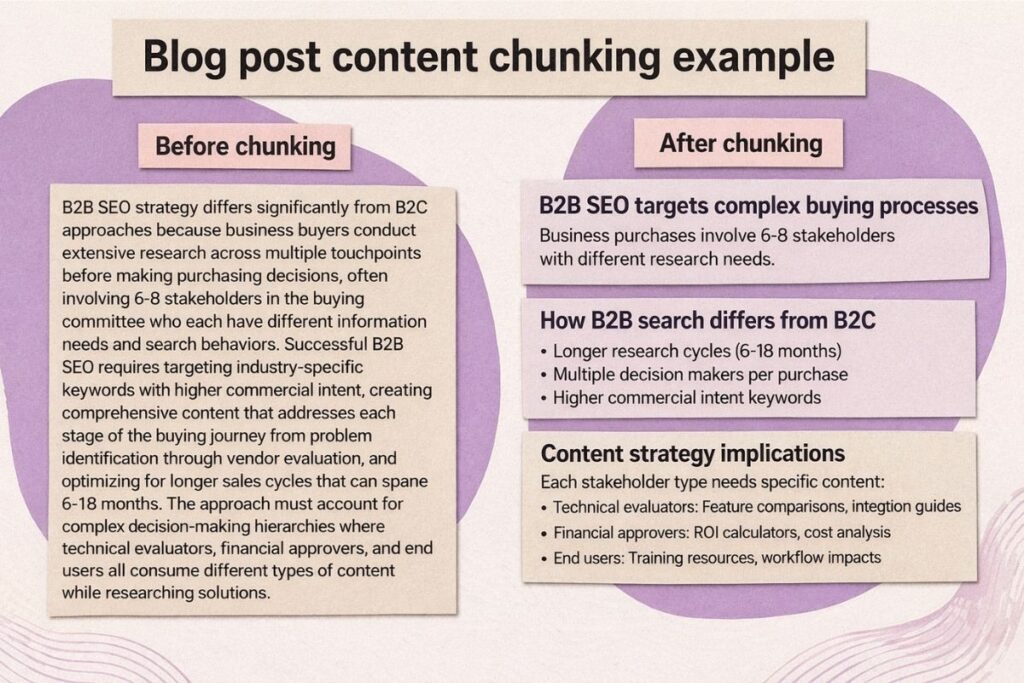
Content chunking plays a major role in AI search optimization. A content chunk refers to a focused section that explains a single idea clearly and completely. Each chunk should make sense even if someone reads it independently from the rest of the article.
AI retrieval systems often divide web pages into smaller segments before analyzing relevance. The system then identifies which segment best matches the user query.
When a section depends heavily on earlier context the system may struggle to interpret it as a standalone answer. To avoid this issue each section should contain enough context to explain the idea clearly on its own.
This does not require repeating large portions of text. Instead it simply means presenting each concept in a complete and self contained explanation. When sections function independently the article becomes easier for AI systems to analyze and retrieve.
Strengthen Semantic Context Across the Article
Modern search systems rely heavily on semantic understanding rather than simple keyword matching. AI models analyze how ideas connect within a topic. Writers can strengthen these signals by discussing related concepts that naturally appear within the topic ecosystem.
For example articles about AI search optimization often reference semantic search, natural language processing information retrieval systems and contextual ranking signals. These related concepts help search engines understand the broader context of the page.
When content covers multiple relevant aspects of a topic it demonstrates topical depth and expertise. The article becomes part of a larger semantic network rather than an isolated piece of content.
Strong semantic context helps search systems understand what the article explains and why it matters within the broader search landscape.
Integrate Entities That Define the Topic
Entities provide another strong signal in AI driven search. An entity represents a clearly identifiable concept such as a platform technology or organization. When content references relevant entities search engines can connect the article to real world topics and knowledge graphs.
Articles about AI search structure naturally mention entities such as Google Search People Also Ask results voice search systems structured data frameworks and schema markup technologies.
When these entities appear naturally within the discussion they strengthen contextual signals around the topic. AI systems recognize these connections and better understand the article’s role within the search ecosystem.
Writers do not need to force entity mentions. Clear explanations of the topic usually introduce them naturally.
Optimize Sections for Featured Snippets and AI Answers
Content that appears in AI Overviews often follows patterns similar to featured snippets. Featured snippets typically pull short explanations that answer a question directly. These answers usually appear in concise paragraphs that clearly explain the concept.
Writers can improve their chances of appearing in AI answers by presenting information in a structured and concise format. Clear explanations placed directly after headings help search engines extract relevant passages quickly.
Content that answers questions directly avoids unnecessary filler text and maintains strong readability often performs best in snippet style results. This same structure helps AI summaries identify and cite the most useful sections.
Maintain Strong Readability and Natural Flow
Structure alone cannot guarantee strong performance. Readers still expect content that feels natural and engaging. AI systems also evaluate readability because it reflects clarity.
When sentences become overly complex or paragraphs stretch too long comprehension decreases for both readers and algorithms.
Writers should maintain a natural rhythm by mixing short and medium length sentences. Each paragraph should focus on a single idea while guiding the reader smoothly into the next concept.
A conversational tone often works best because it mirrors the way people naturally explain information. When ideas feel clear and approachable both readers and AI systems interpret them more effectively.
Demonstrate Expertise and Content Credibility
Authority signals remain critical for modern search. AI Overviews frequently reference content from sources that demonstrate expertise and trustworthiness. Pages that explain ideas clearly provide thoughtful insights and present accurate information tend to perform better.
Credibility can appear through detailed explanations, real examples and well reasoned insights. Instead of simply listing tips, strong content explains why a strategy works and how it influences search visibility.
When readers sense genuine expertise, engagement increases. Search systems often interpret that engagement as a signal that the content provides real value.
Apply Structured Content Across Your Entire Website
AI search optimization does not apply only to blog articles. The same structural principles benefit many types of pages across a website. Service pages, product pages and informational guides can all benefit from clear sections and direct explanations.
For example a service page may explain the problem it solves how the service works and what results clients can expect. Each section then becomes a focused explanation that may match a relevant search query. When every page communicates information clearly the entire website becomes easier for AI systems to understand.
Align Your Content With the Future of Search
Search technology continues evolving quickly. AI generated answers will likely appear in more queries across the web. Instead of treating this change as a threat, content creators can treat it as an opportunity.
Websites that communicate knowledge clearly will become the sources AI systems rely on. Writers who understand content structure gain a powerful advantage.
By organizing information around real questions, presenting direct answers and strengthening semantic context any article can become easier for AI systems to interpret. Over time these practices create a library of content that naturally aligns with the future of search.
Conclusion
Learning how to structure content for Google AI Overviews feature ultimately comes down to one principle. Clarity wins. When information appears in logical sections explains ideas directly and connects concepts through meaningful context both readers and AI systems benefit.
The most successful content rarely relies on tricks or shortcuts. Instead it communicates knowledge in a way that feels clear, organized and trustworthy.
As search engines continue integrating artificial intelligence into their results the pages that succeed will be those that present information clearly enough for machines to interpret and humans to trust.
FAQs
Does structured data help content appear in Google AI Overviews?
Structured data helps search engines better understand the context of a page. Markup from Schema.org defines entities and relationships within content. While it does not guarantee inclusion in AI summaries, it can improve how Google Search interprets the page and retrieves relevant passages.
What is the ideal content length for appearing in AI Overviews?
There is no fixed word count for AI summaries. Content performs better when it includes clear sections that answer specific questions directly. Well structured articles with focused explanations give AI systems more opportunities to extract relevant passages.
How important is topical authority for AI Overview visibility?
Topical authority helps search systems recognize a website as a reliable source. Publishing multiple in depth articles on related subjects strengthens expertise signals and increases the chances that content may be referenced in AI generated summaries.
How often should content be updated for AI driven search results?
Regular updates help keep information accurate and relevant. Refreshing statistics, examples, and explanations signals that the content remains trustworthy which can improve its potential visibility in AI powered search features.
How can website owners track if their content appears in AI Overviews?
Website owners can monitor search impressions, query trends, and result layouts in analytics tools. Checking targeted queries manually can also help identify when a page is referenced as a source in AI generated summaries.