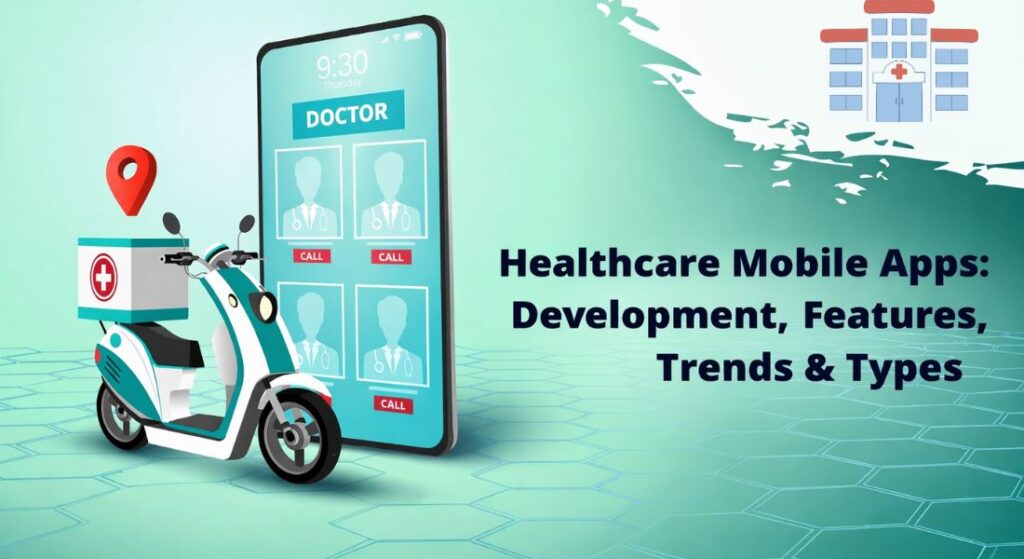
The global mobile healthcare applications market is expanding at a breakneck pace fueled by a relentless demand for accessible and convenient medical solutions. Projections indicate that the market will reach USD 1070.58 billion by 2030 underscoring these applications’ vital role in patient care, health monitoring and wellness management.
As technological advancements like Agentic AI IoMT (Internet of Medical Things) and 5G continue to accelerate the need for sophisticated healthcare mobile apps will increase even further.
This article explores the transformative advantages of healthcare mobile applications and outlines a comprehensive nine step process for their development in the 2026 landscape.
Key Takeaways:
- Digital Bridge: A healthcare app is a secure ecosystem connecting patients and providers via FHIR R5/HL7 APIs.
- Regulatory Rigor: Success requires 100% compliance with HIPAA GDPR and the EU AI Act.
- Strategic Partnership: Choosing a partner with a “Product Mindset” is the difference between a failed MVP and an enterprise success.
What is a Healthcare Mobile App?
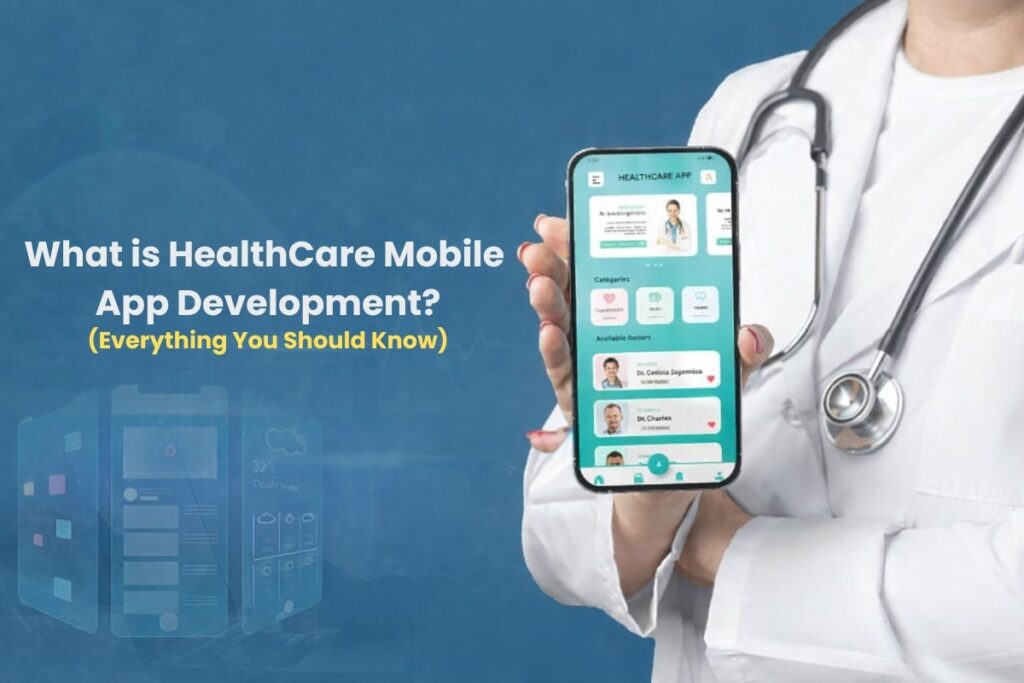
Health apps are mobile software programs designed to process health-related data for users. They suit anyone looking to maintain, improve or manage their personal or community health.
Unlike general wellness apps, true healthcare applications process Protected Health Information (PHI) and often integrate directly with hospital infrastructures like EHR (Electronic Health Records) and LIS (Laboratory Information Systems).
By providing easy access to medical information, appointment scheduling and health tracking these apps empower users to make more informed decisions about their well being.
Moreover they boost patient engagement by enabling real time communication with doctors and personalized monitoring leading to better overall health outcomes and happier healthcare workers.
Technical Feature Comparison: Standard vs. Market Leader!
To beat high ranking competitors your application must move beyond “basic” features into the “Market Leader” category.
| Feature Category | Standard Healthcare App (Competitors) | Market-Leader App (Your Strategy) |
| Data Security | Basic Encryption (SSL/TLS) | Zero-Trust Architecture & Post-Quantum Encryption |
| Interoperability | Manual PDF/File Uploads | Real-time FHIR R5 / HL7 APIs Integration |
| AI Capability | Basic Rule-based Chatbots | Agentic AI with Clinical Decision Support (CDSS) |
| Compliance | HIPAA & GDPR Checkbox | Automated Audit Trails & SOC 2/ISO 27001 Validation |
| Connectivity | Manual data entry | Continuous IoMT Sync (Wearables & Smart Implants) |
| UI/UX | Mobile-responsive design | VUI (Voice User Interface) & WCAG 2.2 Accessibility |
| Scalability | Monolithic Backend | Cloud-Native Microservices (AWS HealthLake/Azure) |
Types of Healthcare Apps (Provider vs. Patient)
To achieve topical authority we must dissect the two primary branches of the healthcare app ecosystem.
Healthcare Apps for Providers (Doctor Centric)
These apps are designed to streamline clinical workflows and improve decision-making:
- Mobile EHR/EMR Interfaces: Allowing clinicians to view longitudinal patient records during hospital rounds.
- Clinical Decision Support Systems (CDSS): AI powered tools providing evidence-based treatment suggestions.
- Tele surgery & AR Assistance: Helping specialists guide surgeries remotely via Augmented Reality.
- Medical Networking: Secure platforms for doctors to collaborate on complex cases.
Healthcare Apps for Patients (Patient-Centric)
These apps give patients more control over their health journey:
- Telehealth Platforms: Integrated video/audio tools for virtual visits and e visits.
- Chronic Condition Management: Tracking Diabetes COPD or Hypertension via wearable sensors.
- Digital Therapeutics (DTx): Software-based treatments for mental health (CBT) or ADHD.
- FemTech: Specialized trackers for fertility pregnancy and menopause.
Benefits of Healthcare Mobile Apps for Patients and Providers
1. Benefits for Patients
- Enhanced Access to Care: 82% of patients reported delays in accessing medications due to communication barriers. Mobile apps resolve this by offering direct access to pharmacists and real-time medical records.
- Reduced Treatment Cost: Medication non adherence can cost up to $52341 per patient. Apps with smart reminders and remote consultations lower these expenses.
- Higher Healthcare Quality: AI driven apps provide personalized recommendations detecting potential issues early.
- Simplified Payments: Integration with digital wallets and even cryptocurrency makes payment flexible and transparent.
2. Benefits for Providers
- Customized Treatment: Access to a patient’s unique history allows for targeted care plans even at large volumes.
- Reduced Diagnostic Errors: AI features detect errors promptly and predict potential drug interactions.
- Remote Patient Monitoring (RPM): Doctors access real-time data from IoMT devices saving time and optimizing hospital resources.
Must Have Features in Healthcare Mobile App Development
Core Features for Providers:
- Doctor’s Profile: Qualifications contact details and AI symptom matching.
- Patient Dashboard: Graphical views of medical trends, pain levels and lab results.
- ePrescription (eRx): Seamless sending of prescriptions to pharmacies with EMR integration.
- Clinical Photo Capture: Secure imaging with on-screen guides eliminating expensive medical cameras.
Core Features for Patients:
- Appointment Booking: Seamless scheduling with document upload (Calendly/API integration).
- Telemedicine Hub: Video/voice calls using WebRTC or Twilio SDK.
- Hospital Wayfinding: Indoor maps and beacon navigation for large facilities.
- One Click Ambulance: Emergency assistance with precise GPS location.
The 9 Step Guide For Healthcare Mobile App Development
Step 1: Define The App’s Goal
Identify the specific clinical friction point. Are you managing diabetes or tracking anxiety? A clear goal ensures your Product Requirements Document (PRD) aligns with actual patient outcomes. This step involves talking to doctors and patients to define the “North Star” of the product.
Step 2: Conduct Market Research
Analyze competitor gaps. In 2026 don’t just look at features; look at API latency and user frustration. If users complain about “slow syncing” make real-time synchronization your USP. Stay updated on trends like Generative AI and Blockchain for data integrity.
Step 3: Hire a Strategic Development Partner
A successful project relies on a team that creates lasting solutions, not just custom code. You need a partner who understands the difference between enterprise software and a simple fitness tracker. (See the detailed selection guide below).
Step 4: Choose a Suitable Tech Stack
- Flutter/React Native: For cost-effective cross platform launches.
- Swift/Kotlin: For native performance in medical imaging apps.
- Backend: Node.js or Go for handling high concurrency patient data.
- Cloud: AWS HealthLake or Google Cloud Healthcare API for built-in compliance.
Step 5: Conduct UX/UI Design (Accessibility First)
Design for “Stress Situations.” Use large fonts for elderly users and follow WCAG 2.2 standards religiously. UI/UX in healthcare is about Empathy; a patient in pain should not have to hunt for the “Call Doctor” button.
Step 6: Ensure Healthcare Compliance
Integrate global standards into the code from day one:
- HIPAA (US) GDPR (EU) and HITECH.
- HL7 / FHIR R5 for data interoperability.
- SOC 2 & ISO 27001 for enterprise-grade security.
- Implement Zero-Trust where every data request is verified.
Step 7: Develop an MVP (Minimum Viable Product)
Launch the core value proposition first. If it’s a Telemedicine app ensure the video quality is 4K before adding an AI symptom checker. This validates demand and attracts investors.
Step 8: Multi Layered Testing
Perform penetration testing to prevent data breaches. Verify the functionality of healthcare workflows and the safety of APIs. Test data interpretation under poor connectivity a medical app must work even on 3G.
Step 9: Launch and Continuous Update
Launch on stores and use CI/CD pipelines for weekly security updates. Ongoing maintenance is essential to address new compliance requirements and OS/device changes.
Strategic Differentiators: How to Outperform 99% of Healthcare Apps?
Addressing the Interoperability Gap: SMART on FHIR
The primary hurdle in healthcare app development is seamless data exchange with legacy hospital systems like Epic or Cerner. In 2026 we go beyond basic APIs by implementing SMART on FHIR protocols.
This ensures your app functions as a “Plug-and-Play” solution within any hospital’s EHR environment effectively reducing development overhead by up to 30%.
The Rise of Agentic AI: Beyond Simple Chatbots!
By 2026 standard rule-based chatbots are obsolete. We integrate Agentic AI autonomous agents that don’t just provide answers but execute tasks.
For example if the app detects abnormal patient vitals the AI autonomously schedules an urgent doctor’s appointment and alerts the nearest pharmacy. This “Autonomous Healthcare” model increases user retention by over 40%.
Zero Knowledge Proofs (ZKP) for Absolute Data Privacy
Standard encryption is no longer the ceiling for data privacy. We utilize Zero Knowledge Proofs allowing patients to verify their identity or medical eligibility without revealing the sensitive underlying data to the system. This is the “Gold Standard” for applications handling high-stakes PHI such as mental health or genomic records.
How to Choose The Right Healthcare Mobile App Development Partner?
Choosing a partner is the most critical business decision in the development journey. Unlike general software healthcare requires a specialized mindset. Here are the key traits to look for:
1. Product Mindset Excellence
Don’t hire a “Body Shop” that just provides coders. Look for a team that creates lasting solutions. They should focus on disciplined releases, appropriate technology selection and continuous optimization.
2. Emphasis on Design Over Coding
Software engineers should be thoughtful creators not just “ticket closers.” An outsourcing partner must anticipate future challenges like scalability and modern interface updates based on user feedback.
3. Testers Familiar with User Needs
Great testers in healthcare go beyond standard protocols. They immerse themselves in the user experience ensuring that a doctor in a rush or a patient in distress can use the app flawlessly.
4. Dedication to Long Term Success
Check the partner’s history. The same team that builds the app should ideally maintain it for multi-year cycles. High employee retention in the partner company is a green flag as it ensures consistent expertise.
How is Enterprise Grade Development Different?
Unlike smaller apps, enterprise-grade solutions support 100000+ users and mission-critical workflows. They require:
- Cloud-Ready Infrastructure: Auto scaling and load balancing.
- 99.9% Uptime SLA: Because a system crash in healthcare can be life threatening.
- Continuous Monitoring: Real-time threat detection to safeguard PHI.
ROI & Business Metrics for Stakeholders
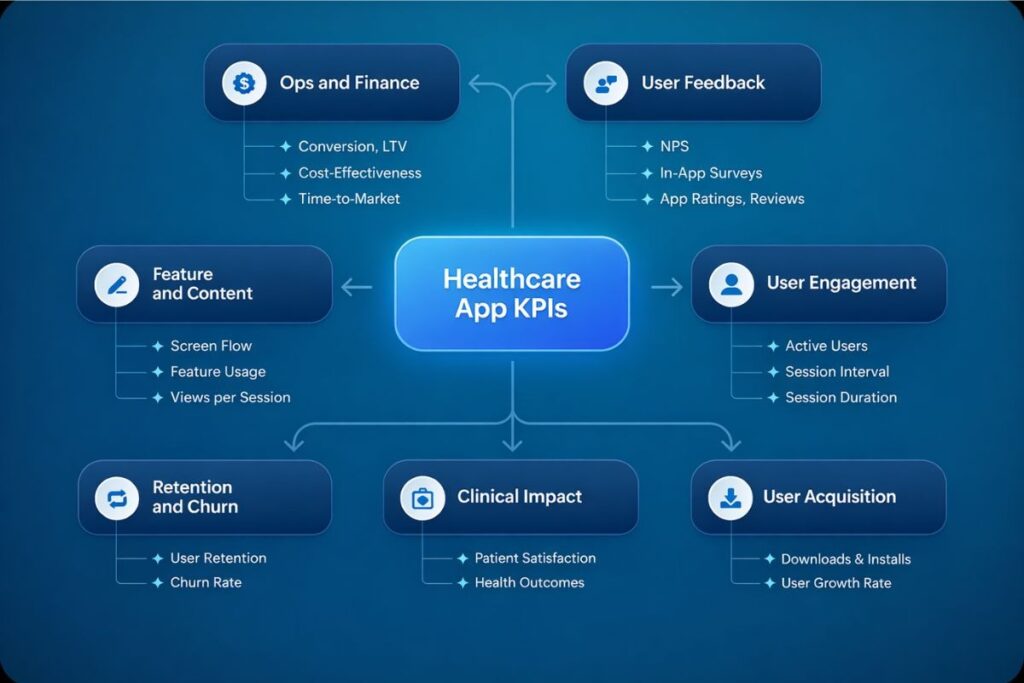
- Operational Efficiency: Reducing administrative load by 30-50% via clinical automation.
- User Retention: Personalized AI insights increase engagement by 40%.
- Medication Adherence: Apps can save thousands per patient by reducing hospital readmissions.
Conclusion
Healthcare mobile app development requires a precise blend of technical innovation and strict regulatory discipline. Following a structured 9-step roadmap allows you to navigate HIPAA compliance and FHIR interoperability with confidence.
Moving toward Agentic AI and Zero Trust security is what truly separates market leaders from standard competitors. Success depends on prioritizing the user ensuring doctors manage workflows efficiently while patients access care seamlessly.
Choosing a partner with a product mindset ensures your application remains scalable and reliable as your user base grows. Ultimately, this guide provides the strategic foundation needed to build a secure, user friendly ecosystem that improves clinical outcomes.
FAQs
How much does it cost to develop a healthcare mobile app?
A basic MVP ranges from $50000–$80000 while enterprise platforms with AI and FHIR integrations exceed $250000. Maintenance typically costs 20% of the build per year.
What is the key challenge in building a healthcare app?
Security and Interoperability. Building an app that is hack-proof yet talks to 20-year-old hospital software is the ultimate technical hurdle.
What is Software as a Medical Device (SaMD)?
If your software performs medical functions like diagnosing cancer from an image or calculating insulin doses it is SaMD and requires FDA clearance.
Why is FHIR integration critical?
FHIR (Fast Healthcare Interoperability Resources) is the standard for data exchange. Without it your app is an “island” that cannot connect to the global healthcare ecosystem.
How does 5G impact medical apps?
5G enables lag free 4K video consultations and real-time sharing of massive MRI/CT scans making virtual care as effective as in-person visits.
What is Zero Trust Architecture?
Zero Trust assumes no request is safe by default requiring verification for every action. This is the gold standard for preventing medical identity theft in 2026.