Running an online store without checking how search engines see it is like sailing without a compass. An e-commerce website SEO audit uncovers hidden issues that silently cost traffic and sales. From technical glitches and slow pages to duplicate content and weak internal linking, small problems can have a big impact.
In this guide, we’ll walk you through every step of a complete audit covering site structure, content, technical fixes, and off-page strategies so your store not only ranks higher but also converts visitors into buyers efficiently.
What Is an E-commerce Website SEO Audit and Why Do You Need It?
Before diving into complex tools, it’s crucial to understand what an e-commerce SEO audit actually does. This audit examines your store’s technical setup, content, site structure, and backlinks to reveal hidden issues that could be silently harming traffic and revenue.
Conducting this audit ensures you:
- Spot technical issues like broken links, slow pages, or crawl errors.
- Identify underperforming keywords and low-converting pages.
- Improve user navigation and internal linking.
- Strengthen your off-page SEO and overall domain authority.
Practical Insight: Many stores ignore small crawl errors, yet fixing just a few can boost product page visibility significantly.
How to Conduct a Keyword Audit for Your E-commerce Website?
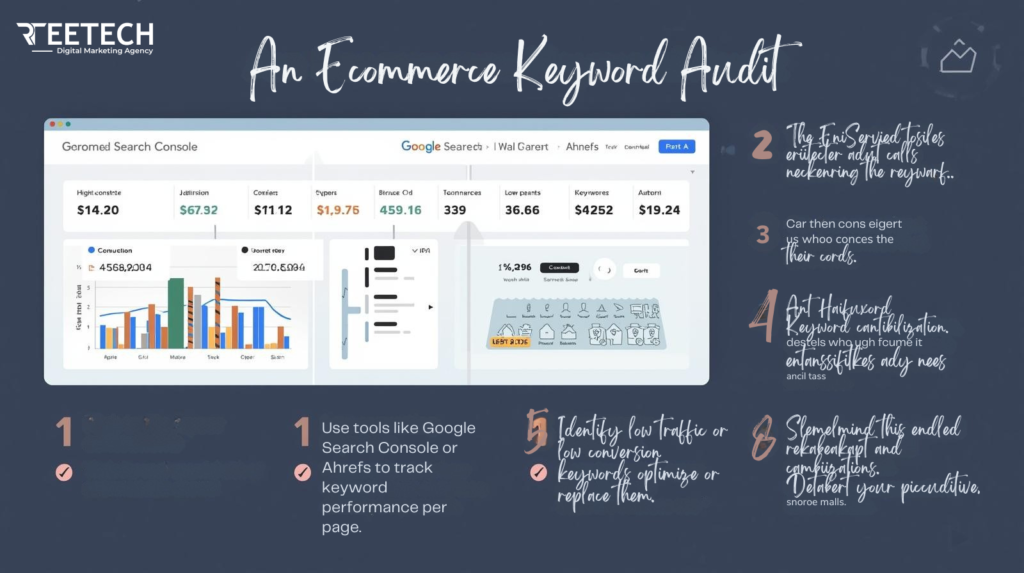
Keywords are the foundation of your traffic and sales. A precise audit tells you which ones drive visits and which ones actually convert buyers.
Steps:
- Use tools like Google Search Console or Ahrefs to track keyword performance per page.
- Identify low traffic or low conversion keywords optimize or replace them.
- Spot cannibalization where multiple pages compete for the same keyword.
- Prioritize high conversion terms even if search volume is smaller.
Example: A product page ranking for “wireless headphones” had high visits but low purchases. Optimizing for “wireless headphones for runners” led to a 35% lift in actual sales.
Critical On-Page SEO Elements for E-commerce Websites
On-page SEO ensures every page clearly communicates intent to both search engines and users. Focus on meta tags, headings, images, internal linking, and schema.
- Title Tags & Meta Descriptions: Keep titles under 60 characters; meta descriptions within 160. Include primary keywords naturally.
- Headings: Use H2/H3 for long tail keyword placement.
- Images: Optimize with alt text and WebP format for faster loading.
- Internal Linking: Connect related products, blogs, and categories.
- Schema Markup: Add Product, Review, and Breadcrumb schemas for rich snippets.
Unique Insight: Competitors often skip detailed product schema. Implementing it can immediately improve CTR without changing the content itself.
Technical SEO Audit: Making Your E-commerce Site Crawlable and Fast
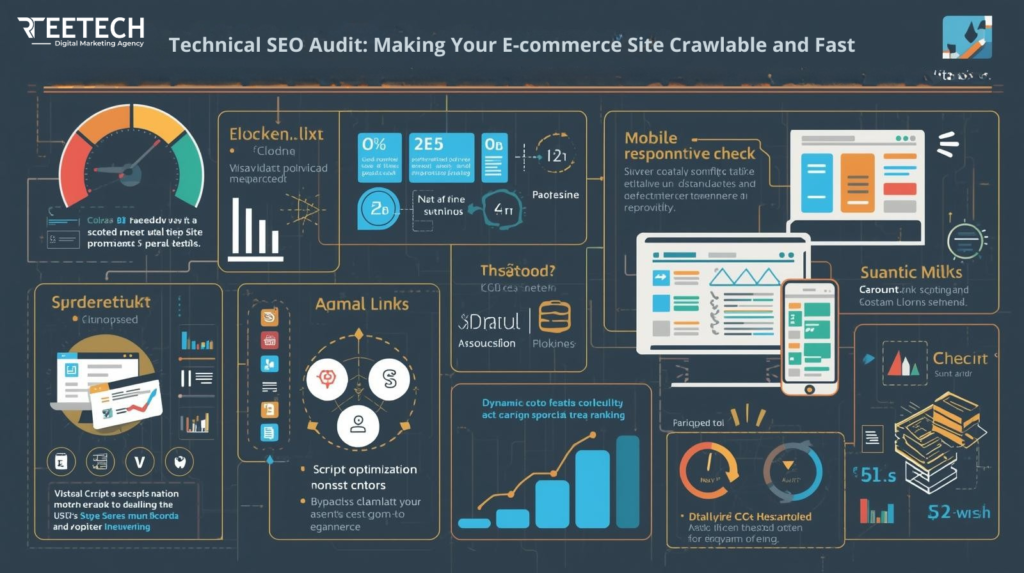
Technical SEO ensures your website’s foundation allows search engines to efficiently crawl, index, and understand your content. Key checks include site speed, mobile optimization, structured data, redirects, and removing technical bottlenecks that block rankings or slow UX.
- Site Speed & Core Web Vitals: LCP <2.5s, INP <200ms, CLS <0.1. Use Google PageSpeed Insights.
- Mobile Optimization: 70 to 80% of traffic comes from mobile ensure responsive layouts.
- Robots.txt & Sitemap: Direct crawlers, exclude irrelevant pages.
- Broken Links & Redirect Chains: Fix immediately to preserve link equity.
- Third Party Scripts: Remove or defer nonessential scripts that slow down pages.
Real world Example: Shopify stores with too many heavy plugins often rank poorly despite good content. Streamlining scripts improved rankings and conversions by 20%.
Optimizing Site Structure for Better SEO and UX
A well planned site structure improves navigation for both users and search engines. Logical hierarchy, shallow click depth, breadcrumbs, and internal linking enhance product discovery, indexing efficiency, and ultimately, conversions.
- Shallow Structures: Keep important pages ≤3 clicks from the homepage.
- Categories & Filters: Group logically to enhance UX and SEO.
- Breadcrumbs & Navigation: Make the journey intuitive for both users and search engines.
- Orphan Pages: Ensure all pages are linked; unlinked pages may get deindexed.
Example: Reorganizing electronics categories in a WooCommerce store lifted organic traffic by 20%.
Off-Page SEO Factors That Drive E-commerce Authority
Off-page SEO builds trust, credibility, and authority beyond your website. This includes backlinks, social engagement, content marketing, and local SEO signals. A strong off-page profile directly impacts domain authority and organic visibility.
- Backlinks: Audit quality and remove toxic links. Acquire authoritative niche links.
- Social Signals: Maintain active social profiles for credibility.
- Content Marketing: Blogs, guides, and FAQs strengthen topical authority.
- Local SEO: Google Business Profile and location pages for physical stores.
Competitor Blind Spot: Many audits ignore internal cross linking via blogs, which can significantly boost product authority.
Advanced Strategies to Maximize Audit Results

Beyond basics, advanced strategies ensure your SEO audit converts insights into actionable revenue growth. This covers AI-driven search readiness, content clustering, conversion focused optimization, and competitor benchmarking to uncover hidden opportunities.
- AI & Generative Search Readiness: Optimize content for voice and AI queries.
- Content Clustering & Internal Linking: Group related products and posts to guide users naturally.
- Conversion Centric Audit: Identify high-traffic, low-converting pages and optimize CTAs.
- Competitor Benchmarking: Compare keyword usage, backlink strategies, and site structure for hidden opportunities.
Example: Rewriting meta descriptions on low performing pages increased conversions by 12% in a Shopify store.
E-commerce SEO Audit Checklist for 2026
A structured checklist consolidates all key audit actions into a single roadmap. It helps systematically fix technical, on-page, off-page, and conversion related issues while tracking progress and ensuring continuous improvement for sustainable growth.
- Analyze all keywords: traffic vs conversions
- Optimize titles, meta, headings
- Improve product images & implement schema
- Fix technical issues: broken links, redirects, mobile optimization
- Enhance site speed & Core Web Vitals
- Evaluate content: remove thin/duplicate material
- Strengthen backlinks & social presence
- Ensure shallow, intuitive site structure
- Track metrics and update audit every 6 to 12 months
Final Thoughts
A thorough e-commerce website SEO audit is more than just checking for errors it’s a strategic tool to boost rankings, improve user experience, and increase revenue.
By addressing technical issues, optimizing on-page content, enhancing site structure, and strengthening off-page authority your online store becomes more visible, trustworthy, and conversion friendly.
Regular audits, combined with prioritizing high-impact fixes and advanced strategies like AI-driven search readiness and content clustering, ensure your store stays competitive and consistently attracts high quality traffic that actually buys.
FAQs
How often should I perform an e-commerce website SEO audit?
At least every 6 months, or immediately after major redesigns, migrations, or traffic drops. Regular audits prevent ranking losses.
Can I do a DIY e-commerce SEO audit?
DIY audits catch obvious issues but may miss advanced technical, schema, and conversion opportunities that professionals identify.
What is the biggest mistake in e-commerce SEO audits?
Ignoring site structure, product schema, or mobile performance. Even strong content won’t convert if users can’t navigate or pages load slowly.
How does SEO impact conversions?
Optimized sites improve traffic quality, page speed, usability, and content relevance driving more visitors to buy.