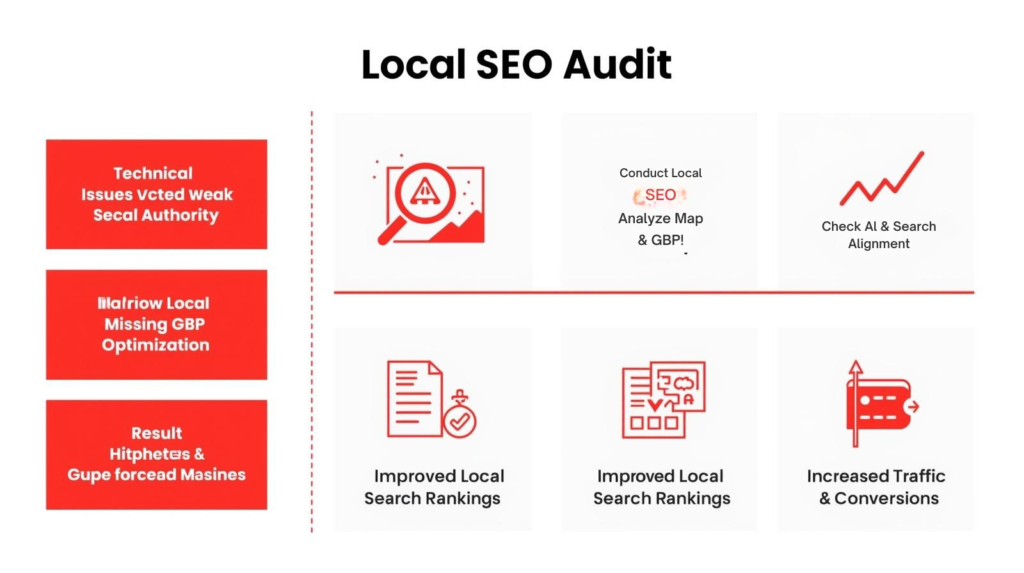
A local SEO audit is the foundation of any business aiming to dominate local search results. Many businesses struggle to appear in Google Map Packs or local searches despite having websites and Google Business Profiles (GBP) set up.
The issue is rarely content alone it’s often hidden technical, structural, or authority related problems that hold your site back.
By conducting a local SEO audit, businesses can uncover these issues, optimize their online presence, and align their strategies with both traditional search engines and emerging AI driven platforms like Google AI Mode and ChatGPT.
This comprehensive approach ensures higher visibility, more traffic, and ultimately measurable growth in conversions.
Why Local SEO Audits Are Critical for Local Businesses?
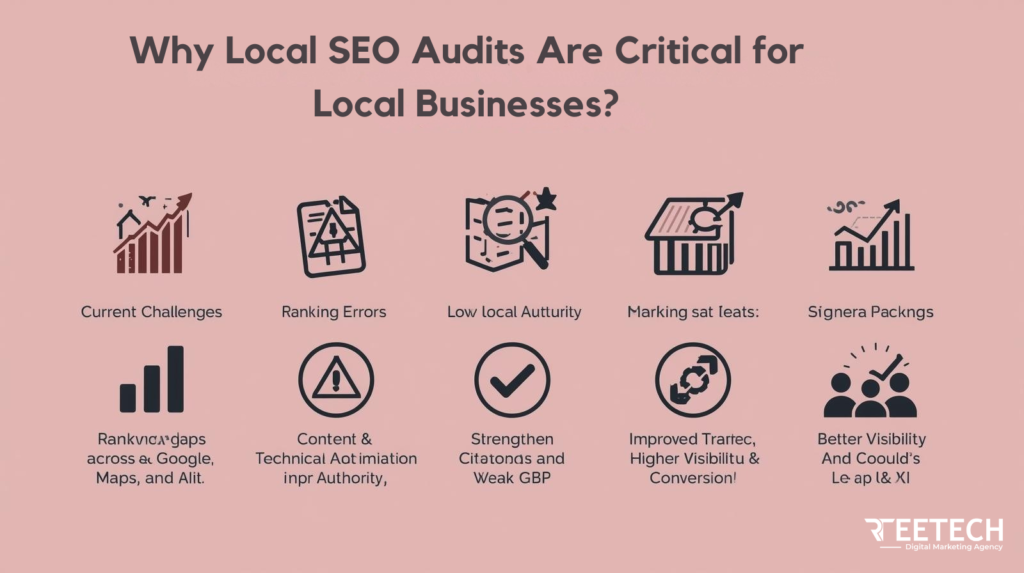
Local search behavior is evolving rapidly. Consumers now rely on Google Maps, voice search, and AI powered assistants to find nearby businesses. In such a competitive environment a simple free local SEO audit won’t suffice you need a strategic professional audit to ensure your business stands out.
A proper local SEO audit achieves the following:
- Identifies ranking gaps across Google, Maps, and AI results
- Fixes technical errors preventing crawlers from indexing pages
- Optimizes content for both transactional and informational local queries
- Strengthens GBP and citations for better local authority
- Improves conversion paths from search to actual business interactions
Without a structured audit businesses often spend resources on low impact fixes while missing core issues.
Why Most Businesses Fail Local SEO Even After an Audit?
Most local SEO efforts fail not because audits are skipped but because audits don’t expose real failure patterns. Businesses look optimized on paper, yet rankings, calls, and leads quietly stagnate. Below are the most common local SEO failure signals that standard audits miss.
Visible in Maps, Zero Calls
Some businesses appear in Google Map Packs but receive little engagement. This usually happens when:
- GBP categories don’t match dominant search intent
- Service descriptions fail to clarify who the business serves
- Visuals and attributes attract views not actions
Visibility without conversions is a clear audit failure.
Optimized GBP Website Suppressing Authority
A polished Google Business Profile cannot compensate for a weak website. Common issues include:
- Poor service location alignment
- Weak internal linking to core service pages
- Thin or generic location content
In these cases the website limits how far local rankings can grow.
Good Reviews, Wrong Category
High ratings don’t guarantee rankings. Many businesses struggle because:
- Reviews reflect valuable services
- But the primary GBP category places them against the wrong competitors
Most audits confirm categories instead of challenging them.
Clean Citations, Blocked Pages
Citations may be accurate yet rankings stall. Why?
- Key service or location pages are buried
- Internal links fail to pass authority
Search engines trust the business, but not the page they should rank.
Traffic Without Buying Intent
Some sites attract visitors but not customers.
This indicates:
- Informational local queries dominating content
- Transactional and near me intent underrepresented
A proper audit separates visibility from revenue intent.
Why These Failures Matter
Most free or automated audits:
- Validate setups instead of judging effectiveness
- Highlight errors without explaining ranking impact
A real local SEO audit identifies what looks correct but performs incorrectly and fixes what actually blocks growth.
Key Insight
Local SEO rarely fails loudly. It fails through misalignment and hidden structural issues.
A strong local SEO audit doesn’t find more problems
it exposes the few failures suppressing visibility, trust, and conversions.
Local SEO Audit Checklist: Core Components
A comprehensive local SEO audit checklist ensures no critical factor is overlooked. Here’s a strategic approach that incorporates competitor insights and actionable steps:
Google Business Profile Audit
Your GBP is your digital storefront in local search. An effective audit evaluates:
- Accuracy: Ensure Name, Address, Phone (NAP) consistency across all platforms
- Completeness: Add services, products, hours, photos, and posts
- Duplicate Resolution: Merge or remove conflicting listings
- Engagement: Respond to reviews promptly and monitor sentiment
A robust GBP increases visibility in Google Map Packs, AI Mode, and other emerging search platforms.
Pro Tip: Google prioritizes profiles with regular updates and high quality images. Structured content like service highlights or FAQs can enhance AI driven visibility.
Website & On-Page SEO Audit
Your website must support local signals. This step focuses on:
- NAP Consistency: Website info must match GBP
- Local Content Optimization: Pages dedicated to service areas with targeted keywords
- Schema Markup: Implement LocalBusiness, Product, Service, FAQPage schemas
- Mobile Usability & Speed: Pass Core Web Vitals and ensure responsive design
- Image Optimization: Descriptive filenames and alt text with keywords
These elements help search engines and AI platforms understand your relevance and location.
Local Citations and Business Listings Audit
Citations validate your business’s local authority:
- Consistency: Ensure NAP matches across Yelp, TripAdvisor, Bing Places, Apple Maps
- Coverage: Fill gaps in niche directories and local listings
- Duplicate Resolution: Remove outdated entries to avoid ranking penalties
Backlink Audit: Identify reputable local sources linking to your site. Prioritize links from local organizations, publications, or partners.
Reviews and Reputation Management
Reviews influence both ranking and conversions:
- Monitor review volume, quality, and recency
- Respond to both positive and negative reviews
- Extract content ideas for FAQs and blog posts based on recurring questions
- Encourage customers to reference specific products/services naturally in their reviews
Note: Over relying on reviews without addressing core website or GBP issues will have minimal impact.
Local Keyword and Content Audit
Local SEO is not just about location; it’s about intent-driven content:
- Map keywords to transactional, navigational, and informational searches
- Evaluate Near Me and geo modified queries
- Audit existing content for gaps in coverage of each customer journey stage
- Include AI driven prompts and natural language phrases relevant to local searches
Content audits ensure that your pages are aligned with what users are actually searching for, improving both visibility and conversions.
Technical SEO Audit
Technical issues can silently kill rankings. Check for:
- Crawlability and indexing errors
- Mobile first readiness and page speed
- Schema validation errors
- JavaScript rendering issues for LLM visibility
A well structured technical audit ensures that search engines and AI tools can access, interpret, and rank your content effectively.
What Are The Wrong Fixes That Waste Local SEO Budgets?
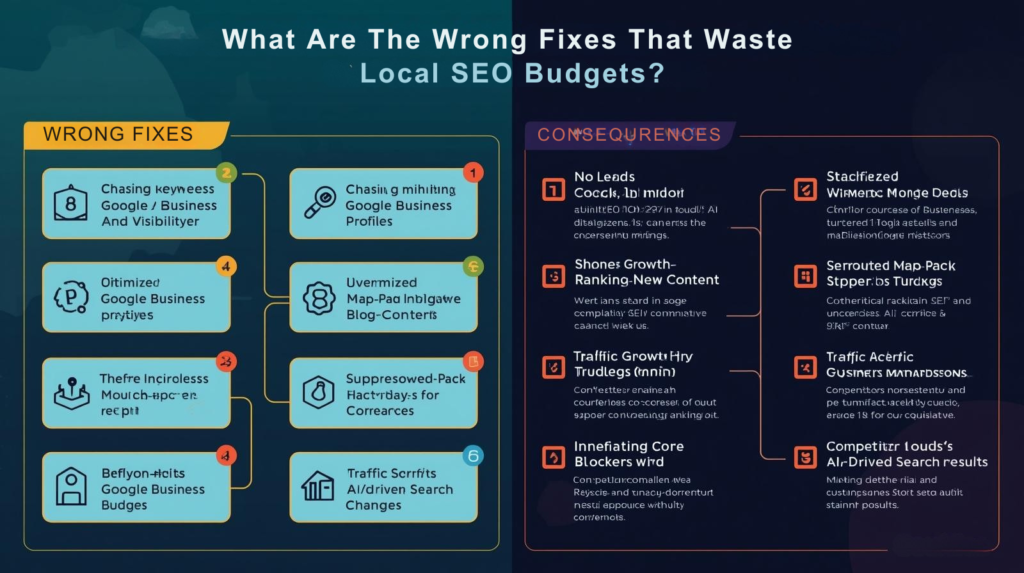
Most businesses don’t fail local SEO because they do nothing. They fail because they fix the wrong things in the wrong order. Below are the most damaging false improvements found during real local SEO audits.
Chasing Rankings Instead of Local Actions
Many audits obsess over:
- Keyword positions
- Visibility percentages
- Vanity metrics
But local success is driven by:
- Calls
- Direction requests
- Website actions from Maps
Result:
Businesses rank but generate zero leads. Real audits track behavioral signals not just rankings.
Over Optimizing Google Business Profile While Ignoring the Website
A polished GBP cannot override a weak website. Common mistake:
- GBP optimized
- Reviews active
- Posts consistent
…but… - Thin service pages
- No internal authority flow
- No location trust signals
Result:
Google suppresses Map Pack growth because the website fails to confirm expertise. A real local SEO audit evaluates GBP + website as one system.
Adding Citations Without Authority Context
Many audits push bulk citation building.
Reality:
- Citations validate existence, not trust
- Repeating the same NAP does not increase authority
Result:
No ranking movement after citation work. High impact audits focus on local relevance links not directory volume.
Publishing Blog Content Instead of Fixing Service Page Intent
Agencies often recommend:
- Weekly blogs
- Informational content
- Generic local posts
When the real issue is:
- Service pages not matching transactional intent
- Weak internal linking to money pages
- Location modifiers misused
Result:
Traffic grows conversions don’t.
Relying on a “Free Local SEO Audit” for Strategic Decisions
Free audits typically:
- Surface obvious errors
- Miss competitive gaps
- Ignore AI & Map Pack behavior
They are diagnostic previews not growth strategies.
Result:
Businesses fix surface issues while deeper blockers remain. A professional local SEO audit identifies ranking suppression causes not just errors.
Ignoring AI & Local SERP Behavior Changes
Most audits still analyze:
- Classic blue links only
But local discovery now happens via:
- Google AI Overviews
- Voice search
- Conversational queries
Result:
Competitors surface in AI results while your site doesn’t. Modern audits evaluate AI visibility signals, structured data, and Q&A coverage.
The Next Frontier in Local SEO
AI search platforms including Google AI Mode, Gemini, and ChatGPT are changing local discovery. A modern local SEO audit must evaluate:
- Presence in AI Overviews and AI Mode results
- Whether competitors’ content is surfacing more prominently
- Opportunities for structured Q&A content and FAQ implementation
- Conversational query coverage for voice search optimization
Key Insight: AI focused optimization should complement not replace, foundational GBP, citation, and technical improvements.
Implementing Audit Recommendations
An audit is only valuable when acted upon. Implementation involves:
- Prioritizing fixes by impact on visibility and conversions
- Providing developer ready recommendations for technical fixes
- Optimizing content with user intent in mind
- Tracking KPIs and adjusting strategy based on measurable results
How Often Should You Run a Local SEO Audit?
- Quarterly for active or large businesses
- Biannual for stable or small businesses
- After website migrations, redesigns, or significant algorithm updates
Regular audits ensure you adapt to evolving search behavior and AI driven ranking factors.
Conclusion
A local SEO audit is a strategic tool not a one time checklist. By evaluating GBP, website, citations, reviews, content, and technical factors businesses can identify hidden barriers and prioritize high impact improvements. Integrating AI insights and competitor benchmarking ensures your strategy stays ahead of evolving search trends.
Executing audits correctly improves not just rankings but also visibility, traffic, and conversions, giving your business a sustainable edge in local search.
FAQs
How to choose perfect GBP primary category for Map Pack?
Analyze top 3 Map Pack competitors categories via GMB audit tool. Pick yours + 3 secondaries matching 80% Analyze search queries (e.g., plumber not handyman). Changes live in 48hrs, 35% ranking boost.
How long to reach Google Map Pack #1 after local SEO audit?
Technical/GBP fixes: 2 to 4 weeks. Reviews + citations: 4 to 8 weeks. Consistent 20+ reviews/month + content = top 3 in 90 days. Track via Local Falcon heatmaps.
Best local keywords for voice search “near me” optimization?
Target conversational: “best plumber near me open now”, “emergency dentist London 24 hours”. Add FAQ schema + GBP attributes. 40% local traffic from voice/AI audit shows 25% missed opportunities.
How many reviews needed for local rankings boost?
50+ reviews at 4.5+ stars = 3x Map Pack odds. Respond to all + get service-specific reviews (“fixed my leak fast”). Audit reveals 60% agencies ignore review sentiment analysis.
Why free local SEO audit tools fail businesses?
Catch 30% issues (surface errors) miss 70% (competitor gaps, AI signals). Pro audits add GBP optimization + £5K revenue roadmap. Free = quick check paid = growth strategy.