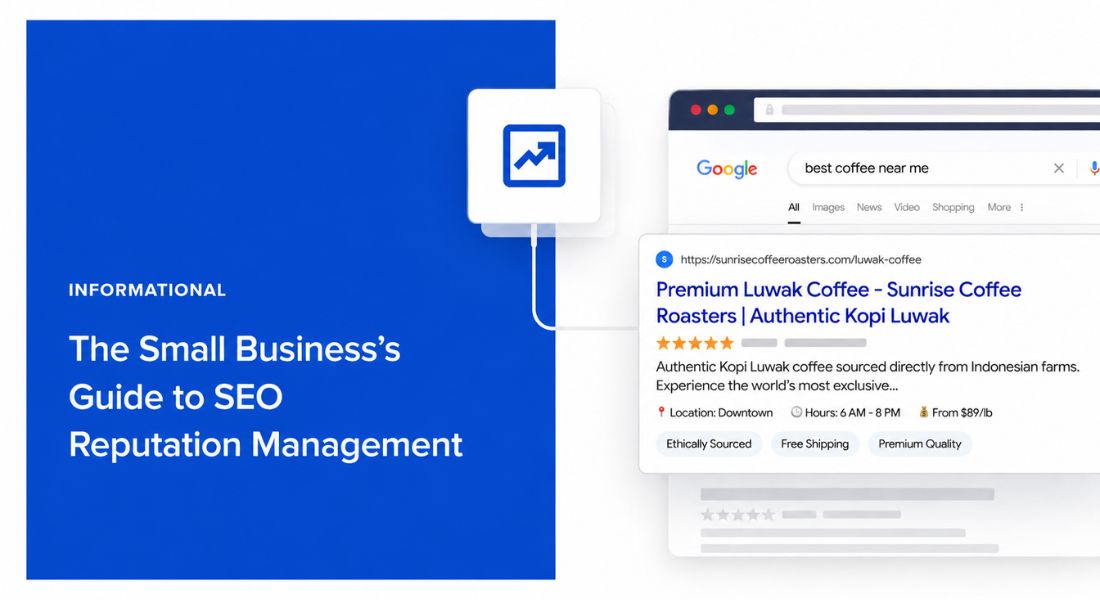
Most businesses rank well on Google but still lose customers because users check reviews, Reddit threads and brand mentions before they ever click. Search visibility and brand trust now work as one system not two.
This article breaks down exactly how branded search perception works, what signals Google evaluates how negative results damage revenue and what steps turn your reputation into a competitive advantage from beginner tactics to advanced strategy.
What Is SEO Reputation Management?
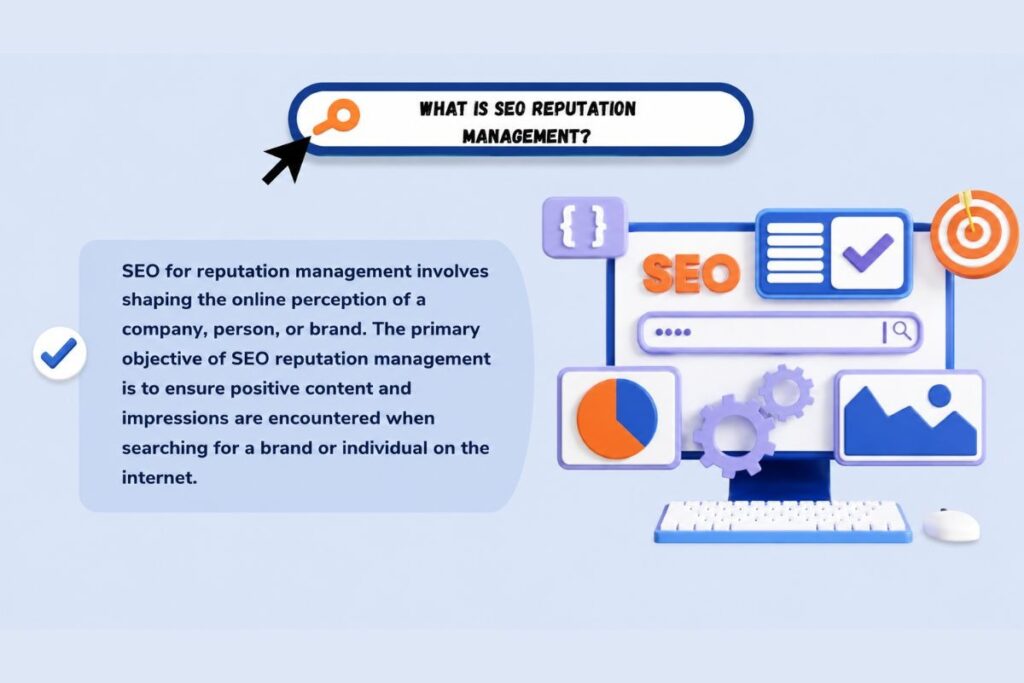
Brand reputation in search covers everything users discover when they search your company name, product or executive. It combines traditional organic optimization with brand perception control, reviews digital PR local visibility and entity-level authority.
A business can hold position one for commercial keywords and still lose sales. Why? Because users search the brand name before they buy. Those branded queries become the final trust checkpoint. What appears there review stars complaint threads or Reddit discussions directly determines whether someone contacts you or clicks your competitor.
How do SEO and brand perception connect?
Organic rankings create visibility. Reputation influences whether users act on that visibility. Google now evaluates both together analyzing click behavior review sentiment branded engagement and entity mentions alongside backlinks and keywords.
How does this differ from traditional ORM?
Traditional public relations manages offline and social perception. Search-specific reputation management controls what ranks when someone searches your brand. The goal is to push trusted positive assets above damaging results, not just manage press coverage.
Why Brand Trust Signals Matter More Than Ever
Search behavior changed. Users now investigate before they buy. They scan review platforms, check Reddit, read complaint articles and look for independent opinions before making decisions. Search engines adapted by giving more visibility to trust-related content.
Branded search behavior shifted: Most buyers search the brand name directly before purchasing. Searches like “company name reviews” or “company name Reddit” reveal real customer sentiment. Businesses that ignore branded search results lose sales even with strong commercial keyword rankings.
Reviews influence rankings and conversions simultaneously: Google uses review quality recency and engagement to rank local businesses. A restaurant with hundreds of recent positive reviews attracts more clicks in Maps than a competitor with outdated feedback.
Review keywords when customers naturally mention phrases like “emergency plumber” or “fast roofing repair” also strengthen contextual relevance and local search association.
AI search now depends on reputation signals: AI-powered search experiences summarize brand perception directly inside results. These systems analyze review sentiment, customer discussions and entity trustworthiness before generating recommendations.
A SaaS company with consistent praise across G2 Trustpilot and forums appears more credible inside AI answers than a competitor with unresolved complaints and weak sentiment signals. This shift makes active brand trust management essential, not optional.
How Negative Search Results Damage Revenue?
Negative results do more than hurt perception. They directly reduce clicks conversions and long-term organic performance.
Click-through rate drops from branded searches: Users avoid businesses when search results show complaint articles or low review ratings. Imagine two law firms with similar keyword rankings. One shows positive review stars and trusted media coverage.
The other shows unresolved client disputes. Most users click the trusted option even if it ranks lower. Google tracks this engagement behavior and consistent avoidance can weaken search performance over time.
Negative reviews reduce local map visibility: Google Maps prioritizes businesses with strong satisfaction signals. A home repair company with dozens of unresolved one-star reviews loses map pack placement to competitors with smaller but more positive review footprints. Actively requesting reviews and responding professionally keeps local rankings stable.
Forum threads and Reddit dominate branded searches: Independent platforms rank prominently for brand-related queries because users trust peer opinions.
A hosting provider with poor uptime discovers that complaint threads outrank its homepage for its own brand name. The business cannot delete those discussions; it can only build stronger assets that rank above them.
Reputation problems cut conversions even when traffic holds: A financial advisor attracting qualified organic traffic still loses leads when search results expose complaints about hidden fees.
Trust converts visitors. Negative results interrupt that conversion before users ever reach a contact form. This problem intensifies in healthcare legal services SaaS and finance sectors where trust directly drives purchase decisions.
Core Components of a Brand Trust Strategy
A strong reputation in search requires multiple systems running together, not one tactic in isolation.
Review management: Build systems that request feedback consistently after successful customer interactions. A roofing company that sends review requests immediately after project completion captures feedback while satisfaction is highest.
Respond professionally to criticism, calm public responses demonstrate accountability and signal trustworthiness to future readers more than the negative review itself.
Branded search optimization: Audit every asset tied to your brand name. Websites LinkedIn profiles YouTube channels founder interviews press pages and business directories should all carry consistent brand signals.
A software startup that publishes case studies, customer stories and executive interviews occupies more branded search real estate which suppresses weaker negative results over time.
Local SEO and Google Business Profile management: Local businesses depend on profile accuracy, fresh photos, active reviews and consistent NAP (name, address, phone number) data across directories.
A restaurant that uploads new images weekly and responds to every review maintains stronger map engagement than inactive competitors. Inconsistent business details across Yelp Google and local directories reduce trust signals and weaken local relevance.
Content publishing and digital PR: Educational articles interviews client case studies and industry resources strengthen entity authority. Digital PR earns placements on trusted publications which often outrank complaint pages because authoritative domains carry significant search weight. A cybersecurity firm featured across respected technology sites builds stronger entity credibility than one relying only on self-published content.
Social media presence: Active social profiles rank for branded searches and strengthen legitimacy. A fitness brand with consistent Instagram and LinkedIn activity appears more established than a company with abandoned accounts. Social profiles also create additional search assets that expand brand visibility.
Brand mention monitoring: Track how the internet discusses your business weekly. A SaaS company that discovers rising refund complaints on Twitter can address the operational issue before those discussions spread into search results. Monitoring also surfaces positive mentions worth amplifying through PR and content marketing.
How Google Evaluates Review Signals?
Google studies reviews carefully because they measure real-world experience and Google wants businesses users trust to appear prominently.
Review recency and velocity: Fresh reviews signal active ongoing customer engagement. A dentist receiving consistent monthly feedback outranks a competitor whose reviews stopped two years ago. Sudden unnatural spikes in review volume can trigger trust concerns if the pattern looks artificial.
Keywords inside customer reviews: Authentic customer language reinforces service relevance. A review mentioning “fast emergency AC repair in Dallas” strengthens local service association without any forced optimization. Never script reviews, genuine language performs better because it reflects real experiences.
Response behavior as a trust signal: Businesses that respond to reviews demonstrate accountability. A hotel manager calmly addressing a complaint publicly builds trust even when the original review stays negative. Potential guests often evaluate the response quality more than the complaint. Consistent response behavior also signals operational activity to search algorithms.
How to Push Positive Content Above Negative Results?
Businesses cannot control every external discussion. They can create trusted assets that earn higher search visibility over time.
Create branded content assets: Case studies podcasts video interviews founder profiles and customer success stories expand your search footprint. Each branded asset creates another opportunity to rank positively for company-related queries. A cybersecurity company publishing security research and executive interviews builds more trust signals than one relying only on product pages.
Optimize owned properties for branded queries: Every owned platform LinkedIn YouTube press pages podcast profiles local citations should contain consistent brand signals. A law firm optimizing attorney profiles educational resources and directory listings around branded search terms strengthens entity recognition across the knowledge graph.
Use digital PR to outrank complaint pages: Trusted publication coverage carries strong domain authority that often ranks above forum complaints. A fintech startup featured in respected finance publications gains stronger branded credibility than competitors without external media coverage. PR campaigns also generate backlinks and entity associations that support broader search performance.
Strengthen authority with entity signals: Google evaluates how trusted sources reference your business. Consistent mentions across industry associations, news outlets directories and interview platforms build the entity recognition that AI search systems use to understand brand credibility.
Handling Negative Reviews the Right Way
Poor responses cause more damage than negative reviews themselves.
Respond publicly to legitimate complaints: Public responses demonstrate accountability. A guest complaining about hotel cleanliness expects acknowledgment ignoring it signals indifference to every future reader who sees that thread.
De-escalate without damaging trust: Avoid defensive language. A software company facing billing complaints should apologize, clearly explain corrective actions and invite the customer into private communication. Potential customers judge professional responses more favorably than they judge the original complaint.
Never buy fake reviews or threaten customers: Manipulative behavior destroys credibility. Users recognize unnatural review patterns through repetitive wording and suspicious timing. Platforms remove suspicious reviews aggressively. Short-term manipulation always creates long-term trust problems.
Building a Long-Term Brand Authority Strategy
Trust cannot rebuild through temporary campaigns alone.
Monitor brand sentiment consistently: Weekly monitoring of reviews mentions and branded discussions catches problems early. A healthcare provider that notices rising complaints about appointment delays can fix the operational issue before negative search visibility expands.
Create systems for review generation: Structured review requests after every successful interaction build steady review velocity. A landscaping company sending automated post-project review requests maintains stronger trust patterns than one running occasional campaigns.
Align SEO PR customer support and social teams: Reputation management fails when departments operate in silos. A retail brand investing heavily in organic traffic while ignoring social media complaints creates a visible trust gap. Coordinated communication across every customer touchpoint builds consistent authority signals.
Publish trust-building content regularly: Client case studies, educational resources and industry guides strengthen branded visibility over time. This content creates positive search assets that grow more valuable as they accumulate authority.
Conclusion
Brand trust in search shapes buying decisions before users ever reach your website. Rankings create the opportunity but review sentiment branded search results and entity authority determine whether users act.
Businesses that integrate organic strategy with review management digital PR and consistent content publishing build authority that compounds over time. Start by auditing your branded search results and review landscape across every platform your customers use.
Fix weak trust signals early, publish stronger branded assets consistently and build review generation systems before a reputation problem forces you into crisis mode.
FAQs
Does having a high domain authority protect against negative branded results?
No, High domain authority helps commercial rankings but does not prevent forum threads, review platforms or news articles from outranking your brand for your own company name.
Can you remove a negative Google result without legal action?
Only if the content violates Google’s policies or platform terms. Otherwise suppression through stronger content is the only reliable approach.
How many reviews does a local business need to rank in the map pack?
There is no fixed number review recency rating quality and response consistency matter more than raw volume. Competitors in your specific area set the benchmark.
Does responding to negative reviews help SEO directly?
Review responses strengthen engagement signals and demonstrate operational activity which supports local trust indicators. The primary benefit is conversion; future readers trust businesses that respond professionally.
What is the fastest way to improve branded search results?
Optimize and fully complete every owned profile tied to your brand name Google Business Profile LinkedIn YouTube and major directories. These rank quickly for branded queries and provide immediate control over what users see.