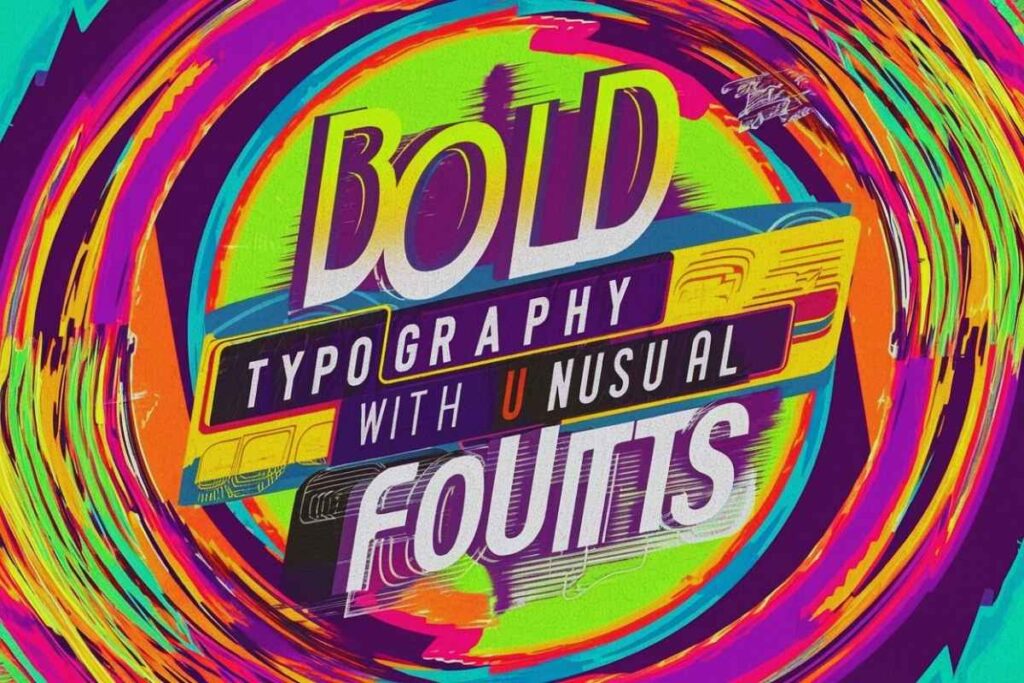
The 90s graphic design scene marked a turning point in visual culture, blending bold aesthetics, psychedelic influences, and experimental digital techniques.
From grunge typography to neon colors, the 90s design style was all about pushing boundaries. This decade revolutionized graphic design, and its influence can still be seen in modern branding, web design, and pop culture.
The Iconic 90s Graphic Design Style
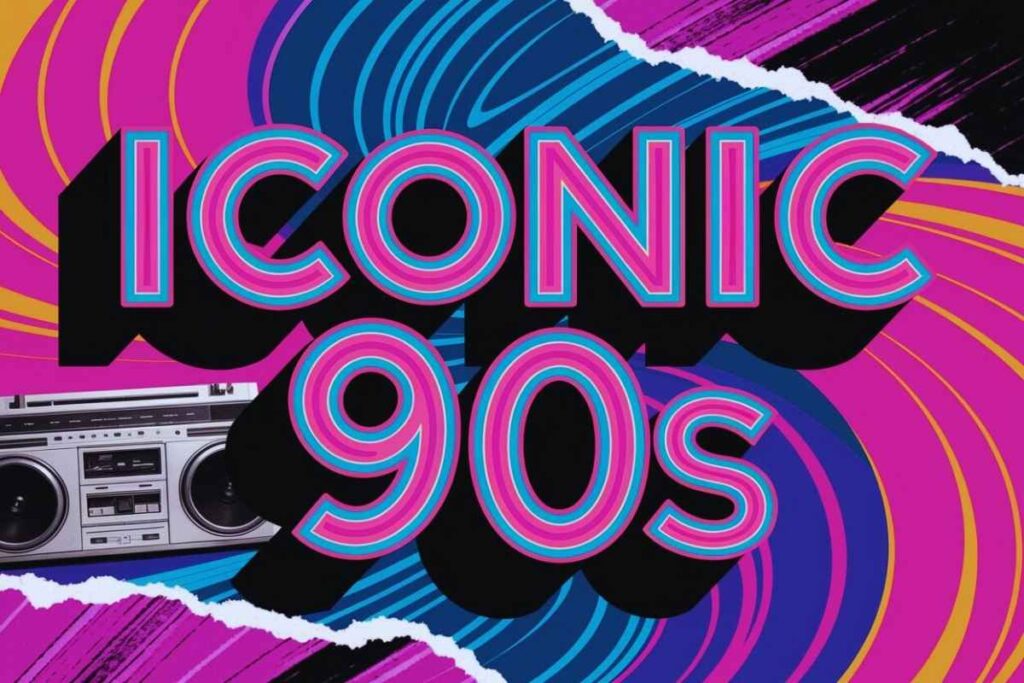
The development of 90s graphic design software was a game changer, with programs like Adobe Photoshop (1990) and CorelDRAW (1989) empowering designers to experiment digitally in ways never before possible.
These tools revolutionized design by enabling image manipulation, the creation of surreal effects, and the addition of 3D elements, thus laying the foundation for the bold, experimental aesthetic that defined the decade. Today, these software programs remain integral to modern design.
- Bold typography with unusual fonts, including distorted and stretched letters.
- Bright neon colors and contrasting palettes.
- Abstract shapes and 3D effects, making compositions look futuristic.
- Layering and textures, creating depth and movement.
- Collage-style layouts, incorporating cut-outs, mixed media, and photographic elements.
How 90s Graphic Design Influences Modern Branding?
90s graphic design continues to shape modern branding through its bold aesthetics, neon color schemes, and typographic experimentation. Designers still draw inspiration from 90s trends, creating visuals that are nostalgic yet modern. Here’s how it influences branding today:
- Bold Typography: 90s typography was all about distorted fonts and oversized text. Brands like Nike and Pepsi still use bold fonts to make their campaigns stand out.
Example: Nike‘s bold typographic approach. - Neon Colors: Neon colors bring energy and excitement. Modern brands use bright, fluorescent shades to capture attention and appeal to a youthful audience.
Example: Adidas using neon hues in their designs. - Geometric Shapes & Abstract Designs: Geometric shapes and abstract designs from the 90s are used today to create memorable, dynamic visuals in branding.
Example: Nike‘s logo with geometric elements. - Layered Textures & 3D Effects: Layered textures and 3D effects from 90s design are still used to create depth in digital ads and social media content.
Example: Instagram ads with 3D effects. - Nostalgic Appeal: 90s graphic design evokes nostalgia, helping brands like Urban Outfitters and Nike tap into retro trends for cultural relevance.
Example: Nike‘s retro-themed collections.
90s Graphic Design Software: A Game Changer
The development of 90s graphic design software played a crucial role in shaping this era. With the introduction of programs like Adobe Photoshop (1990) and CorelDRAW (1989), designers gained the ability to experiment digitally like never before.
These tools allowed artists to manipulate images, add textures, and explore surreal effects, which contributed to the distinctive 90s design graphic aesthetic.
Key 90s Graphic Design Trends
The 90s graphic design trends varied throughout the decade, but some of the most iconic movements included:
- Grunge Design: Inspired by underground rock and punk culture, this style featured distressed textures, torn edges, and chaotic layouts.
- Psychedelic & Rave Aesthetics: Popular in 90s graphic posters, rave flyers, and album covers, this trend involved neon colors, swirling patterns, and surreal elements.
- Memphis Revival: A continuation of the 80s Memphis style, this aesthetic featured playful geometric shapes and vibrant color palettes.
- Cyberpunk & Futurism: A high-tech visual trend that incorporated 3D rendering, pixel art, and digital glitches.
- Minimalist Pop Culture: On the other end of the spectrum, clean typography and pastel tones were used in advertising and branding.
90s Graphic Design Posters: A Wild Experiment
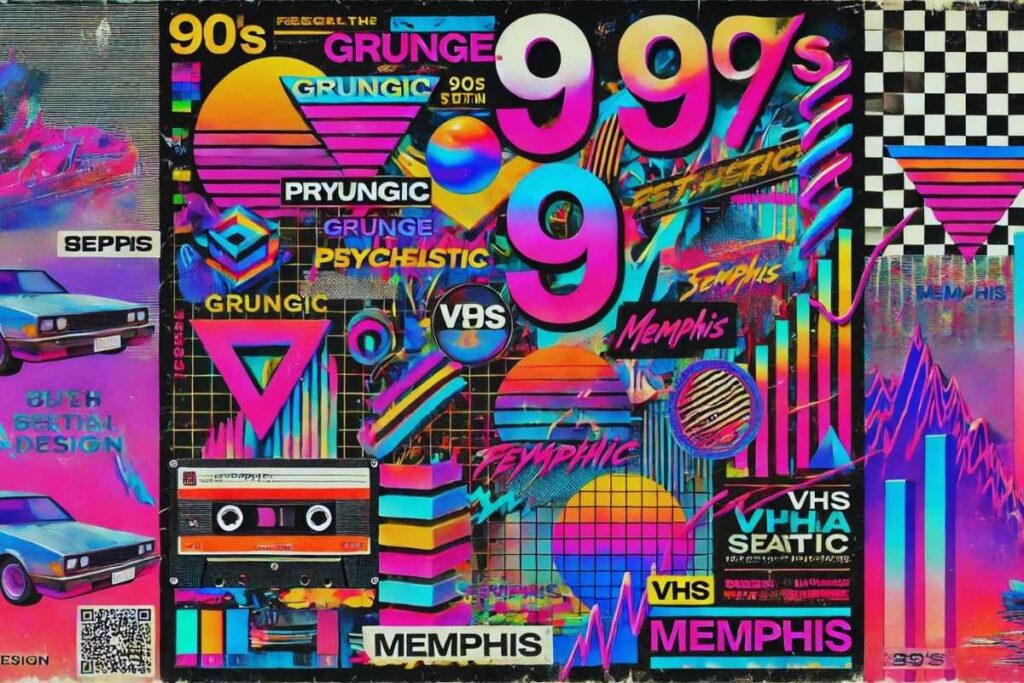
One of the most recognizable aspects of the decade was its 90s graphic design poster culture. Whether it was for movies, concerts, or club events, posters from this era showcased intense visual layering, high-contrast colors, and surreal compositions. Some famous examples include:
- Rave Flyers: Neon, cyber-inspired, and filled with distorted typography.
- Movie Posters: Films like The Matrix (1999) and Titanic (1997) had bold and futuristic poster designs.
- Music & Album Covers: Nirvana’s Nevermind (1991) featured minimalist yet impactful design.
Typography in 90s Graphic Design
Typography in 90s graphic design was all about pushing boundaries. Fonts were stretched, squished, outlined in neon, or distorted to create a rebellious look.
The emergence of Comic Sans in 1994 added a playful, informal touch to the decade’s design landscape. Other popular typography elements included:
- Glowing & Gradient Text
- Pixelated & Digital Fonts
- Cut-and-Paste Style Lettering
- 3D Floating Text (inspired by Star Wars credits)
90s Design T-Shirts: A Cultural Statement
The influence of 90s graphic design t-shirts was massive. Clothing brands and pop culture icons capitalized on the vibrant aesthetics by incorporating bold prints, graffiti elements, and logo-based graphics. Some popular styles included:
- Band Tees featuring distressed and grunge-inspired typography.
- Neon & Cyberpunk graphics reflecting futuristic themes.
- Minimalist Logos from brands like Nike, Adidas, and Calvin Klein.
- Cartoon & Pop Culture Prints, featuring characters from The Simpsons and anime series.
The Legacy of 90s Graphic Design
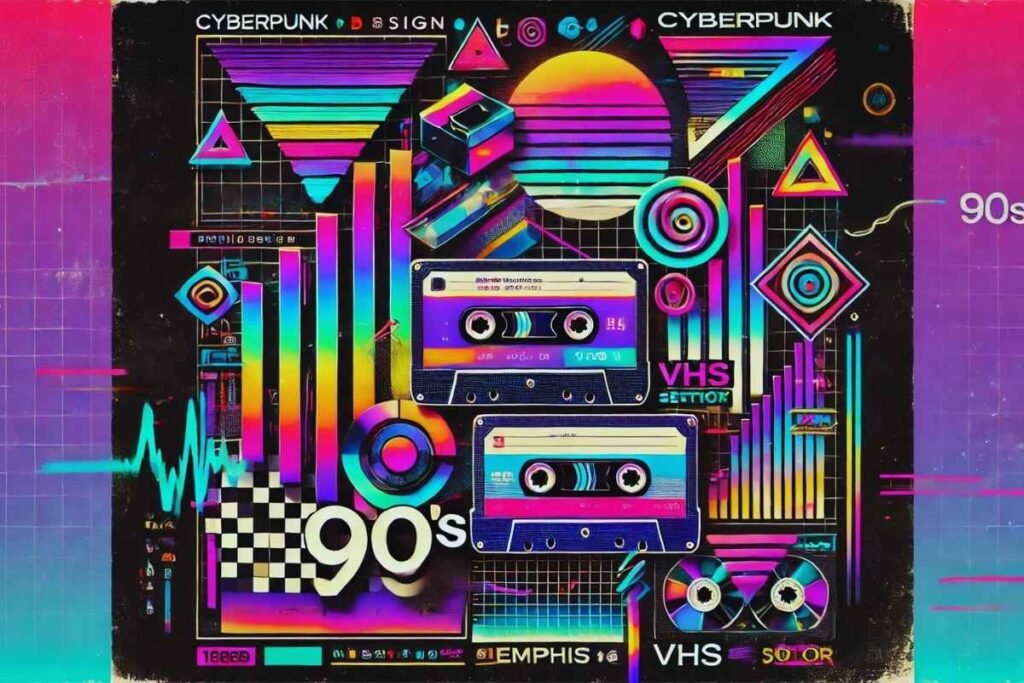
Even in today’s digital era, 90s graphic design trends continue to inspire creatives. From the aesthetics that shape modern branding to the revival of retro 90s graphic design posters, the boldness and freedom of this decade remain influential.
Whether in music visuals, branding, or social media content, the nostalgic appeal of the 90s aesthetic is here to stay. Designers looking to capture the essence of this era can draw inspiration from its fearless use of vibrant colors, experimental typography, and abstract compositions.
Final Thoughts
The 90s graphic design movement was a bold and revolutionary period that shattered conventional rules, influencing modern branding and digital media.
Today, its legacy can be seen in everything from advertising to web design. The fearless use of neon palettes, typography, and abstract visuals continues to inspire the creatives of tomorrow.
From experimental typography and neon colors to grunge textures and futuristic 3D effects, this decade left a lasting impact on visual culture. Today, we see its revival across various industries, proving that the creative spirit of the 90s is timeless.
FAQs
What defined 90s design graphic?
90s graphic design was bold, eclectic, and experimental, featuring neon colors, distorted typography, and layered textures.
How did software influence 90s graphic design?
Programs like Adobe Photoshop and CorelDRAW revolutionized design, allowing digital manipulation, 3D effects, and surreal compositions.
What were the key typography trends in the 90s?
Stretched, pixelated, neon-outlined, and 3D floating text dominated, with playful fonts like Comic Sans gaining popularity.
What made 90s design graphic posters unique?
Posters used high-contrast colors, chaotic layouts, and futuristic elements, especially in rave flyers, movies, and album covers.
How did 90s graphic design influence fashion?
Bold prints, graffiti-style graphics, neon cyberpunk themes, and minimalist logo designs shaped t-shirt culture.
What role did grunge play in 90s design?
Grunge aesthetics featured distressed textures, torn edges, and chaotic typography, heavily influenced by rock and punk culture.
How did Memphis design influence the 90s?
The revival of Memphis design brought playful geometric shapes, bold colors, and an energetic, retro-futuristic feel.
Why is 90 graphic design making a comeback?
Nostalgia-driven trends, retro aesthetics, and digital revival keep the bold, experimental style relevant in modern branding and media.
How can designers recreate 90 graphic design today?
Use neon palettes, grainy textures, layered compositions, and bold typography to capture the era’s rebellious visual energy.